































































































This week on Pharmacy Times, there are a number of important topics that will be covered and posted throughout the week:
This week on Pharmacy Times, there are a number of important topics that will be covered and posted throughout the week:

The report, developed by Thomas McAndrew, a computational scientist and faculty member at Lehigh University's College of Health, and colleagues, uses data from experts and trained forecasters, combining their predictions into a single consensus forecast.
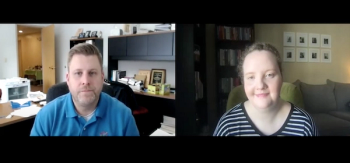
Steve Moore, PharmD, chairman of the Pharmacists Society of the State of New York, said the Federal Retail Pharmacy Program will work alongside his state’s own rollouts to get shots in arms.

The clinical trials analyzed were from the United Kingdom, Brazil, and South Africa, where COVID-19 variants are of significant concern.
In a recent congressional hearing, the NACDS submitted a statement underscoring the critical role of pharmacies, pharmacists, and pharmacy teams in the COVID-19 response and recovery efforts taking place across the country.

The investigational vaccine is compatible with standard vaccine distribution channels.

Cardiovascular health risks exacerbated by lifestyle changes caused by the pandemic will become an even more critical issue in coming years.

The results are from a public polling of more than 800 English-speaking adults nationwide in a study published in the journal Vaccine.

Pharmacy Times® interviewed Nurisha Wade, MBA, and Farah Towfic, PharmD, MBA, of US Pharmacopeia, on how the release of the COVID-19 Vaccine Handling Toolkit may help pharmacists quickly and safely vaccinate.

The Pharmacy Times® Pharmacy Focus podcast provides the latest industry news and information, thought-leader insights, clinical updates, patient counseling tools, and innovative solutions for the everyday practice and business of pharmacy.

Pharmacy Times interviewed Randall A. Oyer, MD, president of the Association of Community Cancer Centers, about how the COVID-19 pandemic is going to impact cancer mortality.

According to the CDC, the ability to evade natural or vaccine-induced immunity could be the most concerning consequence of emerging variants.

Rather than having an intrinsically lower risk of severe COVID-19, the patients in the study may have adhered more strictly to social distancing guidelines compared to the general population.

COVID-19 antibody test may also be able to identify those who have been exposed to the disease but have so far been asymptomatic.

Helpful patient education suggestions for the successful management of COVID-19 at home and when it is appropriate to seek medical attention.

The COVID-19 pandemic has escalated the burden of psychological distress, including anxiety, depression, post-traumatic stress, and insomnia.

Study shows the greatest hesitancy in seeking emergency medical services among families living in under-resourced communities, which highlight health inequities that already exist during the pandemic.

The federal government also gave pharmacy technicians the authority to administer COVID-19 vaccines under the supervision of a pharmacist.

The participating national pharmacy partners and independent pharmacy networks represent more than 40,000 pharmacy locations and is a key component of the administration’s national strategy to expand access to vaccines.

Three international cardiovascular outcomes trials are currently examining the cardioprotective effects of different influenza vaccine formulations.

Guidelines, updated in nearly real time, recommend use of remdesivir, dexamethasone.

Pharmacy Times® interviewed Brian Nightengale, president of Good Neighbor Pharmacy, on solutions that can help support independent community pharmacies now and in the future.

In an interview, Nishita Hira, PharmD, CSP, clinical program manager at AllianceRx Walgreens Prime, discussed the role specialty pharmacists can play during the COVID-19 vaccine rollout.

Pharmacy Times® interviewed Micah Cost, PharmD, MS, who was recently selected as the new chief executive officer of PQA, on his plans for the future of the organization.

Pharmacy Times interviewed Rob LaHayne, CEO of TouchCare, on how communicating the safety and efficacy of COVID-19 vaccines to the public is an essential piece of the rollout.