

Specialty Pharmacy
Advertisement

Risk-based screening, early symptom recognition, and patient engagement can help pharmacists detect chronic kidney disease and prevent progression.
Advertisement

Kyle Fischer, PharmD, explains navigating payer hurdles, supporting adherence, and improving coordination in ILD and PAH care.

This week's episode highlights new data on the newly approved oral GLP-1, orforglipron, the growing role of sports pharmacists, and FDA approval of a higher-dose regimen for spinal muscular atrophy.

Pharmacist Kyle Fischer, PharmD, APh, explains how antifibrotic therapy, drug interactions, and pharmacist–physician collaboration guide ILD care.

Keith Bellovich, DO, explains how SARS-CoV-2–driven inflammation contributes to kidney injury and may reveal previously undiagnosed chronic kidney disease.
Advertisement


The updated dosing schedule for nusinersen offers increased drug exposure and may further improve outcomes for patients with spinal muscular atrophy.
The safety and effectiveness of marne-cel were established in an open-label, single-arm, multicenter phase 1/2 clinical trial.

The approval is a milestone for rare disease that has lacked treatments capable of crossing the blood-brain barrier and introduces a new class of agent that pharmacists will need to understand.
Advertisement


Nutrition coaching and pharmacist support boost medication adherence, tackle access barriers, and strengthen chronic disease routines.

This week's episode covers the court ruling halting RFK Jr.'s childhood vaccine schedule changes, the FDA's RSV vaccine approval for adults aged 18–49, pharmacist-led GLP-1 optimization strategies, and new gabapentin data in SUD treatment settings.

A timely pharmacist referral and collaborative care approach can set off a chain of positive lifestyle changes.

Pharmacists play a pivotal role in helping patients align healthy nutritional habits with consistent medication adherence to improve long-term chronic disease outcomes.
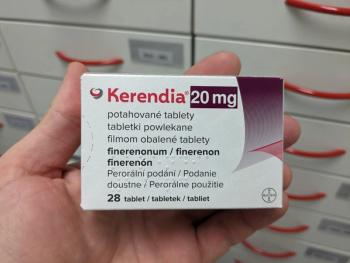
Finerenone slows nondiabetic chronic kidney disease, improving eGFR slope and signaling a possible FDA expansion.

Novo Nordisk's Nicky Kelepouris, MD, discusses the REAL8 trial, the expanded pediatric indications for once-weekly somapacitan, and the pharmacist's role in supporting families navigating long-term growth hormone therapy.

Sibeprenlimab, a new APRIL blocker, cuts proteinuria in IgA nephropathy.

Patients receiving dialysis with primary care physicians had lower rates of emergency department visits compared with those without primary care involvement.

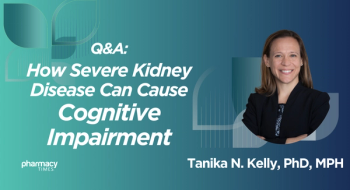
Tanika Kelly, PhD, MPH, discusses her study finding that greater chronic kidney disease (CKD) severity significantly increases the risk of cognitive impairment, with important implications for how pharmacists counsel and support these patients.

Navepegritide becomes the first and only once-weekly treatment to increase linear growth in children with achondroplasia.

Pegvaliase becomes the only enzyme substitution therapy approved to reduce blood phenylalanine concentrations in patients with phenylketonuria.
FDA priority review of rusfertide signals a new PV option, cutting phlebotomy reliance and improving hematocrit control, with pharmacists guiding injections and safety.

Somapacitan-beco becomes the first and only once-weekly growth hormone approved for children with idiopathic short stature, those born small for gestational age, and those with Noonan syndrome, offering an alternative to daily injections.

A large cohort study found that urate-lowering therapy was associated with a reduction in risk for composite kidney outcomes in patients with stage 3 or higher chronic kidney disease (CKD) and hyperuricemia.

A new cohort study found that proteinuria and lower eGFR—particularly in combination—were prospectively associated with multiple domains of cognitive impairment in patients with chronic kidney disease (CKD).

Pitolisant is now the first and only FDA-approved nonscheduled treatment for cataplexy in pediatric and adult patients with narcolepsy.

Incretin-based therapies were associated with a lower risk of dementia compared with sulfonylureas in older adults with type 2 diabetes, highlighting potential cognitive benefits relevant to long-term diabetes management.

Pharmacists are central to optimizing chronic kidney disease (CKD) diagnosis and monitoring long-term adherence to disease-modifying therapies.
Advertisement
Advertisement
Trending on Pharmacy Times
1
Peptide Compounding Is Evolving: What Pharmacists Need to Know Now
2
Dostarlimab Receives FDA Accelerated Approval for MSI-H/dMMR Locally Advanced Rectal Cancer
3
Finerenone in Heart Failure: Evidence and Practice a Year Later
4
FDA Approves Phentolamine Eye Drop for Presbyopia in Adults
5