Rather than requiring a new trial, the FDA extended evidence from carcinoma in situ to high-grade papillary-only disease, a new approach for this setting.
The PD-1 inhibitor is the first immunotherapy approved for stage II and III MSI-H/dMMR locally advanced rectal cancer and may allow eligible patients to avoid chemotherapy, radiation, and surgery.
The FDA has granted accelerated approval to dostarlimab-gxly (Jemperli; GSK) as a single agent for adults with stage 2 or 3 locally advanced rectal cancer that is microsatellite instability-high (MSI-H) or mismatch repair deficient (dMMR), as determined by an FDA-authorized test. The decision makes dostarlimab the first and only immunotherapy approved for this population, according to news releases announcing the accelerated approval.1,2
“Standard treatment for rectal cancer has major life-changing effects. For certain types of rectal cancer, this approval represents a groundbreaking option that avoids surgery, radiation, and chemotherapy. This represents a significant benefit for patients and their families,” Angelo de Claro, MD, director of the FDA’s Oncology Center of Excellence, said in a news release. “The FDA is acting on emerging evidence to bring new approaches to patients sooner, while requiring further studies to confirm that these treatments provide lasting benefits.”1
Typically, patients with locally advanced rectal cancer receive chemotherapy and radiation before surgery, treatments that can affect bowel, urinary, and sexual function, as well as fertility. Surgery also carries a risk of serious complications, including poor healing and anastomotic leaks, and some patients require a permanent colostomy.1 GSK also noted that there is a risk of secondary cancers associated with current standard treatment.2
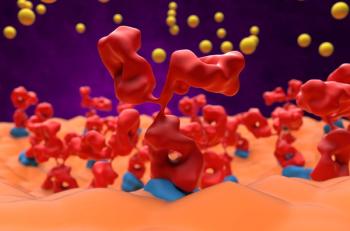
MSI-H and dMMR both describe a defect in the system cancer cells use to correct errors when copying DNA. As errors accumulate, tumors produce proteins the immune system can recognize, making them particularly vulnerable to immunotherapy. Dostarlimab, a programmed death receptor-1 (PD-1)–blocking antibody, works by blocking a signal cancer cells use to evade immune attack.1,2 According to the FDA, published estimates suggest approximately 3% of LARCs are dMMR or MSI-H; GSK cites a prevalence of around 5% to 10% across rectal cancers.1,2
The approval was based on interim results from AZUR-1 (NCT05723562)3, a global, open-label, single-arm, phase 2 trial of dostarlimab monotherapy in 154 patients with previously untreated stage II or III MSI-H/dMMR LARC. Patients received dostarlimab 500 mg as an intravenous infusion every 3 weeks for 9 cycles over 6 months. The primary end point is sustained clinical complete response at 12 months (cCR12) by independent central review (ICR).1,2,4
Investigator-assessed data, a clinically relevant end point, showed approximately 68% (n = 98; 95% CI, 60%-76%) of evaluable patients achieved a cCR12. In an exploratory analysis, 76% (n = 110; 95% CI, 69%-83%) of evaluable patients had no evidence of cancer one year or more after treatment. This also includes 68% (n = 98; 95% CI, 60%-76%) of patients who reached cCR12 without surgery, plus an additional 12 participants who had their complete response confirmed through tissue analysis after surgery. There were no disease recurrences reported among responders to date, after a median follow-up of more than 2 years.2
According to the news release from GSK, data on the primary objective, cCR12, continue to mature. Approximately 47% (n = 54; 95% CI: 37%, 56%) of evaluable patients have achieved cCR12. An additional 38 participants who are still progressing through to the 12-month follow-up have already achieved a clinically complete response.2
Generally, the safety profile presented in AZUR-1 was consistent with the established profile of dostarlimab across other solid tumors. Serious adverse events (AEs) occurred in approximately 20% of patients, and the most common AEs reported were fatigue (32%), rash (22%), diarrhea (18%), and pruritus (17%). Treatment was permanently discontinued because of AEs in approximately 3% of patients.2,4 The most common grade 3 or 4 laboratory abnormalities were decreased lymphocytes, decreased hemoglobin, and increased aspartate aminotransferase.2
As with other PD-1/PD-L1–blocking antibodies, dostarlimab can cause immune-mediated adverse reactions in any organ system, which may be severe or fatal and can occur during or after treatment. The prescribing information recommends evaluating liver enzymes, creatinine, and thyroid function at baseline and periodically during treatment, and withholding or permanently discontinuing therapy based on severity. Patients of reproductive potential should use effective contraception during treatment and for 4 months after the last dose.2
Further, the FDA also cited an earlier Memorial Sloan Kettering study (NCT04165772)5 of dostarlimab monotherapy in 50 patients with previously untreated MSI-H/dMMR LARC. None of the patients had detectable signs of cancer after treatment, and 93% maintained that status for at least 12 months. Among 27 patients followed for at least 3 years, 1 experienced a recurrence, which occurred locally.1,2
Dostarlimab received fast track and breakthrough therapy designations for this indication, and the application was granted priority review. The approval is the 11th for a drug reviewed under the Commissioner’s National Priority Voucher pilot program.1,2 Because the indication was approved based on sustained clinical complete response at 12 months, the long-term risk of relapse is unknown, and continued approval may be contingent on verification of clinical benefit in confirmatory trials.2
“Today, [dostarlimab] becomes the first and only approved immunotherapy for adults in the US with MSI-H/dMMR locally advanced rectal cancer. For decades, treatment has relied on chemotherapy, radiation, and surgery,” Tony Wood, Chief Scientific Officer, GSK, said in a news release. “This approval offers a new treatment approach and represents an important step towards more personalized care for these patients.”2