

In this video, experts who attended the 2025 International Myeloma Society (IMS) Annual Meeting highlighted topics of interest as well as pivotal data.
In this video, experts who attended the 2025 International Myeloma Society (IMS) Annual Meeting highlighted topics of interest as well as pivotal data.

A real-world study at MSK reveals promising efficacy and safety of second-generation BTK inhibitors in mantle cell lymphoma treatment, influencing future guidelines.

A federal pricing pact with Pfizer and an executive order on pediatric cancer AI may reshape affordability and evidence pathways for pharmacists and patients.
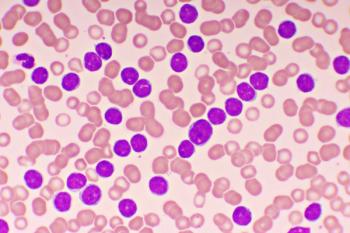
Umoja Biopharma's UB-VV111 gains FDA fast track designation, revolutionizing CAR T-cell therapy for relapsed lymphoma and leukemia patients.

Cevostamab shows promise as a post-CAR T therapy for relapsed/refractory multiple myeloma, enhancing MRD-negative responses and improving patient outcomes.
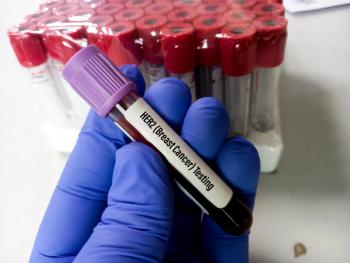
Recent trials reveal fam-trastuzumab deruxtecan-nxki's potential to transform treatment for patients with high-risk HER2-positive breast cancer, enhancing survival rates significantly.
Alice Wang, PharmD, BCOP, discusses the rapid infusion of isatuximab for multiple myeloma, highlighting its benefits, safety, and improved patient convenience in treatment.

Pharmacists lead the charge in integrating pharmacogenetics into patient care, overcoming education barriers and enhancing treatment outcomes through expert guidance.
Adam Kahleifeh, PharmD, BCOP, discusses the impact of IDH mutations in low-grade gliomas.
Mary Nauffal, PharmD, MS, BCOP, discusses innovative use of isatuximab for red cell aplasia post stem cell transplant, highlighting its potential in clinical trials.

Etentamig shows promise in managing infections for relapsed/refractory multiple myeloma.
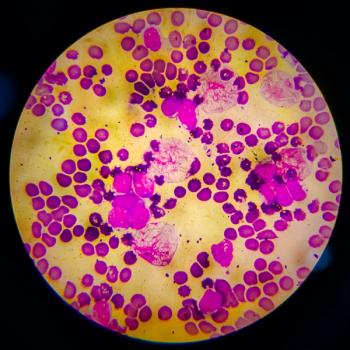
Patients with newly diagnosed transplant-eligible multiple myeloma (NDTE-MM) had high rates of complete response and minimal residual disease–negativity.

Anitocabtagene autoleucel shows impressive efficacy and safety in treating relapsed/refractory multiple myeloma, achieving a 97% overall response rate.

Pharmacists play a crucial role in managing drug interactions and optimizing treatment with CDK4/6 inhibitors for HER2-positive breast cancer patients.

Pharmacists should leverage their accessibility to boost immunization rates among individuals undergoing cancer treatment.
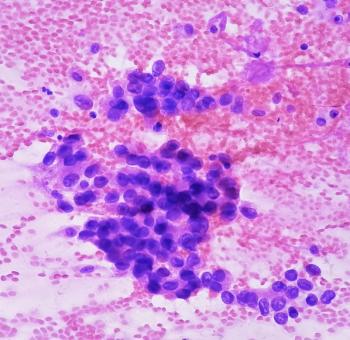
Interim trial data presented at the 2025 World Conference on Lung Cancer shows pumitamig’s promising efficacy in patients with extensive stage small cell lung cancer (ES-SCLC).
Pharmacists enhance patient care by managing CDK4/6 inhibitors, addressing adverse effects and ensuring effective therapy selection in oncology.
The approval is supported by clinical findings from the EMBER-3 trial.
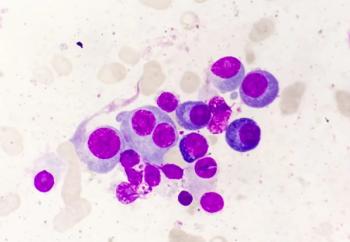
In a dose-escalation portion of LINKER-MM4, linvoseltamab monotherapy demonstrated a high overall response rate (ORR) and minimal residual disease (MRD) negativity in both transplant-eligible and transplant-ineligible patients with newly diagnosed multiple myeloma (NDMM).

New IMWG/IMS guidelines enhance risk assessment for multiple myeloma, revealing daratumumab's impact on patient outcomes in real-world settings.

Pharmacists navigate the evolving hematology-oncology landscape, utilizing genetic insights and innovative therapies to enhance patient care.

New research links rapid CAR T-cell expansion to delayed neurotoxicity in patients with multiple myeloma.

Hercessi shows promising efficacy and safety in treating HER2+ metastatic breast cancer (MBC), with no significant risks from switching from Herceptin.
Pharmacists navigate rapid oncology drug therapy changes, enhancing patient care through education, biomarker insights, and tailored counseling strategies.

Elranatamab enhances MRD negativity in relapsed/refractory multiple myeloma post idecabtagene vicleucel, promising improved treatment outcomes.

Explore the impact of CDK4/6 inhibitors in HR+/HER2– breast cancer treatment and the essential role of oncology pharmacy practice.

New clinical trial results reveal that giredestrant combined with everolimus significantly enhances progression-free survival in patients with advanced ER-positive breast cancer.
Belantamab mafodotin with bortezomib shows promising survival benefits for lenalidomide-refractory multiple myeloma patients.
Idecabtagene vicleucel shows a lower infection risk than other BCMA therapies for multiple myeloma.
Linvoseltamab combined with carfilzomib shows promising results in treating relapsed/refractory multiple myeloma.