

Numerous clinical trials are investigating the next generation of PARPi.
Numerous clinical trials are investigating the next generation of PARPi.

Cancer screening rates were still below the expected rates of return in both 2021 and 2022.

Investigators hope that new findings can cultivate new methods of facilitating immune response to attack lung tumors.

In a fact sheet released by the White House, President Joseph Biden called a $35 monthly cap on insulin for all Americans a “commonsense, life-saving protection.”
Approval of a novel antibody-drug conjugate ushers in new second-line option.

These agents are likely to become the mainstay of cancer treatment in the very near future.
Isatuximab and daratumumab offer promising treatment options for previously treated multiple myeloma.
Patients with triple-negative breast cancer treated with veliparib had statistically significantly longer survival than those given placebo.

Ultra-processed food consumption linked to an increased risk of developing and dying from ovarian cancer and breast cancer.

Sacituzumab govitecan-hziy (Trodelvy) is a conjugated Trop-2-directed antibody and topoisomerase inhibitor previously approved for patients with triple-negative breast cancer.

Artificial intelligence technology is integrated into the services and products we use every day in our personal and professional lives.
The trial is the first randomized phase 3 study evaluating the efficacy and safety of ciltacabtagene autoleucel patients with relapsed and lenalidomide-refractory multiple myeloma.

In the United States, 91% of states had lower rates of targeted therapy use than expected.

Change is upon us, and opportunities for advancing treatment opportunities for patients continue to look strong.
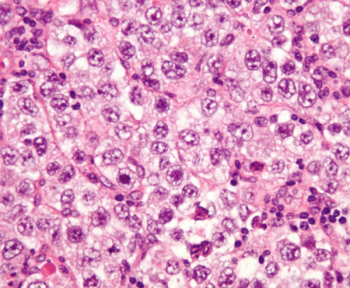
Lisocabtagene maraleucel is a CD19-directed CAR T-cell therapy with a 4-1BB costimulatory domain, which enhances the expansion and persistence of the CAR T cells.
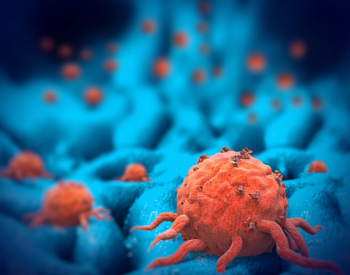
New UC Davis study finds relationship between tumor microbiome and immune system in patients with soft tissue sarcoma.
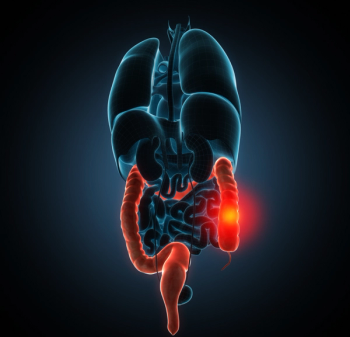
Patients who received first-line ICI showed a significant improvement in progression-free survival (PFS) and overall survival (OS) compared to chemotherapy treatment.
Pembrolizumab approved as adjuvant treatment following surgical resection and platinum-based chemotherapy for patients with stage IB, II, or IIIA non-small cell lung cancer.
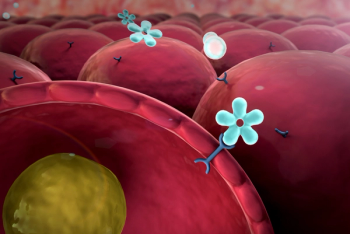
Findings suggest cancer may have overtaken cardiovascular disease as a leading cause of death in individuals with type 2 diabetes.

Relatively higher suicide risks were observed for cancer types with a poor prognosis and high symptom burden in the first 2 years after diagnosis.

Most individuals who used cannabis to manage their chronic pain reported using it in place of other pain medications, including opioids.
Chronochemotherapy aims to time drug delivery when the body is the least vulnerable to harmful effects, while the cancer cells are the most vulnerable.
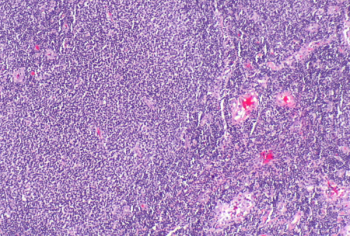
At leukapheresis, a low frequency of differentiated CD3+CD27-CD28--T cells can indicate favorable response to CAR T-cell therapy.
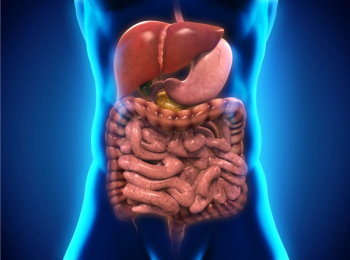
Zolbetuximab treatment reduced risk of death by 25% compared to placebo.
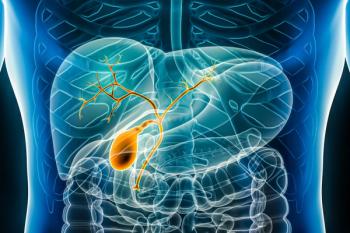
Specific data and results for pembrolizumab in patients with advanced or unresectable biliary tract cancer will be presented at an upcoming medical meeting and will be submitted to regulatory authorities.

New findings reveal the previously misunderstood mechanism by which PCSK9 degrades the low-density lipoprotein receptor.
In patients with HER2-expressing metastatic gastroesophageal adenocarcinoma administered zanidatamab, the median duration of response was 20.4 months, with a median progression-free survival of 12.5 months.
Overall survival data were immature at the time of interim analysis and follow-up will continue to the next analysis.

During the COVID-19 pandemic, patients were able to utilize telehealth services to receive care more conveniently, which may reduce the cost of care.

Patients who received the interventions reported improved anxiety and pain levels.