

Ronald T. Piervincenzi, PhD, CEO of US Pharmacopeia, discusses what stands out as the biggest challenge from the past year and what role USP and pharmacists had in overcoming that challenge.
Ronald T. Piervincenzi, PhD, CEO of US Pharmacopeia, discusses what stands out as the biggest challenge from the past year and what role USP and pharmacists had in overcoming that challenge.

Luciano Costa, MD, PhD, associate director for clinical research at the O’Neal Comprehensive Cancer Center at the University of Alabama at Birmingham, on the safety and efficacy of Dara-KRd in the treatment of patients with newly diagnosed multiple myeloma.
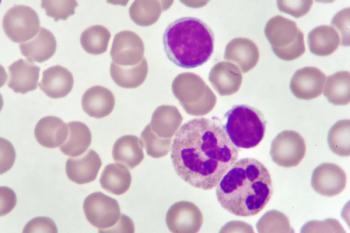
Jacob D. Soumerai, MD, of Harvard Medical School and Massachusetts General Hospital, addresses the primary endpoint in the trial assessing zanubrutinib, obinutuzumab, and venetoclax in previously untreated chronic lymphocytic leukemia.

Mean changes from baseline in weight, fasting glucose, total cholesterol, triglycerides, and low-density lipoprotein cholesterol were similar between lumateperone and placebo.

Sarah Temkin, MD, associate director for clinical research in the Office of Research on Women’s Health (ORWH) at the National Institutes of Health (NIH), discusses how the work of the NIH ORWH impacts pharmacy practice.

The Board of Trustees of APhA addresses 5 areas in their statement, including importance of wellbeing, root causes of pharmacist burnout, pharmacy benefit manager issues, need for provider status, and some potential solutions.

The updated oath has entered into the modern era with more inclusive and contemporary language.

Help patients choose appropriate medications and direct them to a physician, when necessary

Although marginal zone lymphoma is relatively rare, it contains a broad spectrum of conditions under it that require an individualized treatment selection process.
Multiple myeloma has remarkable genetic heterogeneity, which can make it challenging to identify proper prognostication and clinical management for patients.

Investigators in a clinical study evaluating the safety, tolerability, and immunogenicity of the Pfizer-BioNTech COVID-19 vaccine in children aged 6 months to under 5 years noted that their research will continue with new changes.

Abatacept is also approved for adults with moderate to severe rheumatoid arthritis, active psoriatic arthritis, and moderate to severe polyarticular juvenile idiopathic arthritis for children 2 years of age and older.

The treatment was first approved in 2013 for adults as a 1500 mg course of treatment, administered as 2 doses of 750 mg each separated by at least 7 days.
Jacob D. Soumerai, MD, of Harvard Medical School and Massachusetts General Hospital, discusses minimum residual disease-driven time limited therapy with zanubrutinib, obinutuzumab, and venetoclax in previously untreated chronic lymphocytic leukemia.

Laura Lee Hall, PhD, president of the Center for Sustainable Health Care Quality and Equity, addresses disparities occurring in diabetes care among racial and ethnic populations.

Sarah Temkin, MD, associate director for clinical research in the Office of Research on Women’s Health (ORWH) at the National Institutes of Health (NIH), discusses the scope and focus of the work of NIH ORWH.

A panel of experts discuss the future of psychedelic medicine and the role of the pharmacy in that future.

Cutaquig was recently approved for the treatment of pediatric patients aged 2 years and older with primary humoral immunodeficiency.

Study may help guide COVID-19 vaccination strategies for patients with blood disorders.

Study shows moderately reduced efficacy of the Moderna COVID-19 vaccine over time against Delta infection, which supports current booster dose recommendations.
Trial seeks to provide high-level evidence for improving the initial treatment for acute Kawasaki disease.

A single booster dose of the GlaxoSmithKline and Sanofi recombinant adjuvanted COVID-19 vaccine candidate delivered consistent and strong immune responses.

Up to 60% of arteriovenous fistulas fail to develop properly due to smooth muscle cell hyperplasia.

This trial is the first to assess the use of isatuximab as a first-line treatment for newly diagnosed, transplant-eligible patients up to 70 years of age, according to the study authors.

Patients with hormone receptor-positive breast cancer doubled their median progression-free survival following a switch to fulvestrant plus palbociclib.

Patients with breast cancer treated with pyrotinib plus capecitabine had a 31% lower risk of death than those treated with lapatinib and capecitabine

New technology provides information on the benefit of adding atezolizumab to chemotherapy as a neoadjuvant treatment for patients with early high-risk and locally advanced triple-negative breast cancer.

Zofran aids in the prevention of nausea and vomiting.

Experts reviewed the efficacy and safety of the recommended treatment regimens and discussed which treatment strategy they would recommend for their patients.

NRx Pharmaceuticals announces that no new concerns were identified by an independent data safety monitoring board, which recommends continued enrollment.