
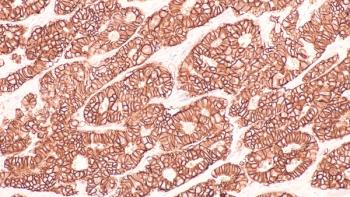
Antibody-drug conjugates have revolutionized metastatic breast cancer treatment and classification.
Antibody-drug conjugates have revolutionized metastatic breast cancer treatment and classification.

Panelists discuss how there have been many new agents being studied and released at the current time and how the development of these agents is moving at a rapid pace. The adverse effect profiles of newer antibody-drug conjugates create a greater opportunity for pharmacists to be involved in toxicity management.
Panelists discuss how optimizing antibody-drug conjugate (ADC) therapy in patients with metastatic breast cancer (mBC) requires interdisciplinary care, including oncologists, pharmacists, and nurses. Adherence barriers such as cost, access, and insurance are addressed via financial and social support.
Panelists discuss how health care professionals use clear, tailored communication to explain antibody-drug conjugate (ADC) risks, benefits, and regimens. They provide education, address concerns, and ensure adherence through counseling and shared decision-making.
Panelists discuss how health care professionals use standardized antibody-drug conjugate (ADC) pathways to guide dosing, adverse effect (AE) management, and transitions. Protocols ensure monitoring, toxicity mitigation, and seamless shifts between therapies for optimal care.
Panelists discuss how pharmacists should monitor neutropenia, diarrhea, and mucositis from sacituzumab govitecan (SG); interstitial lung disease (ILD) and neutropenia from trastuzumab deruxtecan (T-DXd); and neutropenia and ILD from datopotamab deruxtecan (Dato-DXd). Proactive management is essential for patient safety.
Panelists discuss how antibody-drug conjugates (ADCs) often cause toxic adverse events (AEs). Supportive care includes antiemetics, corticosteroids, and growth factors. Infusion reactions are managed with premedication and slow titration.
Panelists discuss how antibody-drug conjugates (ADCs) often show more diverse outcomes in real-world settings compared with clinical trials, with varying efficacy and adverse effect profiles. Key practical considerations for pharmacists include appropriate dosing based on patient factors, managing drug interactions, implementing premedication protocols to minimize adverse reactions, and providing comprehensive supportive care. Careful monitoring and individualized patient management are essential for optimal therapeutic outcomes.
Panelists discuss how patient characteristics significantly impact antibody-drug conjugate (ADC) therapy selection, with key factors including the presence and location of brain metastases (due to blood-brain barrier penetration), organ function and comorbidities affecting toxicity risks, and prior treatment history that may influence both efficacy and safety. Treatment decisions require careful individualization.
Panelists discuss how emerging antibody-drug conjugates (ADCs) in metastatic breast cancer (mBC) treatment demonstrate innovation through optimized drug-to-antibody ratios, novel payloads, and targeted approaches to different breast cancer subtypes. Key trials explore combinations with established therapies and potential for improved tolerability profiles. Additional notable studies include comparative effectiveness research between approved ADCs and investigation of biomarker-driven patient selection strategies to maximize therapeutic benefit while minimizing adverse effects.
Panelists discuss how when making antibody-drug conjugate (ADC) treatment decisions for patients with metastatic breast cancer (mBC), pharmacists primarily consider patient-specific factors such as biomarker status, prior therapies, disease burden, and comorbidities. ADCs are typically introduced after standard first-line treatments show inadequacy or in specific molecular subtypes that demonstrate strong responses to targeted therapy.
Panelists discuss how antibody-drug conjugates (ADCs) for breast cancer (BC) differ in their safety profiles, with trastuzumab deruxtecan (T-DXd) having notable interstitial lung disease risk, sacituzumab govitecan (SG) associated with neutropenia/diarrhea, and datopotamab deruxtecan (Dato-DXd) showing a relatively favorable safety profile but still requiring monitoring.
Panelists discuss how HER2 testing optimization requires multisite sampling and quantitative assessment methods to account for intratumoral heterogeneity. Beyond HER2, biomarkers such as PI3K mutations, hormone receptor status, and tumor mutational burden can guide therapy selection for metastatic breast cancer (mBC), enabling more personalized treatment approaches.
Panelists discuss how antibody-drug conjugates (ADCs) show varying efficacy and adverse event (AE) profiles based on their payload potency, linker stability, and drug-to-antibody ratio. Cleavable linkers enable targeted drug release but may increase toxicity, while noncleavable designs offer better stability. Payload selection impacts both therapeutic index and AEs, with more potent warheads requiring careful optimization of targeting and release kinetics.
Panelists discuss how antibody-drug conjugates (ADCs) combine monoclonal antibodies with cytotoxic payloads, enabling precise targeting of breast cancer (BC) cells through specific antigen recognition. Upon binding, the ADC-antigen complex is internalized, releasing the toxic payload inside cancer cells while largely sparing healthy tissue. This targeted approach offers improved efficacy and reduces systemic toxicity compared with traditional chemotherapy's broad cytotoxic effects.
Panelists discuss how the National Comprehensive Cancer Network (NCCN) and American Society of Clinical Oncology (ASCO)/College of American Pathologists (CAP) guidelines for HER2-negative breast cancer (BC) have evolved to recognize HER2-low (IHC 1+ or 2+/ISH-negative) and HER2-ultra low (IHC 0) as distinct categories. These classifications, particularly HER2-low, guide eligibility for targeted therapies such as trastuzumab deruxtecan, expanding treatment options beyond traditional chemotherapy for previously categorized HER2-negative patients.