Craig Beavers, PharmD, discusses a new American College of Cardiology expert consensus decision pathway that shifts HFpEF management from ejection fraction alone toward phenotype-driven diagnosis and treatment.
Craig Beavers, PharmD, discusses a new American College of Cardiology expert consensus decision pathway that shifts HFpEF management from ejection fraction alone toward phenotype-driven diagnosis and treatment.
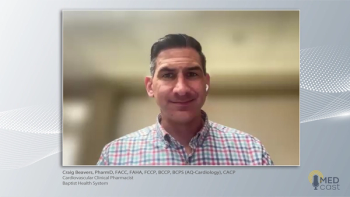
Craig Beavers shares takeaways on congestion-monitoring tools, self-education, and pharmacist advocacy in preventing heart failure readmissions.
Craig Beavers previews the ReadyFlow autoinjector, a seconds-long subcutaneous furosemide dose that could reshape at-home heart failure care.
Craig Beavers details how pharmacists coordinate Furoscix from identification through discharge—and how to build a diuresis model from scratch.
Robert J. DiDomenico, PharmD, FAHA, discusses the new AHA scientific statement on identifying and safely deprescribing unnecessary medications in patients with cardiovascular disease.
Craig Beavers breaks down how Furoscix works, which patients are candidates, and what pharmacists should track once therapy begins at home.
Craig Beavers explains what worsening congestion looks like clinically and why oral furosemide fails right when patients with heart failure need it most.
Lavinia Salama, PharmD, joins Craig Beavers, PharmD, to discuss implementing the 2026 CKM guidelines in clinical practice.
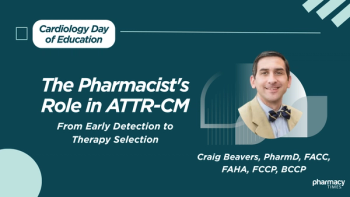
Craig Beavers, PharmD, discusses transthyretin amyloidosis cardiomyopathy (ATTR-CM) red flags, treatment evidence, and how pharmacists can drive earlier diagnosis and improve patient outcomes.
Craig Beavers, PharmD, shares his initial thoughts on the new 2026 CKM guidelines, which highlights a landmark shift in cardiovascular care.
Craig Beavers highlights 3 major developments in cardiovascular and cardiometabolic medicine that pharmacists should have on their radar.
Rhonda Monroe discusses her harrowing journey as a 3-time heart attack and stroke survivor, highlighting the critical importance of patient self-advocacy.
Pharmacists' role in lipid management takes center stage with the 2026 dyslipidemia guideline update.
Craig Beavers urges pharmacists to engage with obstructive hypertrophic cardiomyopathy (oHCM) management and explains how the alignment between mavacamten's clinical trial data and real-world outcomes validates its role as a safe, effective, and sustainable long-term therapy.
Craig Beavers discusses how mavacamten's established long-term safety data strengthen shared decision-making conversations, and outlines best practices for multidisciplinary collaboration when implementing cardiac myosin inhibitor therapy in patients with obstructive hypertrophic cardiomyopathy (oHCM).
Emerging therapies, AI, and patient-centered approaches are reshaping cardiovascular pharmacy.
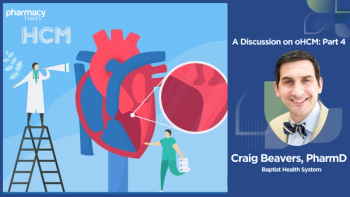
Craig Beavers explains how mavacamten's REMS program and its clearly defined echo-based monitoring protocols create a unique opportunity for pharmacists to take an active role in managing patients with obstructive hypertrophic cardiomyopathy (oHCM).
Artificial intelligence is emerging as a vital tool for pharmacists in cardiovascular care—supporting clinical decisions, patient education, and adherence while maintaining guideline alignment.
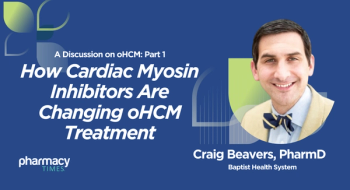
Craig Beavers, PharmD, FACC, FAHA, FCCP, BCCP, BCPS-AQ Cardiology, CACP, breaks down the key distinctions between obstructive and nonobstructive hypertrophic cardiomyopathy (oHCM) and explains how cardiac myosin inhibitors target the underlying disease mechanism.
Explore how pharmacists elevate electrophysiology care and get a preview of ACC 2026 trials on AF, HFpEF, pulmonary embolism, and hypertension.
Despite persistent gaps in cardiovascular risk management, pharmacists are proving essential in improving LDL control, guiding statin use, and supporting evidence-based care across clinical settings.
Pharmacists have become central to titration, access, patient education, and logistics as GLP-1 use grows and cardiometabolic management evolves.
Experts discuss guideline adoption, therapeutic advances, and team-based care.
Experts discuss practice expansion, guideline updates, and team-based care.
Allison Burnett, PharmD, joins The Tell-Tale Heart to break down the first-ever ACC/AHA acute pulmonary embolism guidelines.
Craig Beavers, PharmD, explores new phase 3 evidence on factor XIa inhibitors for secondary stroke prevention, highlighting OCEANIC-STROKE results, safety, and patient selection.
Host Craig Beavers explores why US blood pressure control still lags despite proven treatments.
Craig Beavers is joined by the investigators of the POLY-HF trial to reinforce the critical role of pharmacist counseling and education in treating patients with heart failure.
Craig Beavers and Kyle Fischer, PharmD, BCCP, MBA, discuss key late-breaking cardiovascular trials expected at the American Heart Association’s upcoming annual meeting, exploring their clinical relevance and implications for pharmacists.
Prior to the 2025 American Heart Association (AHA) Scientific Sessions Meeting, Craig J. Beavers, PharmD, FACC, FAHA, FCCP, BCCP, BCPS (AQ-Cardiology), CACP, discusses two recent papers that are influencing practice within the cardiovascular space.
July 27th 2026
April 22nd 2025
October 7th 2025