
Opinion|Videos|July 20, 2026
Furoscix in Practice: Selection, Delivery, Monitoring
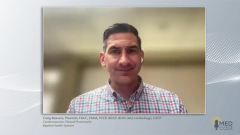
Craig Beavers breaks down how Furoscix works, which patients are candidates, and what pharmacists should track once therapy begins at home.
Advertisement
Craig Beavers orients listeners to what Furoscix is and how it differs from oral and IV furosemide. Structurally, it is the furosemide clinicians already know, but pH-neutralized to permit subcutaneous administration. He describes the delivery mechanism: an 80 mg vial in a pre-programmed on-body infuser that attaches to the patient—typically on the abdomen—delivering 30 mg over the first hour and roughly 12.5 mg per hour across the next four, for a 5-hour total, after which the device is removed and discarded. Bypassing the GI tract provides the high bioavailability needed to reach the diuretic threshold in heart failure, chronic kidney disease, or both. On patient selection, Beavers describes several overlapping criteria: patients inadequately diuresed or showing congestion despite oral therapy, transitions-of-care patients discharged earlier than ideal who still need IV-level diuresis, and patients decompensating again after adequate diuresis. He also cites settings without a diuretic clinic and works with skilled nursing facilities. For monitoring, he tracks weights as the primary barometer, urine output, and periodic labs—sodium, potassium, BUN, and creatinine—noting the safety profile mirrors conventional furosemide without dramatic electrolyte shifts.
Advertisement
Related to this article
Phase 3 Krascendo 1 results suggest investigational divarasib could improve survival compared with currently approved KRAS G12C inhibitors in previously treated NSCLC.

This study found that use of fixed-dose 4F-PCC is a safe, efficient alternative to weight-based dosing and can lead to cost savings for the health system.

Tucatinib’s new HER2-positive breast cancer maintenance indication extends disease control while requiring close liver monitoring and pharmacist coordination of oral therapy with ongoing antibody treatment.

Impostor syndrome prevalence in oncology pharmacists is a complex topic that is not well described.

This quiz was created in collaboration with PTCE™.

Pharmacy professionals can leverage LinkedIn to build a professional brand, expand meaningful connections, share expertise, and create opportunities for career growth.

An Italian pharmacy student offers an inside look at pharmacy education in Italy, from admission and coursework to oral exams and professional training.

The PD-1 inhibitor is the first immunotherapy approved for stage II and III MSI-H/dMMR locally advanced rectal cancer and may allow eligible patients to avoid chemotherapy, radiation, and surgery.
Advertisement
Advertisement
Trending on Pharmacy Times
1
Peptide Compounding Is Evolving: What Pharmacists Need to Know Now
2
VAX-31 Meets All Primary End Points vs PCV20 and PCV21 in Pivotal Phase 3 OPUS-1 Trial
3
Dostarlimab Receives FDA Accelerated Approval for MSI-H/dMMR Locally Advanced Rectal Cancer
4
Fall 2026 Quiz: Test Your Pharmacy Knowledge!
5