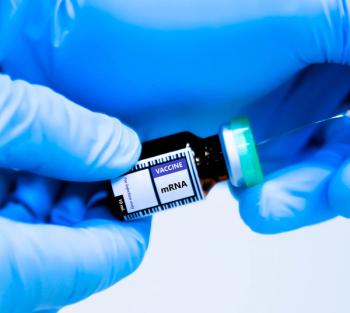
The data help pharmacists predict who will react strongly to mRNA vaccines—giving them a science-backed talking point during respiratory season.
Temperature differences between exhaled air and ambient environments significantly affect how respiratory aerosols disperse.
When an individual coughs or sneezes, they expel microscopic particles capable of carrying viruses and bacteria that cause respiratory diseases such as influenza, COVID-19, and tuberculosis. Understanding how these aerosols disperse in the air is critical for minimizing pathogen transmission in indoor spaces, especially high-risk settings like pharmacies. Until recently, researchers assumed that ambient temperature was a relatively minor factor in aerosol behavior.1
A new study published in Physics of Fluids by researchers from Universitat Rovira i Virgili (URV) found that temperature differences between exhaled air and ambient air play a significant role in determining how far respiratory aerosols travel and how concentrated they remain. The research team conducted 180 experiments across different temperature conditions, using advanced high-speed cameras and laser visualization systems to track aerosol behavior in environments ranging from 7 to 27 °C.2
"Initially, we thought it might be an experimental error, but after careful analysis, we found that the temperature difference between exhaled air and the ambient environment reduced entrainment and increased cloud coherence, allowing the cloud to travel farther than expected,” Nicolás Catalán, study coauthor and a researcher in the URV’s Department of Mechanical Engineering, said in an email interview with Pharmacy Times. “In previous studies, ambient temperature was typically kept constant, which made this effect difficult to observe. These results suggest that buoyancy-driven and potentially baroclinic effects [ie, flow structures arising from density differences induced by temperature gradients] play an important role in aerosol transport."
The study also confirmed that respiratory system geometry significantly influences aerosol behavior. When airflow passes partially through the nose, the horizontal range is reduced while vertical dispersion increases. In contrast, when exhalation occurs exclusively through the mouth—for example, during a cough—the aerosol cloud tends to advance more horizontally. This combination of temperature, exhalation intensity, and nasal involvement creates very different transmission scenarios depending on environmental conditions.2
"These findings suggest that infection control measures should consider the significant differences in aerosol dispersion between nasal and oral coughs and sneezes. Rather than assuming a single dispersion pattern, future studies should evaluate these different scenarios in realistic hospital-room environments and test ventilation strategies to identify the most effective ways to remove airborne particles and reduce transmission risk," Catalán explained.
One of the most practical findings from the research relates to fever. The study heated exhaled air to 37 °C to mimic a person with a slight fever, revealing that greater temperature differences between the body and ambient air cause aerosol clouds to remain more cohesive and travel greater distances. This suggests that febrile patients—or those with elevated body temperatures—may be more contagious than their afebrile counterparts, at least in terms of aerosol transmission dynamics.2
This finding has significant implications for public health messaging and workplace policies in pharmacy settings. Employees and patients with fevers may pose a greater transmission risk than previously understood, suggesting that fever management and sick leave policies warrant particular attention during peak respiratory illness seasons.
Current respiratory disease control protocols rely on a range of interventions, including vaccination, respiratory hygiene, physical distancing, and respiratory protection equipment. These measures remain important. However, the new understanding of temperature-dependent aerosol behavior suggests that pharmacy design and ventilation strategies deserve closer examination.3
When asked what specific ventilation or environmental controls pharmacies should implement during peak respiratory illness seasons, Catalán recommends a layered approach. "Ventilation is key to ensuring proper air exchange, and temperature may also affect aerosol behavior, although it has to be balanced with comfort and energy use. In addition, certified masks such as FFP2s provide an important level of protection. For now, until new ventilation strategies are properly tested, the safest option is to rely on well-established infection-control measures,” he said.
Public health authorities emphasize that ensuring adequate ventilation throughout work environments with outside air or filtering can help promote a safe and healthy workplace. Employers should consider working with qualified HVAC professionals to determine steps necessary to optimize building ventilation, particularly in customer-facing areas where exposure risk is highest.4
The URV research team's use of a 3-dimensional-printed human airway model provided unprecedented experimental control over variables such as flow rate, temperature, and respiratory geometry. This controlled approach generated highly valuable data to feed computational models capable of more accurately simulating aerosol dynamics and disease transmission.2
However, researchers stressed that actual respiratory aerosol behavior is extremely complex and that additional research into factors such as humidity, ventilation, and the persistence of suspended particles remains essential. The new findings open the door to more sophisticated infection control strategies specifically tailored to pharmacy environments—but implementing these strategies will require additional research and careful validation.