News|Articles|July 23, 2026

Two Weeks In: What the Medicare GLP-1 Bridge Actually Looks Like at the Counter

Listen
0:00 / 0:00

Key Takeaways

  • Automatic first-fill claim rejection functions as a prior-authorization trigger, not a coverage determination, and requires proactive patient counseling to prevent abandonment.
  • Submitting claims through the patient’s usual Part D BIN/PCN instead of 028918/MEDDGLP1BR produces denial-like rejections that never reach the Bridge processor.
SHOW MORE

The first 2 weeks have produced a specific, recurring set of counter-level problems that have nothing to do with clinical appropriateness.

The Medicare Glucagon-Like Peptide-1 (GLP-1) Bridge launched July 1, 2026, giving eligible Part D beneficiaries access to semaglutide (Wegovy; Novo Nordisk), tirzepatide (Zepbound; Eli Lilly), and orforglipron (Foundayo; Lilly) for a flat $50 copay through December 2027.1 It runs entirely outside the normal Part D claims pathway, through a single Centers for Medicare & Medicaid Services (CMS)–designated central processor, which is exactly why the first 2 weeks have produced a specific, recurring set of counter-level problems that have nothing to do with clinical appropriateness and everything to do with how differently this program behaves from every other Medicare claim pharmacists process.

Here's what I'm sseeing andwhat's helping.

What to Do at Your Counter This Week

  • Tell patients before they leave that a first-fill rejection is expected, not a denial.
  • Check that your highest-volume prescribers have the obesity diagnosis code and Bridge annotation built into their e-prescribing workflow.
  • Confirm formulation eligibility at verification, especially for tirzepatide.
  • Have the $50 copay conversation with LIS patients before the fill, not at pickup.

The First Rejection Isn't a Denial

CMS built the Bridge so that every first fill gets rejected automatically at the claim level, even for a fully eligible patient.2 That rejection is the system's way of flagging that a prior authorization (PA) is required before the claim can process, not a coverage decision. The pharmacy routes the PA request to the prescriber, typically within 24 to 72 hours.2

That distinction is not intuitive, and it is costing patients therapy. Years of conditioning that "denied means not covered" is causing patients to read that first rejection as a final answer and leave without their medication. Some prescribers’ offices are making the same assumption and not following up on the PA request when it comes through.

What's helping at my counter is telling the patient plainly, before they leave, that this rejection is expected and a decision is coming within a few days. It takes 30 seconds and it's the single biggest lever I've found against walkaways in the first 2 weeks.

Wrong Bank Identification Number Claims Look Identical to Denials

The Bridge uses its own bank identification number (BIN) and processor control number (028918 and MEDDGLP1BR, respectively), separate from the patient's regular Part D plan.3 A claim submitted through the wrong BIN comes back looking exactly like a denial, because it never reached the Bridge processor at all.

I've caught this twice already with prescribers who hadn't yet built the required obesity diagnosis code and “Send to Bridge for weight management” annotation into their e-prescribing templates.2 It is worth a proactive call to your highest-volume prescribers’ offices before they spend a week chasing a denial that was never real.

Formulation Specificity Is Tripping People Up

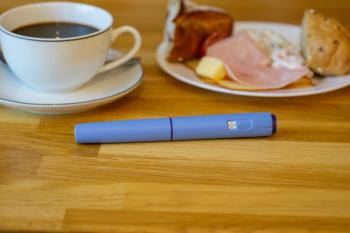
Semaglutide is covered in both injectable and tablet form. Tirzepatide is covered only as the KwikPen—single-dose vials and pens are explicitly excluded. Orforglipron is covered in all formulations.1 A patient who assumes any tirzepatide product qualifies is in for a surprise at pickup if the prescription landed on an excluded formulation. This is an easy catch at verification and worth flagging directly to prescribers who default to whatever formulation they're most used to writing.

The Low-Income Subsidy Conversation Is the Hardest One

The Bridge copay is flat: $50, no exceptions. Patients with a low-income subsidy (LIS), who are used to paying little or nothing under standard Part D, get no LIS reduction here.4 For a patient used to a $2 or $3 copay, $50 isn't a rounding error. It's a conversation that needs to happen before the fill, not at pickup, or it reads as a bait-and-switch instead of a genuinely new program with its own rules.

What's Working

It is worth saying plainly, because it is easy to lose in a list of problems: the mechanics CMS actually controls are holding up close to spec. The 24- to 72-hour PA turnaround is real in most of what I'm seeing. Refills after an initial approval don't need a new PA unless the patient switches products.2 Pharmacy reimbursement WAC minus the copay, plus a dispensing fee, has been processed cleanly.

The friction isn't in the program's design. It's in the 2-week gap between how differently the Bridge behaves compared to every other Part D claim, and how little runway pharmacy staff and prescriber offices had to build new habits around it.

The Uncertainty Ahead Is Real, Not Hypothetical

The Bridge was originally meant to hand off to a longer-term program, BALANCE, starting in January 2027. CMS delayed the Part D portion of BALANCE indefinitely this spring, citing insurer feedback,which is the actual reason the Bridge got extended through December 2027 rather than sunsetting on its original timeline.5 Patients asking, "What happens after this?" deserve an honest answer: right now, the Bridge is the plan, not a placeholder for something more permanent already locked in behind it.

None of this requires the program to change. It requires the same muscle pharmacists have built around every other Medicare coverage transition. Catch the friction before it becomes an abandoned prescription.

REFERENCES
  1. Medicare GLP-1 bridge. Centers for Medicare & Medicaid Services. Updated July 13, 2026. Accessed July 21, 2026. https://www.cms.gov/medicare/coverage/prescription-drug-coverage/medicare-glp-1-bridge
  2. Medicare GLP-1 Bridge: Information for Prescribers. Centers for Medicare & Medicaid Services. June 2026. Accessed July 21, 2026. https://www.cms.gov/files/document/glp-1-prescribers-c-1.pdf
  3. Medicare GLP-1 Bridge: Information for Pharmacies. Centers for Medicare & Medicaid Services. June 2026. Accessed July 21, 2026. https://www.cms.gov/files/document/glp-1-pharmacies-c.pdf
  4. Information for Part D Plans. Centers for Medicare & Medicaid Services. June 2026. Accessed July 21, 2026. https://www.cms.gov/medicare/coverage/prescription-drug-coverage/medicare-glp-1-bridge/information-part-d-plans
  5. BALANCE (Better Approaches to Lifestyle and Nutrition for Comprehensive hEalth) Model. Centers for Medicare & Medicaid Services. Updated June 22, 2026. Accessed July 21, 2026. https://www.cms.gov/priorities/innovation/innovation-models/balance

Latest CME