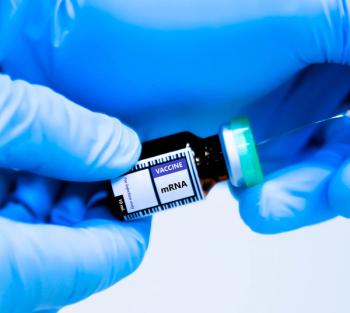
Despite the controversy surrounding mRNA's role in the COVID-19 response, the technology's broader promise—to prevent, treat, and even cure a host of diseases—is coming into focus.
A suspected plague death in Russia has renewed attention on the rare infection. Here's how to spot pneumonic plague and which antibiotics the CDC recommends.
The death of a laboratory technician at a plague research institute in Siberia has put pneumonic plague back in the headlines. It is the only form of Yersinia pestis (Y pestis) infection that spreads between people and is almost always fatal without treatment, but it responds to common antibiotics when therapy starts early.1,2
The woman, an employee of the Irkutsk Anti-Plague Institute, died at a hospital in Shelekhov, Russia, in early October 2026 after its inpatient department was closed over suspicion of a “particularly dangerous infection.” Nearly 200 of her contacts were placed under medical observation, and the US Centers for Disease Control and Prevention (CDC) said there was no indication of a broader threat to the US.1,3
Y pestis circulates among rodents and their fleas, and the route of human exposure largely determines whether a patient develops bubonic, septicemic, or pneumonic disease. Primary pneumonic plague follows inhalation of the bacteria from an infected animal or person. Transmission occurs through large respiratory droplets during close contact within 6 feet; there is no evidence of airborne spread.2
Transmission risk is minimal in the first 24 hours after exposure and highest later in illness, when coughing patients expel large amounts of bacteria. According to the World Health Organization (WHO), recovery rates are high when patients are treated within 24 hours of symptom onset.2,4
Within 1 to 3 days of inhalation, patients develop fever and dyspnea, followed by a productive cough with purulent or bloody sputum. Early symptoms are nonspecific and can mimic many respiratory illnesses.2
“The symptoms with pneumonic plague are much more severe, and they appear and progress pretty quickly in most patients,” Marilyn N. Bulloch, PharmD, BCPS, FCCM, SPP, CPAFH, an associate clinical professor in the Department of Pharmacy Practice at the Auburn University Harrison College of Pharmacy, said in an interview with Pharmacy Times. “Because it is in the lungs, they can have substantial shortness of breath and chest pain. Obviously, being in the lungs, there is a very real possibility for pneumonia—and that’s what it may feel like to most patients. A severe pneumonia that set in really quickly.”
Fever is not a given, Bulloch noted. “The average patient will have high temperature, which may be higher than general fever thresholds, but may not in some patients, such as older adults or those with immunosuppression.”
A recently published CDC report shows how easily it can be missed. In July 2025, a young man in Coconino County, Arizona, presented with 2 days of abdominal pain, chest pain, and dry cough. He was afebrile but tachycardic and tachypneic, and clinicians initially suspected hantavirus or bacterial pneumonia. Despite empiric piperacillin-tazobactam, vancomycin, and azithromycin, he died less than 8 hours after admission. Investigators linked his illness to occupational exposure to 2 ill indoor cats.5
Exposure history is often the clue. The CDC lists a recent flea bite, exposure to areas with rodents, or contact with a sick or dead animal as risk factors in endemic areas, and the Arizona investigators noted that cats are especially susceptible to plague.5,6
The CDC directs clinicians to begin therapy as soon as plague is suspected rather than wait for test results. Gentamicin and fluoroquinolones are first-line US treatments. Adult regimens for pneumonic plague include ciprofloxacin 400 mg IV every 8 hours or 750 mg orally every 12 hours, levofloxacin 750 mg every 24 hours, moxifloxacin 400 mg every 24 hours, gentamicin 5 mg/kg every 24 hours, or streptomycin 1 g every 12 hours, although streptomycin is not widely available. Treatment lasts 10 to 14 days.6
“It is, however, essential to get the antibiotics in quickly—not just a best practice. Antibiotics need to be started within 24 hours to really have a chance at saving the patient’s life,” Bulloch explained. “Honestly, this is not something the average community pharmacist will be facing, but our inpatient pharmacists—particularly those in the emergency rooms and [intensive care units]—might. That is how sick these patients are.”
Patients with severe disease should receive 2 distinct antimicrobial classes, narrowing to 1 agent after clinical improvement. Levofloxacin and moxifloxacin are good options when community-acquired pneumonia has not been ruled out, aminoglycoside levels should be monitored, and doxycycline is only an alternative for pneumonic plague because of mixed animal data. For patients who are pregnant, gentamicin plus ciprofloxacin or levofloxacin is preferred.2
Bulloch added that the severity of plague makes it “one of the few exceptions to the ‘avoid in pediatrics’ rule that we usually associate with tetracyclines and fluoroquinolones.” She also emphasized monitoring over the full course: “Treatment is going to be for about 2 weeks, so adverse effects that may not be as evident with shorter courses (for example, ototoxicity with aminoglycosides) must be monitored… Doses are usually normal doses, but at the higher end of the dosing range.”
Postexposure prophylaxis (PEP) is recommended for 7 days after close, sustained contact without adequate protective equipment, using oral ciprofloxacin, levofloxacin, moxifloxacin, or doxycycline. CDC guidance favors doxycycline for older adults because of fluoroquinolone safety risks. In the Arizona case, 46 potentially exposed people began oral ciprofloxacin PEP, and none became ill.2,5,6
Plague remains rare in the US; Arizona reported only 8 human cases from 2000 to 2024 despite plague being endemic among rodents in the north of the state. Globally, most cases reported to WHO from 2019 to 2025 occurred in the Democratic Republic of the Congo and Madagascar.4,5
“A lot of people assume it is a historical infection that disappeared, but in reality, there are a handful of people who become infected every year,” Bulloch said.
WHO has stated that the risk to the general public remains undetermined, as they are urgently seeking more information from Russian health authorities as to whether the patient died from the pneumonic plague and whether any close contacts could be infected. The Russian health watchdog, Rospotrebnadzor, said on October 7, 2026, that no plague pathogens have been found across 90% of tested contacts of the deceased worker at the institute. Tedros Adhanom Ghebreyesus, PhD, MSc, BSc, director-general of WHO, reported that a “full risk assessment” has not yet been conducted.8
Stay informed on drug updates, treatment guidelines, and pharmacy practice trends—subscribe to Pharmacy Times for weekly clinical insights.
Subscribe