The once-daily tablet is the third approved treatment for fibrodysplasia ossificans progressiva (FOP), with CYP3A4 and metformin interaction guidance.
FDA clears tiratricol for MCT8 deficiency, lowering dangerous T3 and outlining dosing, lab testing, and pharmacy access.
The FDA has approved tiratricol (Emcitate; Egetis Therapeutics) for the treatment of peripheral thyrotoxicosis in adults and pediatric patients with monocarboxylate transporter 8 (MCT8) deficiency, also known as Allan-Herndon-Dudley syndrome, according to a news release from the FDA and Egetis Therapeutics. It is the first FDA-approved therapy for this rare genetic disorder.1,2
The approval gives clinicians a way to lower the excess circulating thyroid hormone that strains the heart and metabolism in these patients. It also brings monitoring, dispensing, and drug interaction considerations that fall to pharmacists.1,2
MCT8 deficiency is an X-linked disorder, caused by pathogenic variants in the SLC16A2 gene, that primarily affects males. Without a functioning MCT8 transporter, thyroid hormone cannot adequately reach the brain, while triiodothyronine (T3) builds up in the bloodstream. Patients may be unable to walk or sit independently and may have absent or severely limited speech, intellectual disability, and feeding difficulties. Egetis reports a median life expectancy of approximately 35 years.1,2
Tiratricol is a thyroid hormone receptor agonist. Unlike T3 and thyroxine, it can enter cells without relying on MCT8, which lets it modulate hypothalamic-pituitary-thyroid axis signaling and reduce circulating T3.1,3
Approval was supported by 2 studies. In ReTRIACt (NCT05579327), 20 male patients aged 5 to 31 years entered a run-in or titration period. The 15 who reached a stable dose were randomized to continue tiratricol or switch to placebo for 30 days. The ratio of the rate of change in total T3 favored continued treatment (1.5; 95% CI, 1.0-2.2; P = .034). Mean total T3 rose 64.6 ng/dL with placebo vs -0.2 ng/dL with tiratricol, and every patient given placebo had a larger T3 increase than any patient who stayed on treatment. On the second primary end point, 4 of 8 patients receiving placebo met the rescue criterion of total T3 above the upper limit of normal, compared with 1 of 7 receiving tiratricol. That 1 patient discontinued early and was counted as meeting the criterion. The 95% CI for the difference between groups crossed zero.3,4
In a 12-month, open-label, single-arm study of 46 male patients aged 10 months to 66.8 years, mean total T3 fell from 323.4 ng/dL at baseline to 118.3 ng/dL. Heart rate decreased by a mean 8.9 beats per minute and systolic blood pressure by a mean 4.1 mm Hg.3
Tiratricol cross-reacts with T3 immunoassays and can falsely elevate results, so the label directs clinicians to measure total T3 by liquid chromatography tandem mass spectrometry (LC-MS/MS). No FDA-authorized LC-MS/MS test for total T3 is currently available, and existing tests may vary in accuracy. Pharmacists reviewing laboratory values should confirm the assay method before interpreting a T3 result.3
Starting doses are 175 mcg/day for patients weighing 10 kg or less and 350 mcg/day for heavier patients. Doses are titrated about every 2 weeks toward a total T3 level below the midpoint of the age-specific normal range. Signs of thyrotoxicosis, including increased heart rate, elevated blood pressure, diarrhea, and hyperhidrosis, may emerge during initiation and titration. The drug should be tapered rather than stopped abruptly. It carries a boxed warning against use for obesity or weight loss.3
Concomitant thyroid medications such as levothyroxine should be avoided, as should bile acid sequestrants and psychostimulants. Other interaction guidance:
The most common adverse reactions were diarrhea, vomiting, rash, and hyperhidrosis.3
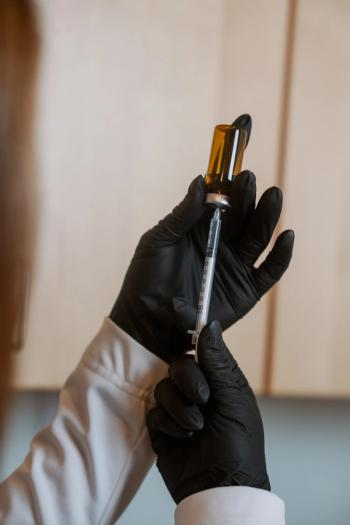
The 350-mcg tablets must be dispersed in room-temperature drinking water in a 10- to 12-mL syringe and given by mouth or enteral feeding tube. Any suspension not used within 30 minutes should be discarded, and tablets should not be swallowed whole, chewed, or crushed. Tablets, including split halves, require refrigeration and protection from light. Egetis expects commercial availability in 8 to 10 weeks, with distribution through the specialty pharmacy PANTHERx Rare and its RareLink patient support program.2,3