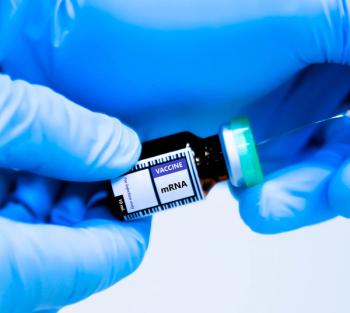
Despite the controversy surrounding mRNA's role in the COVID-19 response, the technology's broader promise—to prevent, treat, and even cure a host of diseases—is coming into focus.
Spencer Durham, PharmD, FCCP, BCPS, BCIDP, discusses why hepatitis B remains an active public health threat.
In an interview with Pharmacy Times, Spencer Durham, PharmD, FCCP, BCPS, BCIDP, associate clinical professor of pharmacy practice and director of professional affairs at Auburn University Harrison College of Pharmacy in Huntsville, Alabama, discussed the ongoing urgency of hepatitis B vaccination during Hepatitis Awareness Month.
Pharmacy Times: Can you please introduce yourself?
Spencer Durham, PharmD, FCCP, BCPS, BCIDP: I'm Spencer Durham. I am a clinical professor of pharmacy practice with the Auburn University Harrison College of Pharmacy.
Pharmacy Times: As we observe Hepatitis Awareness Month, many providers still view hepatitis, and specifically hepatitis B virus, as a managed or historical threat. How do you frame the current reality of adult transmission rates to convince pharmacists that this remains an urgent, active priority?
Durham: Thank you. I think that's a great question. While rates of hepatitis B infection are lower than what we see with some other types of infectious diseases, there are still several thousand transmitted cases each year. In 2023, the CDC reported that there were about 2200 cases of acute hepatitis B in the US that were confirmed, but the estimated true number of new infections is actually thought to be closer to 14,000, because many infections go either undiagnosed or unreported. So it still does affect several thousand people each year. The other thing I would say is that, of those new infections, adults who are between the ages of 40 and 59 have the highest rates of newly reported infections. So it is a disease that I think still should be viewed as having a very active priority, the way other infectious diseases are viewed.
Pharmacy Times: We often talk about hepatitis B as an infection, but it's fundamentally a preventable cause of cancer. How should pharmacists use the stark link between chronic hepatitis B and primary liver cancer to drive urgency in adult patients who feel perfectly healthy?
Durham: I think that's a really essential point to drive home for patients—that the purpose of the vaccine is really to prevent cancer. Certainly, hepatitis B is an infectious disease, but the reason that we even worry about it as an infection is because ultimately it can lead to liver cancer. So patients really should think of the vaccine as a tool to prevent cancer. I would liken it to discussing something like the HPV [human papillomavirus] vaccine with a patient, because I think that's another great example of a vaccine that we are ultimately administering to try to prevent cancer, and so I think that framing has to be communicated appropriately for the patient.
Pharmacy Times: When evaluating adult vaccine options, Dynavax's Heplisav-B utilizes a 2-dose regimen over 1 month compared with the traditional 3-dose, 6-month schedule. From a public health perspective, how does compressing that timeline alter adherence and real-world efficacy?
Durham: I think that's a great question. Any time there is a chance to decrease the frequency of a vaccine or to decrease the number of doses needed, there is going to be a chance of improved [adherence], and therefore better efficacy from the vaccine. The traditional 3-dose vaccine that you mentioned is very highly effective when all of the doses are given, but one of the problems with that series is that it has historically suffered from series completion failure, and those who don't complete the series are not as protected against hepatitis B. So from a public health standpoint, the 2-dose series might lead to more individual protection against hepatitis B, and therefore less transmission and fewer opportunities for patients to develop hepatic cancer.
Pharmacy Times: For a pharmacist evaluating clinical data, why is the speed and robustness of the immune response—not just the fewer number of doses—a critical factor for the adult population?
Durham: I think those concepts are interrelated, but when someone achieves a more rapid immunological response, especially with fewer doses, it leads to achieving immunity against that disease more quickly, which again is likely to lead to less disease transmission, and in this case, less of a risk of development of liver cancer. So it's not simply just a matter of what somebody might call the same protection with fewer doses—there is that, but rather, when you think about higher and earlier seroprotection rates, that does make a meaningful clinical difference. When patients are protected earlier and faster, there is just less of a chance for transmission to others, and also more protection for the patient against the disease and against things like liver cancer.
Pharmacy Times: Many pharmacies now utilize advanced clinical decision support software and state immunization registries. What specific metrics or data triggers should pharmacy managers look for in their systems to proactively identify adult patients who are missing their hepatitis B series?
Durham: I think the biggest thing would be something that detects an incomplete vaccine series—something that detected that a patient only had 1 recorded dose of the [hepatitis] B vaccine, or if there was a way to detect those who are overdue for subsequent doses. Those triggers should at least prompt a discussion with the patient to see if they really didn't complete the series, or maybe they did complete the series but received the subsequent dose in a different state, or something of that nature.
Identifying patients who didn't complete the series, or at least those for whom we don't have a record of series completion, is probably the first step. Another thing would be looking for metrics or data triggers that might indicate someone is at a higher risk of contracting hepatitis B—for example, someone who also has HIV infection or someone on chronic hemodialysis. Identifying those patients is important, and when you identify those factors, I think that should prompt a discussion with the patient about hepatitis B and whether they've received the vaccine, as well as a good opportunity to talk about other vaccines they might be eligible to receive.
Pharmacy Times: With the expansion of collaborative practice agreements, pharmacists are doing more than just executing prescriptions—they are managing public health. How can capturing the low-hanging fruit of adult hepatitis B vaccinations help a pharmacy elevate its clinical standing with local physicians?
Durham: I think that's a great question. In my home state of Alabama, we recently—in the last couple of years—just passed collaborative practice, so that's very exciting, and I am seeing that pop up more. I certainly believe that capturing those undervaccinated adults for hepatitis B can really strengthen a pharmacy's reputation with local physicians, because it demonstrates that the pharmacy is functioning as a true longitudinal clinical partner, not just a dispensing site for medications. The ability of a community pharmacy to close a care gap, provide reliable follow-up for patients, or do anything else that can just reduce the high workload of a medical practice should be very attractive from a physician standpoint.
Pharmacy Times: Is there anything you would like to add?
Durham: The one thing I would say about hepatitis B is that it's really disheartening for me, especially as an infectious diseases pharmacist, to see so much misinformation about hepatitis B on social media. It's particularly disheartening right now to think that our hepatitis B vaccine rates in children may drop because of this misinformation. For example, one of the biggest misconceptions I see is when people say something like, "Well, hepatitis B is a sexually transmitted disease, so babies don't need the vaccine yet." Certainly, hepatitis B can be transmitted through sexual contact, but most people don't realize that it is a very highly infectious virus, typically thought of as more infectious than HIV in blood exposure settings. So children can be exposed to blood through household exposure or exposure in settings like day cares.
The other thing I think is important about our pediatric patients is that those who are exposed to hepatitis B and aren't vaccinated are much more likely than adults to go on to develop chronic infection. When the CDC started recommending universal infant hepatitis B vaccination around 1991, cases of acute hepatitis B in children and adolescents in the US fell about 89% to 90% over the following decade or so. Before universal newborn vaccination, there were about 15,000 to 20,000 pediatric [hepatitis] B infections annually in the US. After implementation, some estimates put that number at fewer than 20 newborn infections annually. So it really is important, and I just think it's terrible to think about people not being vaccinated because of so much misinformation around this topic. Hepatitis B vaccination is certainly a really important public health topic for us to be talking about. Pharmacists really should continue to be strong advocates for vaccination—not just for hepatitis B, but for other diseases as well.
Stay informed on drug updates, treatment guidelines, and pharmacy practice trends—subscribe to Pharmacy Times for weekly clinical insights.
Subscribe