FDA Approves Insulin Efsitora, Once-Weekly Basal Insulin Injection for Adults With T2D
Key Takeaways
- Molecular design links an insulin analog to an Fc domain, yielding ~17-day half-life; clinicians should anticipate slower dose titration and delayed steady-state versus daily basals.
- Across four phase 3 studies (n>3400), once-weekly efsitora achieved noninferior HbA1c lowering versus glargine U-100 or degludec U-100 in insulin-naïve and insulin-experienced populations.
Insulin efsitora alfa-gobe (Onswik; Eli Lilly) is designed to deliver steady basal insulin levels over a full 7-day duration.
The FDA approved insulin efsitora alfa-gobe (Onswik; Eli Lilly and Company), a once-weekly basal insulin injection for adults with type 2 diabetes (T2D). The indication says the injection is to be used along with diet and exercise to control high blood sugar in this patient population.1
Efsitora is a fusion protein that pairs a novel single-chain insulin variant with a human IgG2 Fc domain, engineered for once-weekly subcutaneous administration. Its half-life of about 17 days supports the weekly dosing interval, however, it also means dose adjustments may take longer to reach steady state than with daily basal insulins.2
Qwint Phase 3 Clinical Trial Program Supports Insulin Efsitora’s Efficacy
The FDA approval is based on data from the phase 3 QWINT clinical trial program, which evaluated the safety and efficacy of once-weekly insulin efsitora in over 3400 adults with T2D. In each trial, once-weekly insulin efsitora met the primary end point of noninferior hemoglobin A1C (HbA1C) reduction from baseline that was comparable to insulin glargine U-100 (glargine) or insulin degludec U-100 (degludec). In these clinical trials, insulin efsitora demonstrated an overall safety profile similar to the daily basal insulins studied.1-7
- QWINT-1 (NCT05662332)4 randomly assigned 795 insulin-naive adults to once-weekly insulin efsitora or once-daily insulin glargine for 52 weeks. Insulin efsitora was dosed using a simplified fixed-dose escalation: a 100-unit starting dose, followed by steps to 150, 250, and 400 units every 4 weeks as needed to reach a fasting blood glucose target of 80 to 130 mg/dL, with additional adjustments permitted after week 16. Results demonstrated that HbA1C fell by approximately 1.31% with insulin efsitora versus 1.20% with glargine at week 52.6.1,2,4
- QWINT-2 (NCT05362058)5 compared insulin efsitora with insulin degludec for 52 weeks in 928 insulin-naive adults, including those using and not using glucagon-like peptide-1 receptor agonists. HbA1C was shown to decrease by 1.34% with insulin efsitora versus 1.26% with degludec. The combined rate of clinically significant or severe hypoglycemia was 0.58 events per participant-year with insulin efsitora vs 0.45 with degludec; no severe hypoglycemia occurred with insulin efsitora, compared with 6 episodes with degludec.1,5,8,9
- QWINT-3 (NCT05275400)6 enrolled 986 adults who were already treated with basal insulin and compared insulin efsitora with degludec over a 78-week duration, with the primary end point assessed at week 26. HbA1C was observed to decline by approximately 0.86% with insulin efsitora and 0.75% with degludec.1,2,6
- QWINT-4 (NCT05462756)7 evaluated 730 adults on basal insulin plus at least 2 daily mealtime injections, comparing insulin efsitora with glargine, each given alongside insulin lispro, for a 26-week period. Both treatment arms reduced HbA1C by 1.07%.1,2,7
Pooled Evidence
A systematic review and meta-analysis published in Diabetes, Obesity and Metabolism determined that insulin efsitora produced a modestly greater HbA1C reduction at week 52 than daily basal insulin (mean difference [MD], –0.12%; 95% CI, –0.20 to –0.03; P = .009) with a lower total weekly insulin dose (MD, –30.55; P = .0002). Time above range decreased significantly, whereas time in range increased numerically without reaching significance.10 Common adverse events (AEs) of insulin efsitora include low blood sugar, allergic reactions, reactions at the injection site, skin thickening or pits at the injection site (lipodystrophy), itching, rash, swelling of hands and feet, and weight gain.1 According to the meta-analysis, serious AEs, injection-site reactions, and hypersensitivity events were comparable across groups. There was a numerically, nonsignificant increase in major AEs with insulin efsitora, with an odds ratio of 1.22 (95% CI: 0.97-1.53; p = 0.09), according to the authors. Additionally, they noted that the effect of insulin efsitora on cardiovascular morbidity and mortality has not been established and called for longer-term and real-world data.10
Implications for Pharmacists
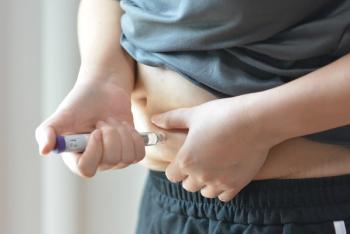
Dose selection is the most significant safety consideration at dispensing. Insulin efsitora, which is administered via Lilly’s KwikPen, is available in 2 concentrations: U-500 (500 units/mL), which delivers doses in 5-unit increments up to 400 units per injection; and U-1000 (1000 units/mL), which delivers 10-unit increments up to 800 units per injection. The labeling warns that dose selection differs from other injectable diabetes medicines and directs patients to verify the pen label prior to every injection, avoid dialing the maximum single dose unless prescribed by a health care professional, and never withdraw insulin with a syringe.1
“…Delays in initiating treatment and the burden of daily injections can have a real impact on patients’ day-to-day experience managing type 2 diabetes,” Kenneth Custer, PhD, executive vice president and president, Lilly Cardiometabolic Health, said in the news release announcing its approval. “[Insulin efsitora] offers a new once-weekly basal insulin option for patients and reflects our continued commitment to deliver innovative treatment options that expand choice and provide greater flexibility in how people manage T2D.”1
REFERENCES
1. US Food and Drug Administration (FDA) approves Lilly's Onswik (insulin efsitora alfa-gobe), a once-weekly basal insulin injection treatment for adults living with type 2 diabetes. News release. Eli Lilly and Company. September 24, 2026. Accessed September 24, 2026. https://investor.lilly.com/news-releases/news-release-details/us-food-and-drug-administration-fda-approves-lillys-onswiktm
2. Ferruggia K. Insulin efsitora alfa demonstrates A1C reduction in various clinical trials. Pharmacy Times. July 17, 2025. Accessed September 24, 2026. https://www.pharmacytimes.com/view/insulin-efsitora-alfa-demonstrates-a1c-reduction-in-various-clinical-trials
3. Halpern L. Once-weekly insulin efsitora demonstrates comparable efficacy to daily basal insulin in type 2 diabetes. Pharmacy Times. March 5, 2026. Accessed September 24, 2026. https://www.pharmacytimes.com/view/once-weekly-insulin-efsitora-demonstrates-comparable-efficacy-to-daily-basal-insulin-in-type-2-diabetes
4. A Study of Insulin Efsitora Alfa (LY3209590) Compared to Glargine in Adult Participants With Type 2 Diabetes Who Are Starting Basal Insulin for the First Time (QWINT-1) (QWINT-1). ClinicalTrials.gov identifier: NCT05662332. Updated August 6, 2025. Accessed September 24, 2026. https://clinicaltrials.gov/study/NCT05662332
5. A Study of Insulin Efsitora Alfa (LY3209590) Compared to Degludec in Adults With Type 2 Diabetes Who Are Starting Basal Insulin for the First Time (QWINT-2). ClinicalTrials.gov identifier: NCT05362058. Updated May 16, 2025. Accessed September 24, 2026. https://clinicaltrials.gov/study/NCT05362058
6. A Study of Insulin Efsitora Alfa (LY3209590) Compared With Insulin Degludec in Participants With Type 2 Diabetes Currently Treated With Basal Insulin. ClinicalTrials.gov identifier: NCT05275400. Updated June 3, 2025. Accessed September 24, 2026. https://clinicaltrials.gov/study/NCT05275400
7. A Study of Insulin Efsitora Alfa (LY3209590) as a Weekly Basal Insulin Compared to Insulin Glargine in Adult Participants With Type 2 Diabetes on Multiple Daily Injections (QWINT-4). ClinicalTrials.gov identifier: NCT05462756. Updated April 27, 2025. Accessed September 24, 2026. https://clinicaltrials.gov/study/NCT05462756
8. Once-weekly dose of insulin efsitora alfa delivers A1C reduction consistent with the most advanced daily insulin in people with type 2 diabetes. News release. Eli Lilly and Company. Accessed September 24, 2026. https://investor.lilly.com/news-releases/news-release-details/once-weekly-dose-insulin-efsitora-alfa-delivers-a1c-reduction
9. Wysham C, Bajaj HS, Del Prato S, et al. Insulin Efsitora versus Degludec in Type 2 Diabetes without Previous Insulin Treatment. N Engl J Med. 2024;391(23):2201-2211. doi:10.1056/NEJMoa2403953
10. Akmal M, Tariq S, Mustafa M, et al. Efficacy of once-weekly insulin efsitora versus once-daily basal insulin in type 2 diabetes: a systematic review and meta-analysis. Diabetes Obes Metab. 2026;28(3):2138-2148. doi:10.1111/dom.70399
Related to this article