
Opinion|Videos|January 1, 2025
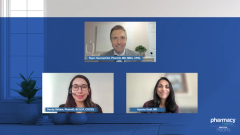
Examining Elafibranor as a Treatment Option for PBC
Panelists discuss how elafibranor demonstrated significant efficacy in the ELATIVE trial, which strengthens confidence in its role as a long-term treatment option for patients with primary biliary cholangitis (PBC) who inadequately respond to ursodeoxycholic acid.
Advertisement
Episodes in this series
Video content above is prompted by the following:
- Elafibranor received accelerated approval based on findings from the
ELATIVE study. What are the key efficacy insights from this trial? - Elafibranor was also demonstrated to have long-term safety and efficacy at 3 years. How does this durability affect your clinical decision-making?
Advertisement
Related to this article
The all-oral combination is supported by phase 3 LITESPARK-011 data showing improved progression-free survival compared with cabozantinib.
The FDA approved lirafugratinib for adults with previously treated, advanced cholangiocarcinoma harboring an FGFR2 fusion or other rearrangement after the REFOCUS trial showed a 46% ORR.
Isatuximab plus Iberdomide maintenance helps MRD-positive myeloma patients turn MRD-negative after transplant, with manageable safety.
Insulin efsitora alfa-gobe (Onswik; Eli Lilly) is designed to deliver steady basal insulin levels over a full 7-day duration.
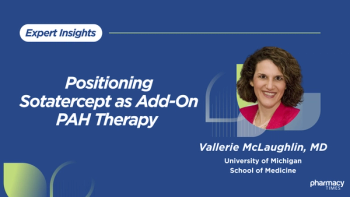
Vallerie McLaughlin, MD, explains why the ERS update strongly recommends sotatercept for patients with pulmonary arterial hypertension (PAH) who don't reach low-risk status on initial therapy.

Long-term CASSIOPEIA Registry results show that daratumumab maintenance supports sustained minimal residual disease negativity in transplant-eligible patients with newly diagnosed multiple myeloma.
Imaging data from the CONTENTed study suggest the type 2 inflammation that drives severe asthma may affect more than the airways.

Infection prevention during bispecific antibody treatment requires pharmacists to coordinate baseline screening, antimicrobial prophylaxis, immunoglobulin monitoring, vaccination, and rapid evaluation of suspected infections.
Advertisement
Advertisement
Trending on Pharmacy Times
1
After 180 Years, Multiple Myeloma Gets a Definition of Cure
2
Severe Asthma's Effects May Extend Beyond the Lungs, Brain Imaging Study Suggests
3
Alcohol and GLP-1 Therapy: Key Counseling Points for Pharmacists
4
Psilocybin-Assisted Therapy for AUD: Emerging Evidence, Clinical and Cost Implications, and Treatment Gaps
5