

Opinion|Videos|January 19, 2026
Clinical Evidence and Impact of Newer JAK Inhibitors in Myelofibrosis
Explore the latest advancements in myelofibrosis treatments, including Fedratinib, Pacritinib, and Momelotinib, and their clinical impacts.
Advertisement
Episodes in this series
The approvals of fedratinib and pacritinib were supported by pivotal clinical trials demonstrating significant reductions in splenomegaly and symptom burden, particularly in patients with thrombocytopenia or those intolerant to prior JAK inhibitor therapy. Their introduction expanded treatment options beyond ruxolitinib, enabling more personalized therapy based on patient-specific cytopenias and risk profiles. Momelotinib’s approval was informed by two key trials. The MOMENTUM study evaluated symptomatic, anemic patients previously treated with JAK inhibitors, showing improvements in transfusion independence, spleen volume, and symptom scores. SIMPLIFY-1 assessed momelotinib versus ruxolitinib in JAK inhibitor–naïve patients, confirming non-inferiority for spleen volume reduction and demonstrating added benefits for anemia management. Collectively, these studies not only established the efficacy and safety of next-generation JAK inhibitors but also reshaped treatment sequencing, highlighting the importance of addressing both splenomegaly and anemia in comprehensive myelofibrosis care.
Advertisement
Related to this article

Researchers found substantial overlap in autonomic symptoms, orthostatic tachycardia, and functional impairment between long COVID and POTS.
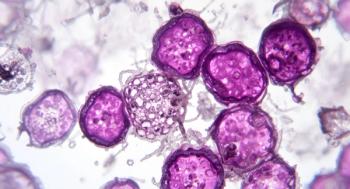
Phase 2 MILESTONE results suggest that postinduction minimal residual disease (MRD) negativity can identify a small subset of transplant-eligible patients with newly diagnosed multiple myeloma who may defer autologous stem cell transplantation.
A phase 3 trial shows etentamig boosts response and delays progression in triple-class exposed RRMM.

Fixed-duration KRd slowed progression in high-risk smoldering myeloma, but high rates of severe toxicity temper enthusiasm.

A review of 69 studies finds influenza vaccines continue to reduce hospitalization and death, with no new safety concerns.

IRAKLIA shows isatuximab OBI boosts comfort and satisfaction vs IV in multiple myeloma, enabling fast at-home dosing with strong completion.

Gut microbiome disruption from anti-anaerobic antibiotics weakens CAR T cell therapy, raising relapse and CRS/ICANS risk; stewardship and microbiome repair may improve cancer outcomes.

The all-oral combination is supported by phase 3 LITESPARK-011 data showing improved progression-free survival compared with cabozantinib.
Advertisement
Advertisement
Trending on Pharmacy Times
1
Nearly Two-Thirds of Patients With Long COVID Meet Diagnostic Criteria for POTS
2
After 180 Years, Multiple Myeloma Gets a Definition of Cure
3
Harnessing the Gut Microbiome for Enhanced CAR T Cell Therapy
4
Building a BCMA Bispecific Around the Patient Experience, Not Just the Molecule
5