
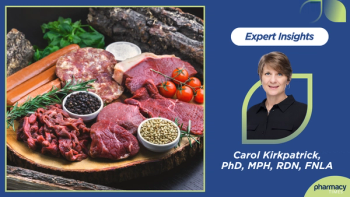
From red meat to 'big and fluffy' LDL, a lipid expert unpacks fat and cholesterol misconceptions that persist among patients and clinicians.
From red meat to 'big and fluffy' LDL, a lipid expert unpacks fat and cholesterol misconceptions that persist among patients and clinicians.

Pharmacists play a large role in mavacamten care, screening for interacting drugs that can raise exposure and may require dose adjustment or withholding.
In an interview with Pharmacy Times, Paula Rodríguez-Otero, MD, PhD, discusses less frequent linvoseltamab dosing, CRS monitoring, and how community practices could prepare for its potential use in high-risk smoldering multiple myeloma.

One molecule now carries both a prevention and a treatment indication, and the panel outlines how pharmacists serve as the critical checkpoint against dispensing errors and inadvertent monotherapy.
As people with HIV live longer, first-line decisions increasingly hinge on cardiovascular risk, comorbidities, and drug interactions — areas where the pharmacist's full view of the medication list matters most.

Validating patient concerns and then reframing them around stroke prevention can help pharmacists counsel patients who worry that statins harm memory.

Michael Mina, MD, PhD, discusses phase 3 LIBERTY study data showing that the monoclonal antibody VYD2311, alone or combined with an mRNA COVID-19 vaccine, was associated with fewer adverse events than vaccination alone.

In an interview with Pharmacy Times, Paula Rodríguez-Otero, MD, PhD, discusses patient selection for LINKER-SMM1 and weighs the potential benefits of early linvoseltamab treatment against infection risk in high-risk smoldering multiple myeloma.

Alexander Turchin, MD, MS, recommends shared decision-making, time-limited lifestyle trials, and gentle persistence to move patients toward statins.

A lipidologist traces patient fears to 2012 FDA label language and reviews observational and randomized data showing no cognitive harm from statins.
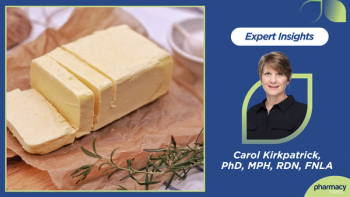
An expert explains why plant-based cooking oils remain the NLA's recommendation for patients at cardiovascular risk, despite new federal advice.
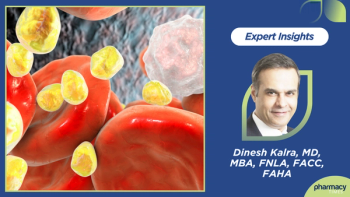
Pharmacists can prompt once-in-a-lifetime Lp(a) testing, reinforce statin adherence, and put muscle aches in context, according to the NLA president.

An expert outlines the new emphasis on protein, whole grains, and added sugars in the guidelines—and why some shifts call for careful counseling

Lp(a) guidance trailed low-density lipoprotein (LDL) cholesterol by decades, but the NLA, ESC, EAS, and now ACC/AHA advise testing all adults at least once, says Dinesh Kalra, MD.

Study coauthor William J. Peppard, PharmD, discusses which patients may benefit most from suzetrigine after knee replacement and how pharmacists can address cost and access barriers to postoperative treatment.

Jose Bazan, MD, discusses how FES PET could refine patient selection for SBRT in ER-positive metastatic breast cancer and highlights considerations for coordinating imaging, radiation, and systemic therapy.
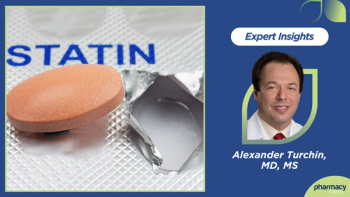
From lifestyle-only approaches to fears about memory, an expert outlines the statin misconceptions pharmacists are most likely to hear.

In an interview with Pharmacy Times, William J. Peppard, PharmD, pain stewardship coordinator at Froedtert & the Medical College of Wisconsin and coauthor of a retrospective suzetrigine study, discusses findings suggesting that the nonopioid medication could help reduce postoperative opioid prescribing after total knee arthroplasty.

In an interview with Pharmacy Times, Jose Bazan, MD, who leads the Breast Radiation Oncology program at City of Hope, discusses an ongoing phase 2 trial evaluating whether stereotactic body radiation therapy (SBRT) can help patients with oligoprogressive estrogen receptor (ER)-positive metastatic breast cancer remain on their current systemic therapy longer.
Integrase inhibitors remain the clear first choice, yet prior long-acting PrEP exposure and the practical realities of same-day starts are reshaping when alternatives make more sense.
Before weighing new options, the panel resets the foundation: how antiretroviral classes work, what the 2026 DHHS update actually changed, and why therapy should start as soon as possible.
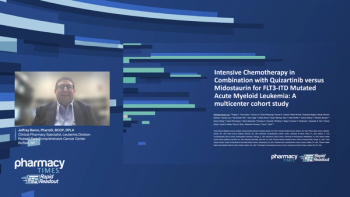
In this Pharmacy Times Rapid Readout, Jeffrey Baron, PharmD, BCOP, DPLA, a clinical pharmacy specialist in the Leukemia Division at Roswell Park Comprehensive Cancer Center in Buffalo, New York, reviews findings from a multicenter retrospective cohort study comparing quizartinib and midostaurin, each given with 7+3 intensive induction chemotherapy, in patients with newly diagnosed FLT3-ITD–mutated acute myeloid leukemia (AML).

Pharmacists have an opening to close chronic kidney disease (CKD) medication gaps as generic ACE inhibitors, ARBs, and SGLT2 inhibitors go underused.

Contraception requests and STI treatment are natural openings for pharmacists to discuss HIV testing and prevention, says Christina Madison, PharmD.

Kevin Astle, PharmD, says expanding pharmacy services to HIV prevention and testing helps meet patients where they are.

In an interview with Pharmacy Times, Danielle Roman, PharmD, BCOP, FHOPA, manager of oncology clinical pharmacy services at Allegheny Health Network in Pittsburgh, discusses ASCO’s updated guideline for follow-up and surveillance after primary treatment for early-stage breast cancer.

Experts discuss how pharmacists can apply shared clinical decision-making, address guidance fatigue, and build multi-vaccine programs as COVID-19 recommendations continue to evolve.

A Peterson Health Technology Institute evaluation found virtual chronic kidney disease (CKD) care companies aren’t slowing kidney function decline or boosting medication adherence, despite billions invested.

Ramantamig trispecific shows deep, durable myeloma responses, with tocilizumab easing CRS and enabling safer outpatient dosing.
MRD-guided stopping in multiple myeloma shows many patients stay disease-free for 4 years.