

Jackie Burke, PharmD, says the widest collaborative drug therapy management (CDTM) gap is operational—implementing workflows and showing outcomes, not proving pharmacists' clinical expertise.
Jackie Burke, PharmD, says the widest collaborative drug therapy management (CDTM) gap is operational—implementing workflows and showing outcomes, not proving pharmacists' clinical expertise.
The strongest antiobesity medication candidates are chosen by overall health and comorbidities like heart failure, CKD, and sleep apnea, not weight alone.

Katelyn O'Brien, PharmD, says a shared view of cardio-kidney-metabolic syndrome lets pharmacists unify care across endocrinology, cardiology, and nephrology.

Kelsey Norman, PharmD, says pharmacists' longer visits and collaborative practice agreements make them well positioned to get patients to low-density lipoprotein (LDL) goals.

Anthony Ishak, PharmD, explains how the PREVENT risk estimator helps pharmacists calibrate dose intensity and move stage 2 patients to combination therapy.

Led by the moderator, the panelists/expert pharmacists examined common specialty pharmacy and insurance barriers facing patients starting tyrosine kinase inhibitor therapy, sharing proactive strategies such as pre-identifying patient assistance and quick-start programs, securing copay assistance and grant funding, and writing data-driven appeal letters to support payer approvals.
Led by the moderator, the panelists discussed how pharmacists integrate the Total Symptom Score into clinical workflows to track symptom burden over time and distinguish drug-related adverse effects, such as fatigue and cognitive changes, from disease-related symptoms.

The Cleveland Clinic team's real-world findings presented at ESC 2026 are hypothesis-generating and need prospective confirmation but point to a low threshold for OSA screening.
In an interview with Pharmacy Times, Claudia R. Morris, MD, lead investigator and author of the phase 3 STArT trial and a pediatric emergency medicine physician at Children’s Healthcare of Atlanta, discussed the need for more meaningful end points in sickle cell pain trials, future research targeting acute chest syndrome, and how pharmacists can improve the collection of opioid-use data.
Publication, conference dissemination, and guideline inclusion are needed for uptake, which has historically been poor for chronic kidney disease (CKD) outcome sets.

Milind Desai, MD, MBA, explains the domino effect linking obesity, obstructive sleep apnea, and hypertrophic cardiomyopathy—and why treating obesity may break the chain.
In an interview with Pharmacy Times, Claudia R. Morris, MD, lead investigator and author of the phase 3 STArT trial and a pediatric emergency medicine physician at Children’s Healthcare of Atlanta, discussed how treatment timing and patient heterogeneity may inform the design of future sickle cell pain trials.
A minimum agreed set of outcomes could let pharmacists compare chronic kidney disease (CKD) interventions head-to-head and cut the heterogeneity that has long muddied trials.
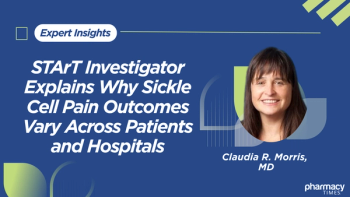
In an interview with Pharmacy Times, Claudia R. Morris, MD, lead investigator and author of the phase 3 STArT trial and a pediatric emergency medicine physician at Children’s Healthcare of Atlanta, discussed how patient history and institutional pain-management practices may influence time to crisis resolution and how care teams, including pharmacists, can help standardize treatment.
The panelists examined dosing considerations for avapritinib, starting at 25 mg with titration to 50 mg in indolent systemic mastocytosis (SM) compared with 200 mg in advanced disease, as well as midostaurin's 100 mg twice-daily dosing in advanced SM, emphasizing patient counseling that dose adjustments reflect tolerability rather than treatment failure.
Led by the moderator, the expert pharmacists examined treatment options for advanced systemic mastocytosis (SM), including higher-dose avapritinib, midostaurin for patients without or with unknown KIT mutation status, and cytoreductive agents such as cladribine and interferon for those not responding to or tolerating targeted therapy.

A clinical pharmacy specialist at UPMC Health Plan discusses how pharmacists help select disease-modifying therapies, address adherence barriers, and coordinate whole-person care for those with MS.

In an interview with Pharmacy Times, Claudia R. Morris, MD, lead investigator and author of the phase 3 STArT trial, discusses why intravenous arginine did not shorten time to crisis resolution and how institutional variation, pain heterogeneity, shorter hospital stays, and treatment timing may have influenced the findings.

Glucagon-like peptide-1 (GLP-1) and GIP/GLP-1 agents are just the start: amylin- and glucagon-based mono-, dual-, and tri-therapies are on the horizon.

Pharmacists’ medication expertise can mitigate GI adverse effects and improve outcomes for patients beginning obesity pharmacotherapy

A Medicare GLP-1 bridge program marks 2026, while multiagonists like CagriSema are poised to lead the next wave of obesity therapy.

Pharmacist Jennifer Goldman on why expectation-setting, GI counseling, and nutrition drive glucagon GLP-1 persistence and long-term success.
McPhillips and James make the business case for at-home testing as a win-win for patients and pharmacies, and close with advice for pharmacists hesitant to add self-testing counseling to their workflow.

Zahra Mahmoudjafari, PharmD, BCOP, FHOPA, MBA, challenges the assumption that oral agents (belumosudil) are inherently more convenient than intravenous therapy (axatilimab) by highlighting that the intravenous schedule creates structured monitoring touchpoints and that mechanism differences—not route alone—should drive sequencing decisions in heavily pretreated populations.
Brooke Adams, PharmD, BCOP, walks through the operational mechanics of transitioning cGVHD patients to community settings: coordination touchpoints, common failure points, and 90-day post-transition checkpoints that confirm a successful handoff.
Zahra Mahmoudjafari, PharmD, BCOP, FHOPA, MBA, addresses the tension between objective NIH scoring and subjective patient experience, and how pharmacists can document patient-reported outcomes to support clinical recommendations, particularly when partial responses demonstrate meaningful functional improvement.
Brooke Adams, PharmD, BCOP, explores how patient narratives on axatilimab inform treatment decisions, moving beyond National Institutes of Health response criteria to functional outcomes—return to work or family activities, reduction in pain or skin discomfort, improved sleep—and how these improvements may exceed what clinical response rates alone predict.
Zahra Mahmoudjafari, PharmD, BCOP, FHOPA, MBA, describes the pharmacist-to-pharmacist handoff workflow when patients with cGVHD transition from the transplant center to outpatient or home infusion settings, including essential documentation elements, baseline assessments, and red-flag symptoms that require immediate clinical contact.
Brooke Adams, PharmD, BCOP, identifies the clinically meaningful adverse effects every pharmacist must monitor—periorbital edema, hepatic enzyme elevations, fatigue—and specifies intervention thresholds (grading, dose modifications, hold criteria) that should trigger escalation conversations with prescribers.
Zahra Mahmoudjafari, PharmD, BCOP, FHOPA, MBA, discusses how axatilimab performs in actual practice versus what AGAVE-201 predicted, including responses in organ manifestations not well-represented in the trial and how real-world monitoring protocols have evolved based on accumulated clinical experience.