

Cassandra Perkey, PharmD, BCOP, explains the operational, staffing, infrastructure, safety, and pharmacist-led requirements for successfully delivering CAR T-cell therapy in a community oncology setting.
Cassandra Perkey, PharmD, BCOP, explains the operational, staffing, infrastructure, safety, and pharmacist-led requirements for successfully delivering CAR T-cell therapy in a community oncology setting.
Cassandra Perkey, PharmD, BCOP, discusses how pharmacists support community CAR T-cell programs through SOP development, treatment planning, education, emergency preparedness, and lessons learned from treating the first patient.
In an interview with Pharmacy Times, Cassandra Perkey, PharmD, BCOP, explains the staffing, infrastructure, hospital partnerships, and scheduling strategies needed to safely deliver outpatient CAR T-cell therapy in a community oncology setting.
In an interview with Pharmacy Times, Manale Maksour, PharmD, BCOP, BCPS, discussed the patient selection, standardized workflows, toxicity management, payer coordination, and caregiver education needed to safely move bispecific step-up dosing into the outpatient setting.
In an interview with Pharmacy Times, Cassandra Perkey, PharmD, BCOP, outlines the essential teams, SOPs, financial planning, and safety protocols community oncology practices need to launch outpatient CAR T-cell therapy successfully.
In an interview with Pharmacy Times, Cherise Steib, PharmD, HDDP, discussed patient selection, caregiver requirements, cytokine release syndrome (CRS), immune effector cell–associated neurotoxicity syndrome (ICANS), and the American Oncology Network’s approach to building an outpatient bispecific therapy program.
In an interview with Pharmacy Times, Steib explains how structured monitoring, patient education, emergency protocols, and pharmacist involvement support the safe delivery of outpatient bispecific therapy.
Cherise Steib, PharmD, HDDP, discusses how bispecific therapies expand treatment options and the factors that determine whether patients are appropriate candidates for outpatient administration.
In an interview with Pharmacy Times, Maksour explained how payer restrictions on prophylactic tocilizumab and the need for intensive patient and caregiver education can influence the safety and feasibility of outpatient bispecific therapy.
In an interview with Pharmacy Times, Nicole McMullin, regional clinical pharmacist at American Oncology Network, discussed AON’s development of an all-outpatient approach to step-up dosing for bispecific T-cell engager therapy in multiple myeloma.
In an interview with Pharmacy Times, Manale Maksour, PharmD, BCOP, BCPS, associate director of pharmacy services at American Oncology Network, discusses the growing use of outpatient step-up dosing for bispecific T-cell engager therapies and the operational challenges clinics must address to safely implement these programs.
Pharmacy Times interviews Nicole McMullin, regional clinical pharmacist at American Oncology Network, on patient and caregiver education, home monitoring, multidisciplinary coordination, and key lessons for community oncology practices implementing outpatient BiTE therapy.
Pharmacy Times interviews Nicole McMullin, regional clinical pharmacist at American Oncology Network, about the oncology pharmacist’s role in outpatient BiTE therapy and the monitoring protocols for identifying and managing CRS and ICANS during step-up dosing.
Key distinctions among bispecific therapies, toxicity management considerations, and the pharmacist’s role in safely implementing these agents across academic and community oncology settings.
Pharmacists are enabling the shift to outpatient bispecific antibody care through education, SOP development, and care coordination.

Melody Chang, RPh, MBA, BCOP, explains how American Oncology Network leveraged its experience with the Oncology Care Model to address challenges when adopting the Enhanced Oncology Model.

Experts presented results that may transform treatment and clinical practice strategies.
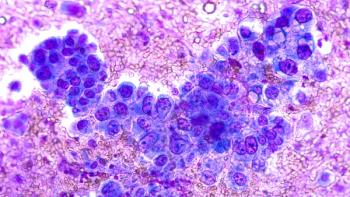
Presentations detail clinical trial results and drugs in the pipeline.

Bispecific antibodies amivantamab and tarlatamab hold promise for patients.

Peer Reviewed
Artificial intelligence holds immense potential to address the rising demand for oncology services and improve patient outcomes by facilitating more effective, efficient, personalized cancer care.

Brooke Peters, PharmD, BCOP, discusses a study conducted at American Oncology Network (AON) to evaluate luspatercept dosing for patients with low- to intermediate-risk myelodysplastic syndromes (MDS).

Data presented show significant advancements in treatment options.
Peer Reviewed
Persistent chemotherapy drug shortages challenge oncology providers. American Oncology Network employs a drug shortage committee for organized shortage management that involves pharmacists and interdisciplinary stakeholders.
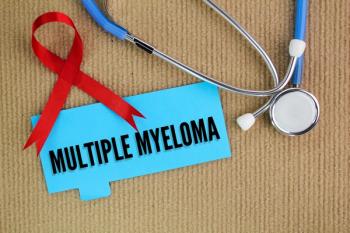
The vice president of pharmacy operations at American Oncology Network says that pharmacists can contribute by educating patients and offering resources for support and treatment adherence.
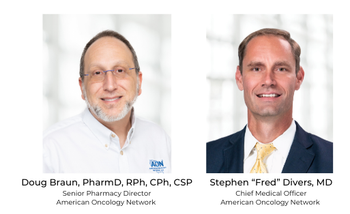
AON’s specialty pharmacy reports success in reducing drug waste like unnecessary and early prescription refills.

The vice president of pharmacy operations at American Oncology Network discusses the 340B Drug Pricing Program and its growth and impact on community oncology.
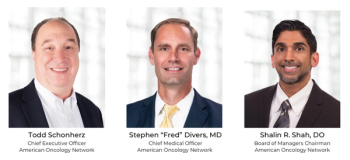
Since its founding, AON has expanded into 19 states and counting.
AON celebrates its Board of Managers’ appointments and retirements.

Significant study results may help inform clinical practice strategies.