

Research shows comprehensive medication reviews enhance medication adherence in those with type 2 diabetes, highlighting pharmacists' vital role in improving health outcomes.
Research shows comprehensive medication reviews enhance medication adherence in those with type 2 diabetes, highlighting pharmacists' vital role in improving health outcomes.

Jacinda Abdul-Mutakabbir, PharmD, MPH, AAHIVP, discusses how looming tariffs, vaccine misinformation, and rising drug costs are straining public health pharmacy efforts, while also sparking new opportunities for innovation, collaboration, and community-centered care amid uncertainty.

Research reveals a significant link between maternal anemia and increased risk of congenital heart defects in infants, highlighting the need for effective prevention strategies.

New trial results highlight intravenous immunoglobulin (IVIG) 10% as an effective rescue treatment for relapsing chronic inflammatory demyelinating polyradiculoneuropathy (CIDP), enhancing patient care and pharmacist involvement in management.

Paula E. Voinescu, PhD, MD, emphasized the need for additional research in this area, noting it is both “surprising and upsetting.”

The condition, which is common in patients with chronic kidney disease (CKD), is characterized by skin lesions and currently has no curative treatment.

In the treatment of metabolic dysfunction-associated steatohepatitis (MASH), engineered extracellular vesicles helped mitigate disease progression and did not compromise bone density.


Specialty pharmacies must develop comprehensive health equity programs that address diverse patient needs.

Liposomal annamycin demonstrates broad synergistic activity with multiple FDA-approved chemotherapies across hematologic and solid tumors in preclinical models, offering a promising and safer combination strategy for resistant and high-risk cancers.

In clinical trials, the dihydroergotamine (DHE) nasal powder had favorable safety profiles and rapid pain relief in patients with migraine with or without aura.

The American Lung Association is raising awareness about updated pneumococcal vaccine guidelines, emphasizing prevention and patient education for at-risk populations.

Cimerli offers a promising biosimilar treatment for age-related macular degeneration, enhancing vision preservation with its effective VEGF inhibition.

New research shows adults with RSV-ARI may face significantly higher mortality and health complications, emphasizing the need for targeted vaccination strategies.

Douglas Adkins, MD shares key data and findings from the phase 3 KEYNOTE-689 study.

Explore the latest advancements in treating transplant-ineligible multiple myeloma, highlighting new therapies and clinical trial outcomes for improved patient care.

Experts provide guidance on managing high cholesterol in adults older than 75 years, emphasizing personalized care and shared decision-making for optimal outcomes.

At Baptist Health South Florida, pharmacists are embedded in all areas of cardiovascular care, an expert said.

A panel of health care experts at Asembia’s AXS25 Summit discussed the critical need for improved patient education and resources to help navigate complex financial assistance programs and health care plans.

The Inflation Reduction Act of 2022 (IRA) drug negotiation provisions will fundamentally reshape Medicare drug pricing, provider reimbursement, and health care delivery dynamics across Part B and commercial markets, according to panelists at Asembia’s AXS25 Summit.

Sasha Watson, PharmD, BCOP, discusses the emerging role of circulating tumor DNA (ctDNA) in colon cancer, highlighting its potential to enhance precision oncology by improving early detection, guiding adjuvant therapy decisions, and monitoring disease recurrence and treatment resistance.
Updates on April 30, 2025, introduce changes to treatment regimens, sequencing flexibility, febrile neutropenia risk assessments, and drug-specific safety and supportive care guidance.

Explore the role of JAK inhibitors in myelofibrosis treatment, focusing on optimizing dosages and managing adverse effects for better patient outcomes.

Specialty pharmacies can leverage advanced analytics, AI, and comprehensive data insights to create targeted clinical programs.

Specialty distributors provide strategic partnerships that enhance pharmaceutical manufacturers' ability to bring innovative medicines to market.
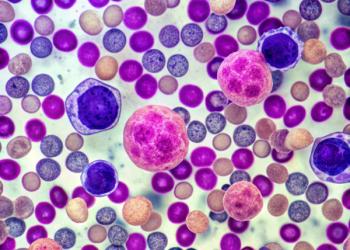
A phase 1b study demonstrated that continuous subcutaneous infusion of low-dose lenalidomide in patients with relapsed or refractory (R/R) multiple myeloma achieved promising efficacy with significantly reduced hematologic toxicity compared to conventional oral dosing.

Research reveals that children face significant long-term health risks, including kidney, gastrointestinal, and cardiovascular issues, after COVID-19 infection.

Biomarker testing transforms non-small cell lung cancer treatment, enhancing outcomes through targeted therapies and next-generation sequencing for better patient care.

How would you counsel these patients?
Nipocalimab the first and only FcRn blocker approved in anti-acetylcholine receptor– or anti-muscle-specific kinase adults and children with generalized myasthenia gravis.