
Leaders of the newly launched Psychedelic Pharmacists Foundation discuss pharmacists' critical role in psychedelic-assisted therapy and patient education.
Leaders of the newly launched Psychedelic Pharmacists Foundation discuss pharmacists' critical role in psychedelic-assisted therapy and patient education.
This OPC interview discusses emerging standards of care in genitourinary cancers, the growing role of molecular testing and minimal residual disease monitoring, and how oncology pharmacists can optimize treatment management.
This OPC interview discusses practice-changing updates from ASCO and EHA, including advances in bispecific antibodies, breast cancer treatment strategies, and multiple myeloma sequencing considerations.
Chris Van Norman discusses how technology, automation, and dedicated frontline teams keep the company's supply chain resilient and patient-focused.
Nancy Lyons, vice president and chief pharmacy officer at Health Mart, explains how McKesson Amplify and pharmacist-told patient care stories are driving advocacy wins for independent pharmacies at the state and federal levels.
This interview discusses candidate selection, toxicity monitoring, access considerations, and evolving clinical applications of menin inhibitors in acute myeloid leukemia (AML).
How oncology pharmacists evaluate emerging clinical data, overcome implementation barriers, and stay current with rapidly evolving advances in precision oncology.
Niki Shah, MHSA, MBA, CCHW, discusses how Project Oasis, a new diabetic retinopathy screening pilot, and the company's Community Health Worker scholarship program are working together to reduce barriers to care in under-resourced communities
The growing role of biomarker-driven treatment selection in breast cancer and how pharmacists can help optimize therapy sequencing, toxicity management, and personalized care.
Key distinctions among bispecific therapies, toxicity management considerations, and the pharmacist’s role in safely implementing these agents across academic and community oncology settings.
Cheeley maps out the resources—courses, certifications, communities, and a retail pharmacy call to action—that can take any pharmacist deeper into lipid management.
Chiadi Ndumele, MD, explains why the new American Heart Association (AHA)/American College of Cardiology (ACC) guideline addresses cardiovascular-kidney-metabolic (CKM) disease as one interconnected syndrome.
Fátima Rodriguez, MD, explains how the new cardiovascular-kidney-metabolic (CKM) syndrome guideline addresses health equity, risk prediction, and the pharmacist's role in care.
Cheeley takes listeners inside her clinical decision-making process—from statin intolerance to PCSK9 inhibitors to omega-3s—and explains why patient buy-in is as important as the prescription itself.
At ACTHIV 2026, Jaimee Colvin, MSN, APRN, FNP-C, outlined how provider knowledge gaps, entrenched stigma, and a lack of culturally representative outreach continue to drive the PrEP disparity among cisgender Black and Brown women.
Jaimee Colvin, MSN, APRN, FNP-C, outlines the intentional, community-rooted, and representation-driven infrastructure required to scale PrEP access for cisgender women nationally.
Correcting the misinformation around statins and cardiovascular disease, and reframing Lp(a) as a genetic condition, not a personal failure, can be a powerful clinical tool.
Craig Beavers, PharmD, discusses transthyretin amyloidosis cardiomyopathy (ATTR-CM) red flags, treatment evidence, and how pharmacists can drive earlier diagnosis and improve patient outcomes.
Persistent HIV stigma, provider reluctance, and harmful misconceptions about who PrEP is for continue to prevent cisgender Black and Brown women from accessing lifesaving prevention.
New data from the phase 3 DeLLphi-304 trial suggest tarlatamab significantly improves intracranial efficacy outcomes, CNS progression-free survival, and overall survival in patients with relapsed small cell lung cancer (SCLC) and baseline brain metastases.
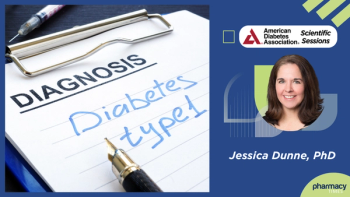
Jessica Dunne, PhD, discusses why adult type 1 diabetes (T1D) is frequently misdiagnosed as T2D in patients with gestational diabetes mellitus (GDM) and how autoantibody testing could close the diagnostic gap.
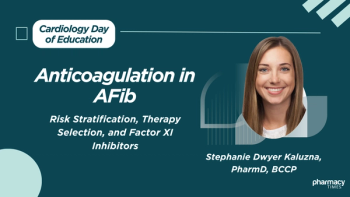
Stephanie Dwyer Kaluzna, PharmD, BCCP, discusses atrial fibrillation (AFib) anticoagulation risk stratification, therapy selection, and the emerging role of factor XI/XIa inhibitors.
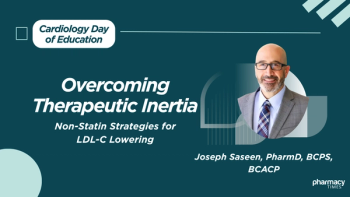
Joseph Saseen, PharmD, discusses how pharmacists can overcome therapeutic inertia and sequence nonstatin therapies to help patients reach individualized LDL-C goals.

Advances in Alzheimer disease diagnosis and treatment are reshaping care, highlighting the pharmacist’s role in medication management, patient education, and overcoming barriers to access.
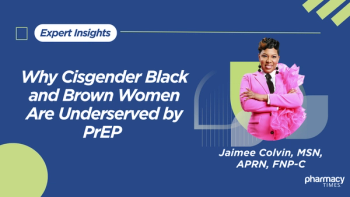
Cisgender Black and Brown women remain significantly underserved by PrEP due to provider knowledge gaps and medical mistrust.
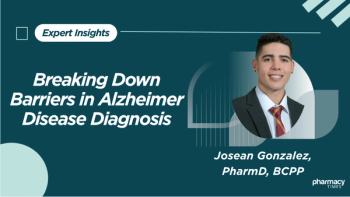
Gonzelez describes advances in Alzheimer disease diagnostics and disease-modifying therapies and highlights the critical role pharmacists play in medication management, caregiver education, and improving treatment access.
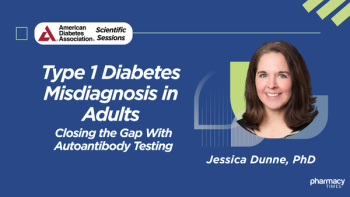
Jessica Dunne, PhD, discusses why adult T1D is frequently misdiagnosed as T2D and how autoantibody testing could close the diagnostic gap.

Josean Gonzalez, PharmD, BCPP, discusses the expanding role of pharmacists in Alzheimer disease care, Baptist Health South Florida’s multidisciplinary approach, and the promise of emerging therapies for patients with cognitive disorders.

Dave Dixon, PharmD, examines why SGLT2 inhibitor and GLP-1 uptake remain low and how pharmacists can bridge the gap between evidence and implementation.
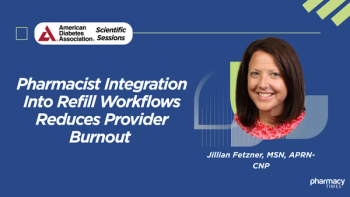
Jillian Fetzner, MSN, APRN-CNP, described how integrating pharmacists into a collaborative practice agreement processed 3750 diabetes refill requests without provider involvement.