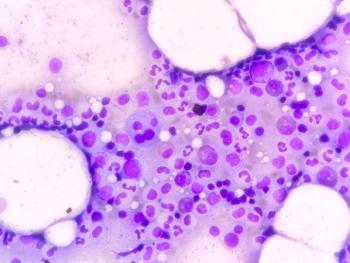
A phase 1/2 analysis found rapid, deep responses with mezigdomide plus elranatamab in patients with relapsed or refractory multiple myeloma, but the small cohort and limited follow-up require cautious interpretation.
This OPC interview discusses emerging standards of care in genitourinary cancers, the growing role of molecular testing and minimal residual disease monitoring, and how oncology pharmacists can optimize treatment management.
In this interview with Pharmacy Times at Oncology Pharmacists Connect in Austin, TX, Sherry Vogt, PharmD, BCOP, Clinical Specialist Pharmacist, Oncology, MUSC Hollings Cancer Center, discusses several potentially practice-changing developments presented at recent oncology meetings, including perioperative enfortumab vedotin plus pembrolizumab for muscle-invasive bladder cancer and neoadjuvant apalutamide with androgen deprivation therapy in high-risk localized prostate cancer. She highlights the increasing importance of patient stratification through genomic testing, homologous recombination repair deficiency assessment, and emerging minimal residual disease (MRD) testing to guide treatment intensification and sequencing decisions.
Pharmacy Times: The genitourinary oncology treatment landscape continues to evolve with new targeted therapies, immunotherapies, and combination approaches. Which recent advances do you believe are having the greatest impact on patient care today, and why?
Sherry Vogt, PharmD, BCOP: That is a great question. I think we have actually seen several abstracts presented this year at ASCO and ASCO GU that have the potential to change the standard of care.
One of the most notable examples is in bladder cancer. The data evaluating perioperative enfortumab vedotin in combination with pembrolizumab, administered before surgery and continued in the adjuvant setting after surgery, were particularly impactful. Initially, much of the focus was on cisplatin-ineligible patients, but we are now seeing data that support this approach in cisplatin-eligible patients as well. I believe these findings have the potential to significantly change how we manage patients with muscle-invasive bladder cancer and ultimately improve patient outcomes.
Another study that I think may be practice-changing is the PROTEUS trial in patients with localized or locally advanced prostate cancer. The study evaluated neoadjuvant apalutamide in combination with androgen deprivation therapy (ADT) administered for 6 months before surgery, followed by surgery and an additional 6 months of therapy afterward. The trial demonstrated improvements in pathologic complete response rates.
Overall, I think any strategy that has the potential to improve outcomes in curative-intent settings is highly meaningful. These are the types of studies that can influence clinical practice and change how we approach treatment for patients with localized disease.
Pharmacy Times: As treatment options expand across prostate, bladder, kidney, and other genitourinary cancers, what factors are becoming increasingly important when selecting and sequencing therapies for individual patients?
Vogt: That is a great question. When considering treatment selection and sequencing, there are several patient-specific factors that need to be taken into account.
In bladder cancer, particularly with perioperative enfortumab vedotin plus pembrolizumab, I think one area that will become increasingly important is minimal residual disease (MRD) testing. As we learn more about how to use MRD assessments in clinical practice, they may help identify which patients truly need additional treatment after surgery. At this point, we still need to follow the treatment approaches that were evaluated in the clinical trials, but I believe MRD testing has the potential to help guide decisions regarding treatment intensification following curative-intent surgery.
In prostate cancer, it is important to identify patients who are at high or very high risk. These patients may derive greater benefit from treatment optimization or intensification before surgery and potentially afterward as well. Recognizing those patients early in the treatment course is critical to maximizing outcomes.
Genomic testing is also an important consideration in prostate cancer. It is essential to determine what testing has already been performed and, if it has not yet been completed, to ensure that it is ordered early in the diagnostic process. Early identification of homologous recombination repair (HRR) deficiencies can influence treatment selection and may affect first-line therapeutic decisions. As a result, incorporating genomic testing early in the disease course is becoming an increasingly important component of personalized treatment planning.
Pharmacy Times: Many of the newer therapies used in genitourinary malignancies bring unique toxicity and monitoring considerations. What are some of the most important adverse event management strategies oncology pharmacists should be aware of in current practice?
Vogt: That is a great question. I think this is actually one of the key areas where oncology pharmacists can have a tremendous impact on patient care. Their role extends beyond helping select the most appropriate treatment option. Pharmacists also play a critical role in ensuring that patients can tolerate therapy and remain on treatment for its intended duration.
In bladder cancer, for example, we are increasingly using enfortumab vedotin in combination with pembrolizumab. Because of this, it is important to be very familiar with adverse effects such as peripheral neuropathy, rash, and other skin toxicities, which can be associated with either agent. With pembrolizumab specifically, pharmacists must also remain vigilant for immune-related adverse events, including the various inflammatory toxicities that can occur. Identifying these issues early and intervening when appropriate is a key area where pharmacists can make a meaningful difference.
Similarly, in prostate cancer, as PARP inhibitors are potentially incorporated earlier in the treatment paradigm, pharmacists need to be aware of the hematologic toxicities associated with these agents. This includes ensuring that laboratory monitoring is performed appropriately and that supportive care resources are available when needed. For example, infusion center capacity may need to be considered if patients require red blood cell transfusions.
Pharmacists also play an important role in recommending dose modifications, coordinating supportive care, and reminding providers of the interventions necessary to keep patients on treatment safely and effectively. These efforts can help optimize outcomes while minimizing treatment-related complications.
Pharmacy Times: Looking ahead, what emerging concepts or areas of research in genitourinary oncology are you most excited about, and which developments do you think have the potential to further reshape the standard of care?
Vogt: That is a very good question. I think the use of minimal residual disease (MRD) testing is one of the most important areas of ongoing research across many disease states. While there are still a number of unanswered questions, MRD testing is increasingly being explored in a variety of solid tumors and may ultimately help guide treatment decisions and determine the appropriate intensity and duration of therapy.
In bladder cancer, in particular, I think MRD testing has significant potential. Given the rapid evolution of treatment strategies for muscle-invasive disease, having definitive information about a patient's MRD status could help reinforce treatment decisions and better identify which patients are most likely to benefit from additional therapy.
As more data become available, MRD testing may become an increasingly valuable tool for personalizing treatment approaches and ensuring that patients receive the therapies most appropriate for their individual risk profile and disease status.