









































































































The results also indicate an association with increased risk of colorectal and noncolorectal gastrointestinal cancers as body mass index increases over time.

The results also indicate an association with increased risk of colorectal and noncolorectal gastrointestinal cancers as body mass index increases over time.

Lutetium Lu177 dotatate demonstrated significant and clinically meaningful progression-free survival for those with SSTR-positive and inoperable midgut neuroendocrine tumor.

Overweight or obesity between middle and later adulthood had a statistically significant risk for noncolorectal gastrointestinal cancer.

Zolbetuximab treatment reduced risk of death by 25% compared to placebo.
In patients with HER2-expressing metastatic gastroesophageal adenocarcinoma administered zanidatamab, the median duration of response was 20.4 months, with a median progression-free survival of 12.5 months.
The analysis found a median progression-free survival of 14.2 months in the ripretinib arm, compared with 1.5 months in the sunitinib arm.

Like using good nutrients to grow tomatoes in the soil, good nutrients and diverse microbes are important for our good gut health, or our gut's "garden," said a leading researcher.

Findings in a new trial show that dietary supplementation of resistant starch has the potential to decrease people’s risk of certain types of gastrointestinal cancers.

In clinical trials, dabrafenib and trametinib showed meaningful efficacy in multiple BRAF-positive tumor types, including in patients with rare cancers who have no other treatment options available.
Any antibiotic use was associated with higher rates of IBD, and the risk went up substantially with each course.

There is more to patients with IBD than the physical detriments, with many mental health issues arising from the condition.
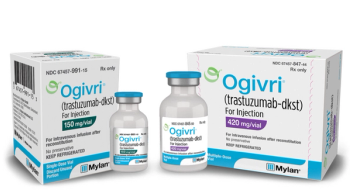
Trastuzumab (Herceptin, Herzuma, Kanjinti, Ogivri, Ontruzant) is a HER2/neu receptor antagonist indicated for early and advanced breast cancer, advanced stomach cancer, and gastroesophageal junction cancer.

The research team suggests that healthy weight maintenance throughout adulthood is crucial in preventing colorectal adenoma.
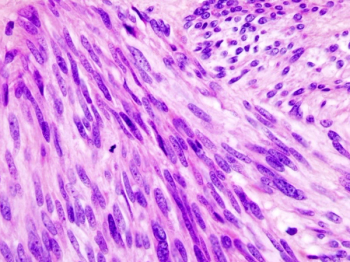
Small GISTs may cause no symptoms and may grow so slowly that they have no serious effects.

The continued approval for this indication may be subject upon verification and description of clinical benefit in a confirmatory trial.

Nivolumab (Opdivo; Bristol Myers Squibb) is FDA approved for 11 cancer indications, with the most recent approval for use in combination with certain chemotherapy for the initial treatment of gastric cancer.
Primary results from the randomized portion of the INVICTUS study had previously shown that ripretinib was able to significantly improve progression-free survival with a clinically meaningful overall survival benefit in patients with advanced gastrointestinal stromal tumor.

Bemarituzumab is an investigational, potential first-in-class targeted antibody designed to block specific fibroblast growth factors from binding and activating FGFR2b.

Median disease-free survival was twice as long in patients who received nivolumab compared to patients who received a placebo.
Nivolumab is the first and only immunotherapy in combination with chemotherapy to deliver superior overall survival compared to chemotherapy alone in this patient population.

A presentation at the Community Oncology Alliance 2021 Virtual Conference focused on the latest developments in gastrointestinal oncology and how the field of gastroesophageal cancer is responding to 3 major, practice-changing trials.
The data were presented for the first time at the virtual 2021 American Association for Cancer Research (AACR) Annual Meeting, April 10-15, 2021.
Data from the FIGHT trial suggests that approximately 30% of patients with non-human epidermal growth factor 2-positive GEJ cancers overexpress fibroblast growth factor receptor 2.
The efficacy results demonstrated that there were 4 patients with confirmed partial response, and an additional 3 patients had stable disease lasting 16 weeks or longer.
The FDA approved Enhertu in January 2020 for the treatment of adult patients with unresectable or metastatic HER2-positive breast cancer.