

The results support perioperative nivolumab as a potential new treatment option.
The results support perioperative nivolumab as a potential new treatment option.

The CMS FAQ ruling is resulting in barriers to care for patients.

Treatment options can be limited for this patient population.

Fran Gregory, PharmD, MBA, vice president of emerging therapies at Cardinal Health, discusses the dynamic landscape of the biosimilars market, providing key insights into its current status and future projections.

There is a prognostic impact of clinical and immunohistochemistry markers.

The approval marks the first for an alternative to platinum-containing chemotherapy.

Although treatment is effective, AEs remain difficult for patients.

The differences between the regimens, anti-PD1/CTLA-4 and anti-PD1/LAG-3, can be used to optimize outcomes for patients with melanoma, particularly in those who develop drug resistance.

Belzutifan (Welireg; Merck) demonstrated superior progression-free survival compared to everolimus in advanced renal cell carcinoma.
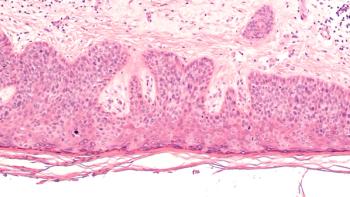
The protein STAT3 is present in approximately 70% of tumors, with elevated levels of the protein being an indicator of poor prognoses in patients.

Hospice care is only a part of palliative care services.

Douglas Warner, MD, chief medical officer at eFFECTOR, provides a comprehensive overview of zotatifin and its current status in a Phase 1/2 dose escalation and expansion study, with a focus on ER+/HER2- breast cancer.

This is the first FDA approval for a therapy intended to reduce the risk of relapse in patients with high-risk neuroblastoma.

AFPs limit access to provider-prescribed specialty medications.

Heather McArthur, MD, clinical director of breast oncology at UT Southwestern Medical Center, discusses the toxicities associated with antibody-drug conjugates (ADCs) used in breast cancer treatment at the 2023 San Antonio Breast Cancer Symposium.
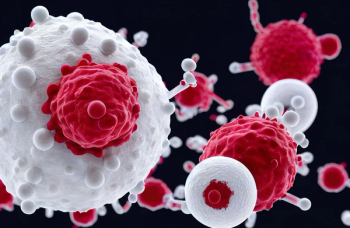
There is progress being made regarding research on immunotherapies and the mutation, which adversely affects a higher number of patients in this population.
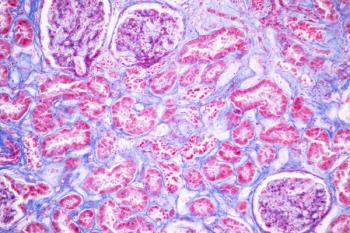
Axitinib, cabozantinib, and lenvatinib are first-line treatment options.

The study authors note that low skin cancer screening (SCS) participation, the participants’ better health than nonparticipants, and examination biases may be contributing factors to the insignificant results.

Troy Bremer, PhD, chief scientific officer at PreludeDx, discusses biosignature model and it's potential in predicting radiation therapy response for those with early-stage invasive breast cancer.
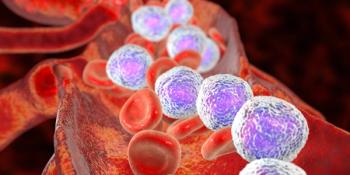
Compared to placebo plus chemotherapy, quizartinib plus chemotherapy improved OS without significant AEs and impact on QOL in patients with AML.

In a recent study, people who lived in disadvantaged or rural areas were just as likely to receive the second-generation medications as people in urban areas.

However, a survival benefit was observed with using a signaling inhibitor in general for patients with angioimmunoblastic T-cell lymphoma.

The authors note that CAR-T cell therapy could change the treatment standard for patients with DLBCL, who previously had few options if standard chemotherapy treatment was ineffective.

An overview of how gene therapy has evolved since its inception, current applications, and emerging challenges.

The pharmacist can help patients to manage symptoms throughout the entire treatment journey.
Expert breaks down these findings and more from the GLAMM1 study at the 2023 ASH Annual Meeting.

Only 20% of the patient population were reported as being “very good” sleepers when it comes to sleep disturbances.
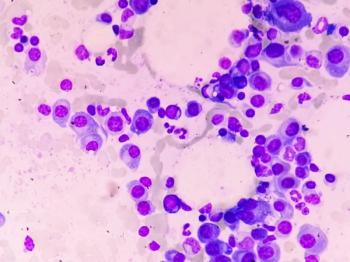
Seven new agents have received FDA approval since October 2022.

Almost 80% of patients have now stopped treatment with ribociclib, but benefit persists and is greater than it was 6 months ago, according to the presenter.
Median overall survival is set to be more than 2 years, which is more than double the overall survival of current frontline therapies.