

The analysis found that more than twice as many women who received olaparib were still alive 5 years after the beginning of the study with no progression of their cancer.
The analysis found that more than twice as many women who received olaparib were still alive 5 years after the beginning of the study with no progression of their cancer.

Mitchell Horwitz, MD, principal investigator and professor of medicine at the Duke Cancer Institute, discusses the results of a phase 3 study of omidubicel, which treats patients with hematologic malignancies in need of a bone marrow.

In addition to cardiotoxicity from cancer-related treatments, the researchers noted that obesity, cancer, and cardiovascular disease share some common risk factors.

DKN-01 is a humanized monoclonal antibody that binds to and blocks the activity of the Dickkopf-1 (DKK1) protein, which activates the innate immune system in the tumor microenvironment and anti-tumor activity.

A new study published in The American Journal of Clinical Nutrition found that for colorectal cancer survivors, maintaining a stable body weight may hide a loss of muscle and the development of fatty deposits in their muscles, which resulted in a 40% higher risk of premature death.
With the breakthrough device designation granted in 2019, the Signatera MRD test now has 3 designations for use across several cancer types and indications.

Results from the phase 3 KEYNOTE-775/study 309 trial found that Keytruda plus Lenvima reduced risk of death by 38%, with a median overall survival of 18.3 months

Results from a phase 3 trial investigating the programmed cell death protein 1 inhibitor cemiplimab monotherapy compared to chemotherapy showed an overall survival benefit among patients previously treated with chemotherapy whose cervical cancer is recurrent or metastatic.

Electricity may slow the speed at which breast cancer cells spread through the body, and in some cases may stop them entirely, according to a new study published in Bioelectricity.

When analyzing the odds of death or hospitalization due to COVID-19, the researchers found that use of cytotoxic chemotherapy did not predict increased risk for either.
The company received Fast Track designation from the FDA for GEN-1, a DNA-mediated interleukin-12 (IL-12) immunotherapy.

Investigators found a statistically significant improvement in both overall survival and progression-free survival for patients who received pembrolizumab with chemotherapy.

Low doses of propylparaben–a chemical preservative found in food, drugs, and cosmetics–can alter pregnancy-related changes in the breast in ways that may lessen the protection against breast cancer normally conveyed by pregnancy hormones.

The IGCS Mentorship and Training Program seeks to provide training and education to regions without formal training programs in gynecologic oncology.

Clinicians have been searching for accurate, reliable, non-invasive diagnostic tools to differentiate early stage, less dangerous, and more treatable stages of the disease from the aggressive, high-grade and likely-to-spread forms.

According to study results presented at the SGO meeting, biopsies showed no signs of cancer or precancer in two-thirds of 165 women with stage I endometrial cancer or atypical endometrial hyperplasia, 6 months after insertion of the hormonal IUD.

Language barriers can present a major obstacle to patient involvement in cancer care, although clinicians recommended several potential strategies to help patients who speak different languages.

The approach inverts missing alleles into an immune cell activating signal, which engineered T cells can then attack and destroy.
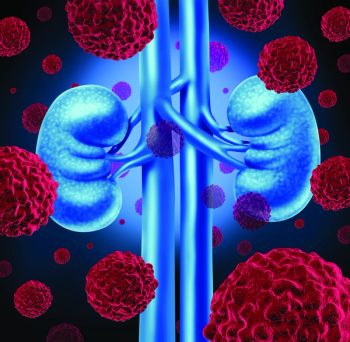
The FDA has granted priority review for an NDA for the hypoxia-inducible factor-2 alpha inhibitor MK-6482 for the potential treatment of patients with von Hippel-Lindau disease-associated renal cell carcinoma that does not require immediate surgery.

A panel of experts in the management of NETs discuss the role of peptide receptor radionuclide therapy for NETs.

A viewpoint perspective from 3 experts endorsed the requirement for a patient and their physician to engage in a shared discussion of benefits and harms before proceeding with a low-dose spiral computed tomography (LDCT) scan in order to prevent lung cancer death.

The FDA announced that it will hold a public meeting of the Oncologic Drugs Advisory Committee from April 27 to 29 to address the indications granted accelerated approval for 6 therapies.
Bristol Myers Squibb and bluebird bio are seeking FDA approval for ide-cel as a standard therapy for relapsed myeloma, with a decision expected by the end of March.

The FDA has granted a fast track designation to poziotinib for use in previously treated non-small cell lung cancer patients with HER2 exon 20 mutations.

Dwight Kloth, PharmD, FCCP, BCOP, director of pharmacy at Fox Chase Cancer Center, discusses the role of the oncology pharmacist in the cancer care continuum, and how this role has been impacted by the COVID-19 pandemic.

Cecilia Lau, RPh, BCOP, APh, and Daneng Li, MD, discuss the management of stomatitis caused by everolimus when used for NETs.
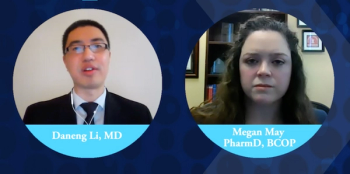
Megan May, PharmD, BCOP, and Daneng Li, MD, discuss the availability of home-injection programs for patients with NETs, especially during the coronavirus pandemic.

Experts in the management of NETs review the various delivery systems and preparations available for short- and long-acting somatostatin analogues.

The panel of experts in the management of NETs review the indications and safety data of the somatostatin analogues.

Megan May, PharmD, BCOP, and Daneng Li, MD, review the efficacy and the pivotal trials for the somatostatin analogues in the treatment of NETs.