

The FDA looks to address a lack of diversity in cancer drug trials.
The FDA looks to address a lack of diversity in cancer drug trials.

Luciano Costa, MD, PhD, of the University of Alabama at Birmingham, discusses how the results of the trial assessing daratumumab, carfilzomib, lenalidomide, and dexamethasone in patients with newly diagnosed multiple myeloma may impact the treatment landscape.

Luciano Costa, MD, PhD, of the University of Alabama at Birmingham, discusses the adverse events experienced by patients with newly diagnosed multiple myeloma who were administered daratumumab, carfilzomib, lenalidomide, and dexamethasone.

Jacob D. Soumerai, MD, of Harvard Medical School and Massachusetts General Hospital, discusses next steps in the research assessing zanubrutinib, obinutuzumab, and venetoclax in the treatment of previously untreated chronic lymphocytic leukemia.

Bladder cancer risk increases with age and is more common among men than women.

Luciano Costa, MD, PhD, of the University of Alabama at Birmingham, discusses the results for all of the trial endpoints assessing daratumumab, carfilzomib, lenalidomide, and dexamethasone for patients with newly diagnosed multiple myeloma.

The prescription-only crofelemer delayed-release tablets were developed using a sustainable, plant-based formula.
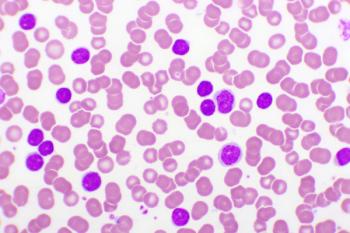
Jacob D. Soumerai, MD, of Harvard Medical School and Massachusetts General Hospital, discusses trial results showing the safety and efficacy of zanubrutinib, obinutuzumab, and venetoclax in the treatment of previously untreated chronic lymphocytic leukemia.

Holistic wellness and helping patients manage the toxins in their outside life are just a few of the focuses at Wobbly Arrow Wellness.

Modern technology is crucial to the provision of home infusions.

Luciano Costa, MD, PhD, of the University of Alabama at Birmingham, discusses the primary endpoint in the trial assessing daratumumab, carfilzomib, lenalidomide, and dexamethasone in the treatment of patients with newly diagnosed multiple myeloma.
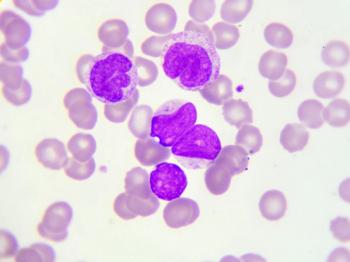
Jacob D. Soumerai, MD, of Harvard Medical School and Massachusetts General Hospital, discusses the adverse events experienced by patients with previously untreated chronic lymphocytic leukemia when treated with zanubrutinib, obinutuzumab, and venetoclax.

The cancer care system lags in comparison to other chronic health conditions in this key area.
Luciano Costa, MD, PhD, associate director for clinical research at the O’Neal Comprehensive Cancer Center at the University of Alabama at Birmingham, on the safety and efficacy of Dara-KRd in the treatment of patients with newly diagnosed multiple myeloma.
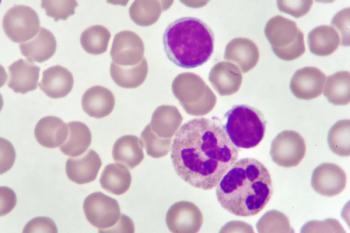
Jacob D. Soumerai, MD, of Harvard Medical School and Massachusetts General Hospital, addresses the primary endpoint in the trial assessing zanubrutinib, obinutuzumab, and venetoclax in previously untreated chronic lymphocytic leukemia.

Although marginal zone lymphoma is relatively rare, it contains a broad spectrum of conditions under it that require an individualized treatment selection process.
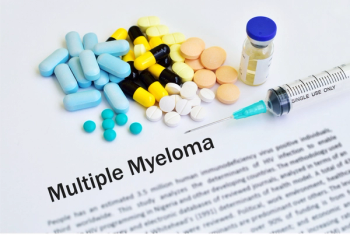
Multiple myeloma has remarkable genetic heterogeneity, which can make it challenging to identify proper prognostication and clinical management for patients.

Abatacept is also approved for adults with moderate to severe rheumatoid arthritis, active psoriatic arthritis, and moderate to severe polyarticular juvenile idiopathic arthritis for children 2 years of age and older.
Jacob D. Soumerai, MD, of Harvard Medical School and Massachusetts General Hospital, discusses minimum residual disease-driven time limited therapy with zanubrutinib, obinutuzumab, and venetoclax in previously untreated chronic lymphocytic leukemia.

This trial is the first to assess the use of isatuximab as a first-line treatment for newly diagnosed, transplant-eligible patients up to 70 years of age, according to the study authors.

Patients with hormone receptor-positive breast cancer doubled their median progression-free survival following a switch to fulvestrant plus palbociclib.

Patients with breast cancer treated with pyrotinib plus capecitabine had a 31% lower risk of death than those treated with lapatinib and capecitabine

New technology provides information on the benefit of adding atezolizumab to chemotherapy as a neoadjuvant treatment for patients with early high-risk and locally advanced triple-negative breast cancer.
Experts reviewed the efficacy and safety of the recommended treatment regimens and discussed which treatment strategy they would recommend for their patients.

However, active disease alone for hospitalized patients was not associated with greater odds of dying from COVID-19, nor was receiving ongoing cancer treatment.

Uterine cancers that developed in patients with breast cancer treated with tamoxifen had fewer phosphoinositol-3-kinase (PI3K) pathway mutations and may have been driven by tamoxifen-induced PI3K pathway activation.

Data from a couple of new molecules could be encouraging for the treatment of acute myeloid leukemia and diffuse large B-cell lymphoma

Since its initial approval in 2016 for urothelial carcinoma, atezolizumab has received FDA approval for an additional 5 types of carcinomas.

In addition to data showing the durable efficacy of acalabrutinib, other data presented at ASH 2021 demonstrate that the new tablet formulation of the drug supports ease of use for patients
The study demonstrates a need for novel tolerable and efficacious therapeutic agents to address the burden of illness in patients with multiple myeloma, according to the investigators.