
Opinion|Videos|February 24, 2025
Patient Counseling and Management of Adverse Events
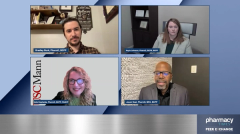
Panelists discuss how pharmacists serve as essential medication experts by providing comprehensive counseling on VMAT2 inhibitors, including proper administration, expectations for symptom improvement, potential side effects, and drug interactions, while playing a vital role in monitoring older adult patients through regular check-ins, medication therapy management services, and collaboration with the healthcare team to optimize treatment outcomes.
Advertisement
Episodes in this series

Video series above is prompted by the following:
- What role do pharmacists play in counseling patients and caregivers about TD treatments, including VMAT2 inhibitors?
- How do pharmacists help monitor for and manage adverse effects associated with TD therapies in older adults?
Advertisement
Related to this article

A single infusion reversed new-onset type 1 diabetes (T1D) in more than half of treated mice by strengthening regulatory T cells and driving autoreactive CD8+ T cells into a less destructive state.

A detailed LINKER-MM1 analysis found that cytokine release syndrome (CRS) with linvoseltamab occurred early, was predominantly low grade, and became less frequent with successive step-up and full doses.

Approval spans early and levodopa-treated disease; a 6-week titration and CYP3A interactions put pharmacists at the center of starting therapy.

In a Pharmacy Times interview, study coauthor William J. Peppard, PharmD, discusses the association between suzetrigine and fewer opioid refills after knee replacement, the limits of the evidence, and the access barriers pharmacists can help patients navigate.

The once-daily tablet is the third approved treatment for fibrodysplasia ossificans progressiva (FOP), with CYP3A4 and metformin interaction guidance.

Novo's topline phase 3 data show 12.4% weight loss with CagriSema 1.0 mg/1.0 mg in type 2 diabetes and 21.0% in adults with overweight or obesity.
Marissa Reigelman of US Pharmacopeia explains how single-country dependence on key starting materials, combined with low prices, has kept 5 critical injectable drugs in shortage for more than a decade.

An MRD-guided strategy incorporating teclistamab-daratumumab intensification produced deep responses in newly diagnosed high-risk multiple myeloma, although infections affected more than three-quarters of treated patients.
Advertisement
Advertisement
Trending on Pharmacy Times
1
FDA Approves Tavapadon, First D1/D5 Agonist for Parkinson Disease
2
Ramantamig's 93.6% ORR and Outpatient CRS Control
3
Engineered Stem Cell Therapy Reverses New-Onset T1D in Mice by Reprogramming T Cells
4
CagriSema Tops Tirzepatide 5 mg for Weight Loss in REIMAGINE 5
5