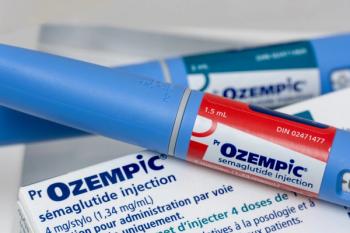
A Novo Nordisk–funded claims analysis of adults with type 2 diabetes found an adjusted HR of 1.06 for MACE with switching, although the findings cannot show causation.
In adults with type 2 diabetes at high cardiovascular (CV) risk, the oral GLP-1 RA also improved HbA1C and weight, with less hypoglycemia but more GI events.
Once-daily oral orforglipron (Foundayo; Eli Lilly and Company) was noninferior to insulin glargine for major adverse cardiovascular events (MACE) in adults with type 2 diabetes who are at an increased cardiovascular (CV) risk, while producing greater reductions in hemoglobin A1C (HbA1C) and body weight with less hypoglycemia, according to results of the phase 3 ACHIEVE-4 trial (NCT05803421).1,2
Published in The Lancet and presented at the European Association for the Study of Diabetes Annual Meeting in Milan, Italy, this study is the first to assess the CV safety of a nonpeptide, small-molecule glucagon-like peptide-1 receptor agonist (GLP-1 RA) in patients with type 2 diabetes at an increased CV risk.1,2
The FDA approved orforglipron for chronic weight management in April 2026; ACHIEVE-4 is the longest study of the agent completed to date.1,3
Investigators randomly assigned 2749 adults to orforglipron or titrated insulin glargine, which were both adminstered once daily. Participants had an HbA1C of 7.0% to 10.5%, a BMI of at least 25 kg/m2, and were taking 1 to 3 oral agents (metformin, a sulfonylurea, and/or a sodium-glucose cotransporter 2 inhibitor). All had established CV disease or chronic kidney disease.1
Orforglipron was escalated every 4 weeks to 36 mg capsules, equivalent to the 17.2-mg tablet, or the maximum tolerated dose. Insulin glargine was titrated to a fasting glucose below 100 mg/dL. The open-label trial used a noninferiority margin of 1.8 for the upper bound of the hazard ratio (HR).1
Over a median follow-up of 104 weeks, 4-component MACE occurred in 4.2% of participants receiving orforglipron vs 5.0% receiving insulin glargine (HR, 0.84; 95% CI, 0.59-1.20; P < .0001 for noninferiority). Orforglipron did not achieve superiority for 3-component MACE (HR, 0.77; 95% CI, 0.52-1.13; P = .18). Deaths occurred in 1.4% vs 3.2% of participants, respectively, although all-cause death was not controlled for multiplicity.1
“The ACHIEVE-4 trial was designed to establish cardiovascular safety—in other words, to show that orforglipron does not increase CV risk,” lead author Klara Klein, MD, director of the Endocrine Diabetes and Obesity Clinical Research Unit at the University of North Carolina at Chapel Hill, told Pharmacy Times. “The study was not designed to demonstrate cardiovascular benefit (ie, that orforglipron reduces the risk of cardiovascular events). As a result, we cannot conclude from these data whether or not orforglipron reduces the risk of CV events.”
Klein noted that many countries require new glucose-lowering medications for type 2 diabetes to demonstrate that they do not increase the risk of major CV events. “The ongoing ATTAIN-Outcomes (NCT07241390) study is powered for superiority, so we will learn in the coming years whether or not orforglipron will join the group of incretin therapies that have demonstrated cardiovascular benefit,” she explained.
At week 52, orforglipron reduced HbA1C by an additional 0.50 percentage points and body weight by an additional 8.9% versus insulin glargine (P < .0001 for each), with differences sustained through 104 weeks.1
Clinically significant or severe hypoglycemia occurred in approximately 6.8% of participants receiving orforglipron vs 19.2% receiving glargine. Among patients taking a sulfonylurea at baseline, rates were 12.8% versus 25.7%, a reminder for pharmacists to review sulfonylurea dosing when a GLP-1 RA is added. Orforglipron was also associated with a 27.1% reduction in urine albumin-to-creatinine ratio versus glargine and slower estimated glomerular filtration rate decline at week 52, both secondary end points.1
Gastrointestinal (GI) adverse events (AEs) occurred in 62.1% of participants receiving orforglipron vs 14.2% receiving glargine, led by nausea (31.9%), vomiting (21.0%), and diarrhea (20.4%). Most were mild to moderate and occurred early, during dose escalation. Discontinuation due to AEs was approximately 15.4% versus 5.4%. Specifically, 8.9% of orforglipron-treated participants stopped due to GI-related events. Among participants able to remain on treatment, 83.8% escalated to and remained on the top dose through week 104.1
Pulse rate rose by a mean of about 4.0 beats per minute with orforglipron. Adjudicated pancreatitis was rare (2 vs 3 cases), and there were no hepatic safety signals that emerged.1
For pharmacists counseling patients through dose escalation, Klein emphasized a gradual approach. “The key to helping people stay on therapy is ‘low and slow,’” she said. “As people stay on doses for longer, they tend to tolerate the medication better. Starting at a low dose and titrating slowly allows most people to tolerate these medications and remain on therapy.”
“Combined with the convenience of a shelf-stable, once-daily oral medication that can be taken without fasting or water restrictions, these results highlight the potential of orforglipron to expand access to effective diabetes treatment globally,” Klein stated in a news release.2