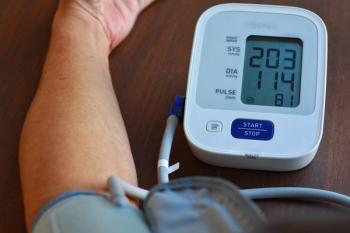
A meta-analysis of 27 trials found 15% lower cardiovascular (CV) event risk per 10-mm Hg SBP reduction, with eGFR declines but no rise in kidney failure.
New findings presented at the World Congress of Nephrology detail how chronic kidney disease (CKD) drives progressive muscle loss and cognitive decline.
Chronic kidney disease (CKD) affects an estimated 11% to 13% of the global population, with prevalence rising to nearly 40% among adults 60 years and older. Although much clinical attention focuses on slowing disease progression and managing cardiovascular risk, the broader systemic consequences of CKD—particularly its effects on physical and neurological reserves—remain underappreciated in everyday practice.1
Two research presentations at the 2026 World Congress of Nephrology shed new light on these extrarenal complications. One study tracked body composition changes and their association with mortality in people with CKD over 1 year; the other examined the prevalence and determinants of neurocognitive disorders in a hospitalized CKD cohort. Together, their findings reinforce a growing clinical consensus: CKD is a disease of the whole body, and these complications carry a compounding burden that demands greater clinical attention.2,3
Sarcopenia and physical frailty are now recognized as major CKD complications, independently associated with disease progression, hospitalization, and mortality. Despite this, routine body composition assessment remains uncommon in nephrology practice.4
In a prospective study from the University Hospitals of Derby and Burton NHS Foundation Trust and the University of Nottingham, Randhay et al enrolled 61 individuals with CKD stages 3, 4, and 5, alongside 21 age- and sex-matched healthy volunteers. Body composition was measured by bioelectrical impedance analysis (BIA) at baseline and 1 year, with clinical outcomes tracked over the same period.2
At baseline, the CKD cohort was already substantially more impaired than healthy volunteers: a median Clinical Frailty Score of 3 vs 1, a Cambridge Multimorbidity Score of 4 vs 1, and a Karnofsky Performance Score of 80% vs 100%. Over the follow-up year, patients with CKD stage 5 experienced a significant decline in skeletal muscle index of 0.55 kg/m² (P = .013), compared with a nonsignificant decline of 0.06 kg/m² in healthy volunteers.2
Mortality analysis identified key BIA-derived parameters as significant predictors of all-cause death at 1 year: the extracellular water to total body water ratio, a marker of hypervolemia (HR, 1.832 per 0.01 increase; 95% CI, 1.308-2.565; P < .001), and a low whole-body phase angle (HR, 0.240; 95% CI, 0.091-0.631; P = .004). Standard body mass index (BMI) was not a significant predictor.3
That last point is underscored by a striking gap in obesity classification. Only 22% of the combined study cohort met BMI criteria for obesity, whereas 67% were classified as obese using body fat percentage thresholds via BIA—a discrepancy the authors attribute to BMI’s known limitations in capturing central adiposity, sarcopenic obesity, and fluid overload. Research has similarly shown that BIA-derived body composition metrics outperform BMI in predicting CKD risk and progression. For patients with CKD, where muscle composition and volume status carry direct prognostic relevance, BIA may serve not only as an assessment tool but also as a risk stratification and monitoring instrument.2,5
If muscle loss represents the physical face of CKD's systemic burden, cognitive impairment represents its neurological shadow. Patients with CKD carry a substantially elevated risk of neurocognitive disorders compared with the general population, driven by vascular disease, uremic toxin accumulation, chronic inflammation, and disrupted cerebrovascular function. Yet cognitive screening is rarely integrated into standard CKD care, meaning many patients carry unrecognized impairments that complicate their ability to manage complex medication regimens.6
A cross-sectional study from the Carol Davila University of Medicine and Pharmacy and the Dr Carol Davila Teaching Hospital of Nephrology in Bucharest, Romania, examined 210 adult patients with CKD hospitalized at a tertiary referral center. Cognitive performance was assessed using the Mini-Mental State Examination (MMSE).3
Nearly 1 in 5 patients (19%) met the MMSE threshold for a neurocognitive disorder diagnosis, with the vast majority presenting with mild impairment. Critically, 80% of those diagnosed had not been previously identified by themselves or their families, pointing to the extent to which cognitive decline goes undetected in CKD populations.3
In a binary logistic regression model, multiple factors independently predicted cognitive impairment: advanced age (OR, 1.083 per year; 95% CI, 1.02-1.15; P = .01), ischemic heart disease (OR, 6.21; 95% CI, 1.24-31.25; P = .03), and lower serum hemoglobin (OR, 0.75 per g/dL; 95% CI, 0.59-0.95; P = .02). Notably, kidney function severity—measured by estimated glomerular filtration rate or dialysis status—was not independently associated. These findings align with the broader literature on CKD-related cognitive decline, in which vascular and ischemic mechanisms are increasingly recognized as primary drivers.3,6
The role of hemoglobin as an independent predictor is particularly relevant for pharmacists: Anemia is already managed as a major CKD complication, but these findings suggest its neurological consequences may be as consequential as its cardiovascular ones.3
Viewed together, these studies reveal a coherent clinical picture: Patients with advanced CKD are simultaneously losing muscle mass and physical capacity while carrying an elevated, and often undetected, risk of cognitive dysfunction. These are not independent problems. Frailty and cognitive decline share upstream drivers, including cardiovascular disease, anemia, and chronic inflammation, and amplify each other's clinical impact across every dimension of disease management.
For pharmacists, the implications are concrete. Patients with undetected cognitive impairment may appear nonadherent when they are, in fact, unable to process complex polypharmacy regimens. Those with declining physical function may struggle to access pharmacies, open childproof packaging, or accurately self-administer medications. Both studies suggest that older patients with CKD who have significant cardiovascular comorbidities deserve heightened attention—and that simplified medication regimens, reinforced counseling, and caregiver engagement may be warranted well before overt symptoms appear.
Both research teams reached a similar bottom line: accessible tools—BIA for body composition and MMSE for cognitive screening—exist to begin detecting these complications systematically. The barrier is not technology. It is integration into routine care.
Stay informed on drug updates, treatment guidelines, and pharmacy practice trends—subscribe to Pharmacy Times for weekly clinical insights.
Subscribe