
News|Articles|September 21, 2026
New Data Reshapes Nonstatin Lipid Therapy Choices
Author(s)Luke Halpern, Associate Editor
Listen
0:00 / 0:00
Key Takeaways
- Pharmacist-led longitudinal follow-up can reduce clinical inertia by optimizing adherence first, then selecting add-on therapy based on LDL reduction needed, outcomes evidence, patient preferences, and cost.
- Guideline alignment is strengthened by the 2026 CKM syndrome recommendations naming clinical pharmacists as core team members, despite lipid guidelines not explicitly enumerating pharmacists.
At NEIAP 2026, Kelsey Norman, PharmD, walked through how VESALIUS-CV, Lp(a)HORIZON, and CKM guidelines change pharmacist-led lipid care.
Advertisement
The biggest obstacle in hyperlipidemia management isn’t a lack of treatment options, it’s getting patients’ low-density lipoprotein cholesterol (LDL-C) to goal, according to Kelsey Norman, PharmD, BCCP, BCACP, clinical pharmacy coordinator in the Cardiovascular Center at Boston Medical Center. Norman presented “Supporting Guideline-Driven Hyperlipidemia Care: The Pharmacist’s Prescribing Authority with Novel Lipid-Lowering Therapies” at the New England Institute of Ambulatory Care Pharmacists (NEIAP) 2026 Annual Forum in Boston, then spoke with Pharmacy Times about how newly published trial data and a newly recognized guideline role are changing what pharmacists can do about that gap.1
Norman told Pharmacy Times that pharmacists have an edge that shorter physician, nurse practitioner, and physician assistant visits don't allow: Time.
"We’re able to meet with our patients for longer amounts of time than our physician and other provider colleagues," she said, and as lipid decisions grow more nuanced, pharmacists working under collaborative practice agreements “can really help continue those conversations, make adjustments, and then independently follow patients to get them to their goals faster.”
That authority now has firmer guideline backing. Although pharmacists are not specifically named in the lipid guidelines, Norman noted in her session that the 2026 American Heart Association/American College of Cardiology/American Diabetes Association/American Society of Nephrology cardiovascular-kidney-metabolic (CKM) syndrome guidelines identify clinical pharmacists as a key interdisciplinary team member for CKM care, an area that overlaps heavily with lipid management.2
Sequencing Therapy as LDL Targets Intensify
Norman’s approach starts with adherence, not a new prescription. “If they’re not adherent, adding on more things is just going to make it more complicated,” she told Pharmacy Times. Once existing therapy is optimized, she recommended weighing how much additional LDL lowering is needed among options that include proprotein convertase subtilisin kexin type 9 (PCSK9) inhibitors, ezetimibe (Zetia; Organon), and bempedoic acid (Nexletol; Esperion Therapeutics), factoring in patient preference, cardiovascular outcomes data, and cost.1
In her presentation, she added that as LDL targets intensify, triple lipid-lowering regimens—which are historically uncommon—are becoming more necessary, even though the combined evidence base for 3-drug regimens remains comparatively thin. She also flagged a practical cost note for oral agents: Combining ezetimibe with bempedoic acid costs the same as the latter alone.1
New Trial Data Reshaping the PCSK9 Inhibitor Conversation
Norman's session incorporated data from just the past year. The FDA-expanded indication for evolocumab (Repatha; Amgen), based on the VESALIUS-CV trial (NCT03872401), gives it randomized evidence for reducing cardiovascular events in high-risk patients with no prior MI or stroke—making it, per her presentation, the only PCSK9 inhibitor with that primary-prevention evidence; alirocumab (Praluent; Regeneron), by contrast, has secondary-prevention risk-reduction data but no primary-prevention outcomes trial.1,3
On the horizon-agent front, she cited the Lp(a)HORIZON trial (NCT04023552) of pelacarsen (Novartis), which recently missed its primary end point of reducing cardiovascular death, nonfatal MI, nonfatal stroke, and urgent revascularization—leaving open, she said, whether other injectable Lp(a)-targeted agents in development will translate biomarker lowering into outcomes benefit. She distinguished obicetrapib, an oral CETP inhibitor, as a different case: It lowers LDL through a separate mechanism, with Lp(a) reduction only a secondary effect.1,4
Overcoming Clinical Inertia and Building Real Adherence Habits
For pharmacists newly exercising prescribing authority, early obstacles are often about getting collaborating providers comfortable with newer options, sometimes through continuing education aimed at colleagues rather than the pharmacist. On adherence, Norman’s message was blunt: Refill history in the chart “does not always indicate medication adherence,” she said in her presentation, so it has to be asked about directly, at every visit. As a result, it’s easy to deprioritize since, unlike blood pressure, lipid panels aren't rechecked that often.1
“I’m continually surprised when I talk about lipid goals and where patients are at—all of a sudden the discussion turns to, ‘Well, I only take my statin 3 days a week,’” she told Pharmacy Times, calling it “low-hanging fruit.” She added that continually discussing lipid results with patients improves adherence and reduces therapeutic inertia.1
Matching Therapy to the Patient and Clearing Access Barriers
Beyond LDL reduction needed, Norman’s presentation walked through patient-specific factors that shape agent selection: diet, prior medication intolerances, health literacy with injectable therapies, needle phobia, dexterity and family support for self-administration, and refrigerated-storage access for patients experiencing housing instability. She also pointed to system-level tools: the PROMPT-Lipid trial (NCT04394715), a cluster-randomized study at Yale New Haven Health, found that individualized EHR alerts increased lipid-lowering therapy intensification compared with usual care—evidence, she said, that pharmacists can extend their reach beyond 1-to-1 visits.1,5
For access barriers pharmacists encounter directly, Norman explained that documentation is decisive: clear notes on the LDL goal, rationale, and guidelines cited, paired with an updated lipid panel, help insurers approve therapy faster. She also advocated partnering with pharmacy technicians on prior authorizations, since “pharmacy technicians know how to navigate a lot of these insurance issues and can do a lot of this faster than we as clinicians can.”
Norman closed her session by noting a gap in the evidence pharmacists themselves could help fill: Lipid management has comparatively little published data on pharmacist-only interventions compared with fields like hypertension, and the ACC/AHA lipid guidelines specifically call out the need for randomized controlled trials involving pharmacists. Even small resident projects and case series, she said, could help close that gap.
REFERENCES
1. Norman K. "Supporting Guideline-Driven Hyperlipidemia Care: The Pharmacist's Prescribing Authority with Novel Lipid-Lowering Therapies." Session presentation and interview with Pharmacy Times. New England Institute of Ambulatory Care Pharmacists (NEIAP) 2026 Annual Forum; September 11, 2026; Boston, MA.
2. Ndumele CE, et al. 2026 AHA/ACC/ADA/ASN guideline for the prevention, detection, evaluation, and management of cardiovascular-kidney-metabolic syndrome: A report of the American College of Cardiology/American Heart Association Joint Committee on Clinical Practice Guidelines. Circulation. 2026;154(4):e50–e158. doi:10.1161/CIR.0000000000001453
3. Bohula EA, Marston NA, Bhatia AK, et al. Evolocumab in patients without a previous myocardial infarction or stroke (VESALIUS-CV). N Engl J Med. 2026;394(2):117-127. doi:10.1056/NEJMoa2514428
4. Novartis announces Lp(a)HORIZON Phase III topline results for pelacarsen in patients with elevated Lp(a) and established cardiovascular disease. Novartis. News release. Published September 4, 2026. Accessed September 18, 2026. https://www.novartis.com/news/media-releases/novartis-announces-lpahorizon-phase-iii-topline-results-pelacarsen-patients-elevated-lpa-and-established-cardiovascular-disease-cvd
5. Shah NN, Ghazi L, Yamamoto Y, et al. Pragmatic trial of messaging to providers about treatment of hyperlipidemia (PROMPT-LIPID): a randomized clinical trial. Circ Cardiovasc Qual Outcomes. 2024;17(5):e010335. doi:10.1161/CIRCOUTCOMES.123.010335
Advertisement
Related to this article
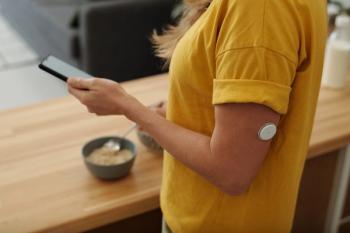
At the 2026 New England Institute of Ambulatory Care Pharmacists (NEIAP) Annual Forum, Jennifer Goldman detailed how monitoring data drive engagement—and how a new dual sensor readies pharmacists for ketone alerts.
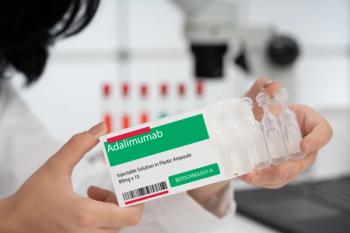
Eight Humira biosimilars have been launched, but payer formularies and interchangeability rules decide what dispenses.

Pharmacists can educate patients about staying up to date on immunizations and discuss fall prevention strategies.

Findings presented at the European Respiratory Society Congress 2026 suggest semaglutide may offer respiratory benefits beyond its approved diabetes and obesity indications.

Study investigator David Berg explains why volume overload shouldn't decide which hospitalized patients get an SGLT2 inhibitor.
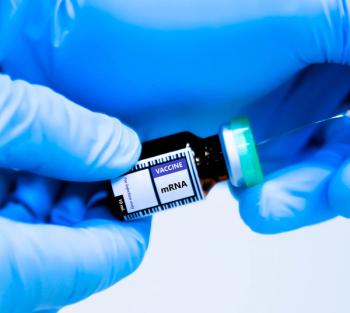
The data helps pharmaicts predict who will react strongly to mRNA vaccines—giving them a science-backed talking point during respiratory season.

CDC-recommended adult vaccination programs for pneumococcal disease, RSV, influenza, and COVID-19 prevent over 182,000 deaths and generate up to $12 in societal value for every $1 spent.

This article discusses a recent publication examining pharmacy access across Minnesota and explores the complex factors contributing to threatened community health access across the US.
Advertisement
Advertisement
Trending on Pharmacy Times
1
Dapagliflozin in Heart Failure: Congestion Isn't the Gatekeeper
2
Ambulatory Pharmacists Convene in Boston at NEIAP's 2026 Annual Forum
3
Semaglutide Linked to Up to 40% Fewer Asthma Attacks, Real-World Data Show
4
From Reactive to Proactive: AI's Role in Modern Pharmacy Safety
5