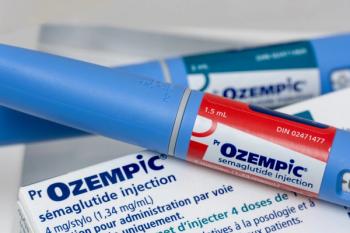
Phase 2b data from EASD 2026 show the amylin-incretin combination also cut HbA1c by up to 2.9% in adults with obesity or overweight and type 2 diabetes.
GLP-1 weight-loss drugs reshape healthcare and consumer spending, as markets surge, coverage splits, and subscription models spread.
Yes. Glucagon-like peptide-1 (GLP-1) products continue to justify ongoing and frequent articles thanks to their magnitude of effects and influences on the market and human behavior way beyond treating diabetes and obesity in the medical model of care. Just as Taylor Swift’s Eras Tour had measurable effects on the gross domestic product (GDP) of whole countries, GLP-1s are beginning to have macroeconomic and societal-level effects across the globe. Consider the following quote from a JP Morgan analyst specializing in the grocery retailing sector: “GLP-1 treatments are projected to lead to an annual revenue reduction of $30 (billion) to $55 billion by 2030-2034 for the food and beverage industry, with consumers taking in 21% fewer calories and spending 31% less on groceries.”1 That is a profound prediction, both economically and societally.
The global market for GLP-1s in 2023 was $5 billion; in 2024, it was $10 billion; and last year, it was $62.83 billion, with a projected market of $254 billion by 2034.2 That’s a quarter of a trillion dollars and roughly equivalent to the GDPs of Ukraine, Qatar, and Hungary. The United States alone is projected to spend $100 billion by 2034, likely making up more than 20% of all drug spending.
The development pipeline is plentiful, with many “me too” GLP-1s coming as well as “add-ons” from other mechanisms using amylin agonists, glucagon agonists, glucose-dependent insulinotropic polypeptides, peptide YYs, and others as research and development continues to ramp up in what is now a cardiometabolic category with positive patient outcomes and generalized effects on many other condition groupings.3 It is very likely that this grouping of therapies will look a lot like the renin-angiotensin-aldosterone system groupings of medications that emerged in the 1990s, with angiotensin-converting enzyme inhibitors coming out of the gate as the main innovator (with the price to go with it), and other add-in or adjacent mechanism drugs coming along, especially as patents are lost. That will leave us in the 2030s with an array of options, all having positive outcomes but with varying levels of insurance coverage and off-label prescribing and effects for different payer types, insured, and economic means, including very affordable options that still reduce body weight by 15% to 25% with impressive add-on effects. Imagine a GLP-1 that costs the system the same amount as lisinopril or metoprolol. Again, this category will have profound effects on the practice of medicine and pharmacy, broader macroeconomics, and society.
The Holderness Family of content creators runs a popular social media feed that went mainstream when Kim and Penn Holderness won “The Amazing Race” in March 2022. The family has now contributed to the GLP-1 phenomenon. Penn has publicly discussed his family history of dementia and genetic predisposition with the APOE-ε4 gene (which has suspected involvement, but research is ongoing), prompting him to have a dementia prevention mindset early in life.4 The Holdernesses recently disclosed in a post that Penn has started a low-dose GLP-1 regimen to this end, after consulting with one of his medical providers.
Meanwhile, data have emerged on the protective effects of GLP-1s on the liver (to be added to many other organ systems with positive data), but the news flash focused less on the liver and more on the fact that the study showed that the positive effects on the liver might be independent of weight loss. In other words, the 10% to 15% of GLP-1 users who don’t respond to therapy for weight loss still might get other benefits from therapy.5 This finding takes a juggernaut category of medications and turns it into a supernova. Imagine a class of drugs that (independent of diabetes and obesity) has potentially trajectory-changing effects on cardiovascular disease, other endocrine-related diseases, mental health, polycystic ovarian syndrome, substance use disorder, and (likely coming someday) cancer prevention, along with many others. Add to that the societal impacts on how we think of diagnosis, treatment, and procurement of health care services and products in a social network, relationship-driven, and influencer-driven category of medications, and the impacts are profound. Consider that 51% of all who are clinically obese are female. Then contemplate why and how 76% of all GLP-1 users for obesity are female.6
GLP-1s have accelerated an underlying trend that has undergirded health care financing of medications in the US for a few decades, leading to the emergence of 2 broad submarkets. Government insurance (Medicaid, Medicare, and others) will generally cover GLP-1s and provide somewhat generous coverage (low out-of-pocket) if you can get it approved. Typically, the conditions are a bit narrowed, with multiple prior authorization steps even after you get the first drug and dosage level approved for step-up dosing, continuing therapy, or other rationing rationales to limit taxpayer or capitated health plan exposure. It has resulted in a mountain of paperwork, time, effort, and additional office visits for tens of millions of government-insured patients.
On the other hand, on the commercial side (employers, exchange market, etc), the trend is to move toward encouraging (explicitly or implicitly) or facilitating covered households to purchase entirely out of pocket (whether through the benefit design, health savings account, or outright cash pay) as households with more disposable income find the time, cost, and money saved and access equation is actually better on the cash pay pathway to accessing GLP-1s.
The cash pay marketplace is less likely to qualify clinically for more restrictive inclusion criteria for coverage. All of this together has created a proliferation of alternative access, from how to receive the prescription (online visits) to what the product is (compounded pills) to the dosing (microdosing and other dosing strategies) to medical service–adjacent industries getting into the pharmaceutical distribution and prescription-filling business, such as Weight Watchers. I believe the GLP-1 phenomenon is having more far-reaching effects than we realize societally, as I observed my personal gym now offering B12 injections each Saturday morning.
A recent survey found that 1 in 8 adults have used a GLP-1, with the 50- to 64-year-old age group having the greatest use at 30%.7 This is also the group with the highest likelihood of not qualifying for government insurance and having difficult access to coverage for GLP-1s, and the demographic is more likely to have disposable income.
Subscription revenue models have become the norm across many sectors of our economy (have you seen the latest membership offering at your local car wash?). It is a great model for products and services where the incremental cost of the next unit or unit of use is small relative to larger fixed costs. Enter the GLP-1 manufacturers. As the cash pay industry continues to evolve and thrive, it is giving license to manufacturers to operate differently as well. The direct-to-consumer model would not have been politically palatable were it not for compounding pharmacies getting GLP-1s started for millions of Americans paying cash. Now manufacturers are playing follow-the-leader as cash pay entrepreneurs create subscription offerings. This opens a plethora of opportunities for manufacturers to work directly with employers and governments on subscription models specific to medication class or even select conditions, such as obesity.
As we keep saying, GLP-1s are having profound structural impacts, and they just keep delivering. Expect many more articles to come.
5 months ago
Oral GLP-1 Orforglipron Is Approved for Obesity