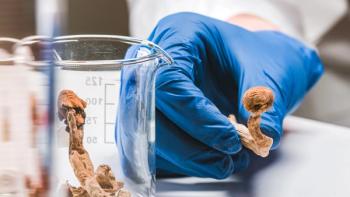
Evidence suggests that psilocybin-assisted therapy for those who have not responded to standard interventions may be beneficial.
Pharmacy Practice in Focus: Health Systems
Hirsch shows how mentorship and networks shape a pharmacist-scientist, driving infectious disease research and fosfomycin breakthroughs.
This interview explores the journey Betsy Hirsch, PharmD, FCCP, FIDP, FIDSA, took from limited early exposure to research to becoming a leader in infectious diseases scholarship. She discusses how her training and mentorship experiences shaped her path to a tenure-track, research-focused career, and her role in leading multidisciplinary research programs and fostering the next generation of pharmacist-researchers. She also highlights the importance of collaboration, her contributions to antibiotic research, and the impact of her work on clinical practice and scientific advancement.
This interview was lightly edited for clarity.
Pharmacy Times: What brought you to research as a pharmacist, and how has research shaped your work in the field?
Betsy Hirsch, PharmD, FCCP, FIDP, FIDSA: During my undergraduate and pharmacy school training, I did not have a lot of research experience, so I was unaware of the roles of faculty research and the stark difference between tenure-track and non–tenure-track faculty positions. My advanced pharmacy practice experiences [and] rotations during pharmacy school solidified my focus in infectious diseases, but my interest at that time was in a clinical pharmacist role. My PGY1 program was closely aligned with faculty at the University of Houston College of Pharmacy. Exposure to their research programs piqued my interest in pharmacist-scientist roles and impacted my career path, ultimately leading me to complete infectious diseases fellowship training and to secure a tenure-track faculty position focused on research in infectious diseases.
Pharmacy Times: Traditionally, what is your role within the research team, and how often are you involved in pharmacist-led research?
Hirsch: My role as a principal investigator of a translational research program in my college of pharmacy means that I am often leading and mentoring research projects for students and trainees of various levels. Trainees engaged in my research program span undergraduate students, pharmacy students, graduate students, and pharmacy residents. Our projects also span “bench” research to animal models and to clinical outcomes, and are often collaborative and/or multidisciplinary with faculty in other departments and colleges, both within and outside our university.
Pharmacy Times: When getting involved with a research team, are you most frequently connected through your institution, or have associations or other groups provided opportunities for research collaboration?
Hirsch: While I do have some local collaborations within my institution and neighboring hospitals, my involvement and service within professional pharmacy and infectious diseases organizations have been instrumental in sparking new collaborative research ideas, teams, and opportunities outside of my university. Networking via social media has also served as a mechanism to form connections with new collaborators and brought together the group of pharmacists who started
Pharmacy Times: What are some of your greatest accomplishments as a pharmacy researcher?
Hirsch: Some of my greatest accomplishments as a pharmacy researcher are being involved in training the next generation of scientists and clinicians and seeing them succeed in independent careers. I am especially indebted to some of the first trainees who helped me start up research labs in both academic institutions [where] I have worked. I am still connected with many of them and look forward to reunions at academic conferences. Besides this accomplishment, my research program has focused on antibiotic susceptibility testing methods and clinical efficacy of fosfomycin over the last few years—and I hope that others in the field associate our work when they hear fosfomycin mentioned.
Pharmacy Times: What is a recent publication showcasing your research that you are proud of?
Hirsch: On the topic of fosfomycin susceptibility testing, one recent publication I am proud of is a recent PhD graduate’s work in Microbiology Spectrum, “Skipped Wells and Scientific Error During Fosfomycin Agar Dilution and Broth Microdilution Lead to Inconsistent Minimal Inhibitory Concentrations and May Be Cause for Reevaluating Testing Methods for Klebsiella pneumoniae,” led by Dr. Morgan Bixby. The fosfomycin work she led in our laboratory has important implications for susceptibility breakpoints and the clinical use of fosfomycin for treatment of urinary tract infections.