Age is the leading factor in influenza vaccine selection, and vaccination remains effective well beyond the ideal September-to-October window.
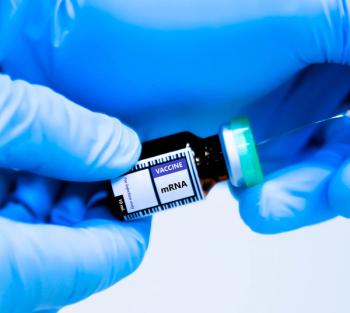
The FDA declines to review Moderna’s mRNA flu vaccine filing over comparator choice, despite positive phase 3 results.
The FDA’s Center for Biologics Evaluation and Research (CBER) has declined to review Moderna’s biologics license application (BLA) for its investigational influenza vaccine, mRNA-1010, and issued a refusal-to-file (RTF) letter, according to an announcement released by the company. Moderna had used a priority review voucher to expedite the application’s review.1
"This decision by CBER, which did not identify any safety or efficacy concerns with our product, does not further our shared goal of enhancing America's leadership in developing innovative medicines," Stéphane Bancel, chief executive officer of Moderna, said in the news release.1
The RTF was signed by Vinayak Prasad, MD, MPH, director of the CBER, who stated that the sole reason for declining to review Moderna’s application was its use of a licensed standard-dose seasonal influenza vaccine as the comparator. The letter, posted online by Moderna, argued that the study did not include an “adequate and well-controlled” comparator reflecting the “best-available standard of care,” although neither federal regulations nor FDA guidance specifically require such a comparator. The agency did not cite any safety or efficacy concerns with mRNA-1010.1,2
The BLA submission includes 2 positive phase 3 studies that included a total of 43,808 participants, which met all prespecified primary end points. IGNITE P303 part C (NCT05827978) was a randomized, stratified, observer-blind, active-controlled phase 3 study that evaluated the immunogenicity, reactogenicity, and safety of the mRNA-1010 vaccine against a high-dose comparator in adults 65 years and older. P304 (NCT06602024) was a randomized, observer-blind, active-controlled, case-driven phase 3 study that investigated the safety, efficacy, and immunogenicity of mRNA-1010 compared with a licensed inactivated seasonal influenza vaccine in adults 50 years and older. In both phase 3 studies, mRNA-1010 met its primary end points and demonstrated statistical superiority over the respective comparators.3,4
The P304 efficacy study mirrors the approach used to support approval of 2 influenza vaccines now preferentially recommended for adults 65 years and older in the US. Those approved vaccines showed a similar level of statistically superior relative efficacy compared with a standard-dose comparator, as mRNA-1010 achieved in P304.1
Moderna stated in its announcement that the RTF letter contradicts prior written guidance from CBER. In April 2024, during a pre-phase 3 consultation, CBER said it would be acceptable to use a licensed standard-dose influenza vaccine as the comparator, although it recommended using a vaccine preferred for adults older than 65 years. CBER did not raise objections or place the study on clinical hold after reviewing the protocol or before the trial began in September 2024.1
After completing the phase 3 efficacy trial in August 2025, Moderna reported that it held a presubmission meeting with CBER and received written feedback requesting additional supportive analyses on the comparator, and noted this would be a significant issue during BLA review. Moderna included the requested analyses in its submission, including data from a separate phase 3 trial comparing mRNA-1010 with a licensed high-dose influenza vaccine. The company noted that CBER did not indicate at any point that it would refuse to review the application.1
"It should not be controversial to conduct a comprehensive review of a flu vaccine submission that uses an FDA-approved vaccine as a comparator in a study that was discussed and agreed on with CBER prior to starting. We look forward to engaging with CBER to understand the path forward as quickly as possible so that America's [older adults], and those with underlying conditions, continue to have access to American-made innovations,” Bancel concluded.1
In response to the rejection, Moderna has requested a Type A meeting with CBER to understand the basis for the RTF letter.1
Stay informed on drug updates, treatment guidelines, and pharmacy practice trends—subscribe to Pharmacy Times for weekly clinical insights.
Subscribe