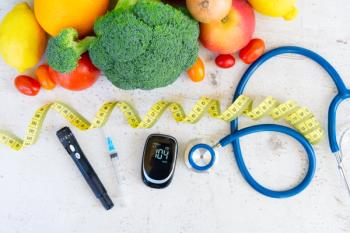
As accessible health care providers, pharmacists can raise awareness about the proper use of OTC blood glucose meters and continuous glucose monitoring devices.
Abbott's Libre Duo 10 Day tracks both glucose and ketones to flag rising DKA risk in people with diabetes 2 years and older.
The FDA has authorized the Libre Duo 10 Day Continuous Dual Glucose Ketone Monitoring System (Abbott), the first wearable in the United States to continuously track ketone levels and the first anywhere to monitor ketones and glucose together in a single device. For pharmacists counseling individuals with diabetes, it introduces a new monitoring parameter—real-time ketone trends—into a category that until now measured only glucose, with direct implications for how patients at risk of diabetic ketoacidosis (DKA) are educated and followed.1,2
DKA develops when the body lacks enough insulin and begins breaking down fat for energy, driving ketone levels up until they become dangerous. The American Diabetes Association warns that DKA can progress within hours and, untreated, can lead to coma or death. Existing blood and urine ketone tests give only a single point-in-time reading and can't show whether ketones are climbing or falling. The Libre Duo 10 Day measures both ketones and glucose in the interstitial fluid every minute, day and night, sending readings wirelessly to a compatible smartphone and issuing automatic alerts when ketones reach a concerning threshold.1-3
“DKA accounts for nearly 75% of pediatric hospitalizations for people with type 1 diabetes, so monitoring ketones for that group is important,” Eden Miller, DO, a board-certified family practitioner, diabetologist, and fellow of the American Board of Obesity Medicine who lives with type 1 diabetes, told Pharmacy Times. “The Libre Duo 10 Day system will provide alerts when ketones are rising, so families can make informed decisions when they need to.”
Abbott reports that DKA is the most common hyperglycemic emergency in diabetes and that hospital admissions for it have risen 55% over the past decade.2,4
The device is indicated for individuals with diabetes 2 years and older and is aimed at those at higher risk of elevated ketones, including patients with type 1 or type 2 diabetes who use insulin or other glucose-lowering agents such as sodium-glucose cotransporter 2 (SGLT2) inhibitors. That last group is a specific counseling flag: SGLT2 inhibitors can precipitate DKA even when glucose readings appear near normal, a scenario that continuous glucose monitoring alone won't catch.1,2
The clinical picture also carries an equity dimension worth raising with patients. Abbott notes that most individuals don't have a blood ketone meter at home and that early signs of rising ketones are frequently mistaken for common infections, delaying treatment.2
"Libre Duo 10 Day is designed for people living with diabetes ages 2 and older who may be at higher risk of elevated ketones,” Miller explained. “People living with diabetes who are interested should talk with their healthcare provider to determine the best path forward."
The authorization is based on 6 clinical studies enrolling more than 600 participants 2 years and older, evaluating the accuracy of both the ketone and glucose functions across a range of levels. According to the FDA, the device accurately tracked clinically meaningful differences in ketone levels across its 10-day wear period, including identifying elevated ketones before the onset of DKA.1
Wear-time counseling should be realistic. Abbott's own sensor-duration study found 84.1% of sensors in adults and 68.8% in the pediatric population lasted the full 10 days—meaning roughly 16% of adult sensors and 31% of pediatric sensors may fall short.2
The FDA cleared the device through the De Novo pathway for novel low- to moderate-risk devices after granting it breakthrough device designation. Abbott says it's the first system to meet both the integrated CGM standard and a new integrated continuous glucose-ketone monitoring standard. The company plans a US launch later this year and expects compatibility with Beta Bionics' iLet and Sequel Med Tech's twiist automated insulin delivery systems by the end of this year, with Insulet and Tandem integrations in 2027.1
One safety caveat belongs in every counseling conversation: Ketone output should be interpreted alongside glucose readings and symptoms, not in isolation. Abbott cautions that the Urgent High Ketones alarm may not catch all instances of ketones above 3.0 mmol/L, so readings and symptoms should guide treatment decisions together.2,3
Stay informed on drug updates, treatment guidelines, and pharmacy practice trends—subscribe to Pharmacy Times for weekly clinical insights.
Subscribe