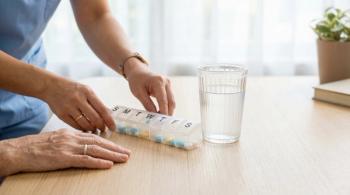
Evidence suggests that psilocybin-assisted therapy for those who have not responded to standard interventions may be beneficial.
A recent study from the Fuqua HeartCenter in Atlanta, Ga, shows that drinkingdecaffeinated coffee can actually raise aperson's level of low-density lipoprotein(LDL) cholesterol, the "bad" cholesterolassociated with cardiovascular diseaserisk. The results of the study were presentedat a meeting of the American HeartAssociation in November 2005.
The study, which was supported by theNational Institutes of Health, included 187volunteers randomly assigned to 3 groups:one group drank no coffee, one groupdrank 3 to 6 cups of decaffeinated coffee aday, and one group drank 3 to 6 cups of caffeinatedcoffee a day. All coffee was preparedin a specific way, and all subjectsdrank it black.
After 3 months, the researchers found nosignificant differences among the 3 groupsin most of the factors related to heart diseaserisk: body mass index, blood pressure,heart rate, total cholesterol, triglycerides,high-density lipoprotein (the "good" cholesterol)levels, insulin levels, and glucoselevels. Among those who drank only decaffeinatedcoffee, however, there was a significantrise in LDL levels and an increase inapolipoprotein B, a protein that may be aneven greater indicator of heart disease riskthan LDL alone. Researchers suggest that,in combination with diet, exercise, andweight loss, eliminating decaffeinated coffeefrom a patient's diet could lower LDLlevels by up to 30%.
over 20 years ago
Resealable and Nultraviolet Ultraviolet (UV) Inhibitant Bagsover 20 years ago
High Alert Insulin Binover 20 years ago
Hydase (hyaluronidase injection, USP)over 20 years ago
Humira (adalimumab)over 20 years ago
INVANZ (ertapenem for injection)over 20 years ago
Compounding HOTLINEover 20 years ago
Customer Guilty of Prescription Fraud by Supporting Friendover 20 years ago
Counterfeit Drugs: A Life-or-Death Problemover 20 years ago
Qui Tam Lawsuits Blow the Whistle on PBMsover 20 years ago
Can You Read These Rxs?