

Andrew Bzowyckyj, PharmD, explains how the CKM framework turns albuminuria, ejection fraction, and inflammation into patient-specific risk stratification.
Andrew Bzowyckyj, PharmD, explains how the CKM framework turns albuminuria, ejection fraction, and inflammation into patient-specific risk stratification.
This episode, titled 'Availability, Patient Preference, and Linvoseltamab: What Pharmacists Need to Know About the Evolving Bispecific Landscape,' features oncology pharmacists discussing the following critical questions:
In 'Patient Selection and Line-of-Therapy Navigation: Practical Insights for a Complex Myeloma Treatment Landscape,' our panel of experts delve into the following critical questions:

From double-dipping GLP-1s to off-label pioglitazone, Cornell breaks down where the metabolic dysfunction-associated steatotic liver disease (MASLD) drug evidence stands today.
Finally, Winter and Maroney synthesize the most critical practical lessons for pharmacy professionals and health care providers caring for patients with EDS in narcolepsy and OSA. They provide the essential roadmap pharmacists need to optimize outcomes for patients with EDS—from initial identification through long-term therapy management.
Winter explores how solriamfetol's emerging pipeline (ADHD, binge eating disorder, major depressive disorder, shift work disorder) may reshape the future of CNS pharmacology and the pharmacist's evolving role in this space.
Maroney outlines the key safety considerations pharmacists and clinicians should weigh when prescribing solriamfetol for EDS in narcolepsy or OSA. She highlights the drug's favorable interaction profile—since it isn't a substrate for major CYP enzymes, unlike modafinil, armodafinil, and pitolisant—making it a practical option for patients managing comorbidities on polypharmacy regimens.
Maroney discusses practical strategies for navigating coverage determinations and prior authorizations for patients prescribed solriamfetol. Current data show roughly 95% of commercially insured patients already have access to the drug, suggesting access barriers, while real, are often surmountable
Winter examines the TONES 5 randomized-withdrawal trial, discussing how sustained efficacy over 6 months factors into clinical decision-making and patient adherence in a chronic condition like EDS.
Winter breaks down the TONES clinical trial program, discussing ESS and Maintenance of Wakefulness Test end points. He covers how these benchmarks translate into what patients actually experience as functional improvements in their daily lives—helping pharmacists understand the real-world significance of the trial data.
Winter explains solriamfetol's distinct pharmacological profile as a dopamine-norepinephrine reuptake inhibitor—the first and only agent in its class approved specifically for EDS—and discusses why this mechanism matters clinically compared to other available wakefulness-promoting options.
Winter opens the discussion by highlighting that millions of Americans with narcolepsy and OSA suffer from undertreated EDS. He sets the stage for understanding the unmet need that solriamfetol addresses.
Winter opens the discussion by highlighting that millions of Americans with narcolepsy and OSA suffer from undertreated EDS. He sets the stage for understanding the unmet need that solriamfetol addresses.
James and McPhillips unpack the everyday barriers that keep patients from addressing health concerns and make the case for at-home testing as a way around them, then turn to how pharmacists can improve their counseling once a patient shows up with results in hand.
Al-Ola Abdallah outlined the key adverse events associated with bispecific antibodies, noting that while CRS occurs in over 70% of patients, the majority of cases are grade 1 or 2 and therefore manageable in outpatient settings with appropriate infrastructure, while ICANS is less commonly observed at severe grades compared with CAR T-Cell therapy.
Zahra Mahmoudjafari explained that REMS programs are a Food and Drug Administration (FDA) mechanism designed to ensure that the safety risks associated with specific therapies are clearly communicated to prescribers, healthcare facilities, pharmacies, and patients, noting that each REMS program is unique and that BCMA-directed therapies currently carry REMS requirements for bispecific antibodies due to cytokine release syndrome (CRS) and neurotoxicity risks, and for belantamab mafodotin due to ocular toxicity, while the REMS programs previously required for CAR T-Cell therapies were recently removed.
Finally, Zepcan and Ali reflect on the single most important lessons for pharmacists new to menin inhibitor therapy and share what they wish they'd known on day one.
In this episode, 'The Long-Term Infection Risk: How Pharmacists Are Approaching Prophylaxis and Monitoring in Bispecific Myeloma Care,' the oncology pharmacists explore the following questions:
In this episode, 'From Treatment to Prevention: How Pharmacists Are Refining CRS Management for Bispecific Antibody Therapy,' the oncology pharmacists explore the following questions:

Jerry P. Abraham, MD, MPH, CMQ, discusses why COVID-19 prevention strategies, including ensitrelvir for postexposure prophylaxis, remain essential for protecting vulnerable patients amid persistent summer transmission.
Jerry P. Abraham, MD, MPH, CMQ, discusses how ensitrelvir's new post-exposure prophylaxis indication gives pharmacists a critical 72-hour window to help prevent COVID-19 in high-risk patients.

Learn how AIMS scoring, video tracking, and team-based follow-up boost tardive dyskinesia detection and VMAT2 treatment persistence.
Boost tardive dyskinesia care with VMAT2 inhibitor education, social media stories, and pharmacist–prescriber teamwork for monitoring and access.
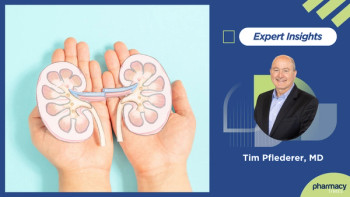
A nephrologist makes the case that value-based care is team-based care—with pharmacists, care managers, and dietitians in the loop.

AI-enabled scheduling, multidisciplinary coordination, and workflow redesign can help cancer centers manage growing patient volumes without compromising safety or workforce well-being.
Predictive scheduling can improve staffing, pharmacy preparation, infusion capacity, and the overall patient experience.
CVS pharmacists expand into frontline care, guiding immunizations, birth control prescribing, and at-home tests like UTIs and fertility to steer patients toward timely, cost-effective treatment.

In an interview with Pharmacy Times, Ming-Hei Tai, PharmD, BCOP, discusses emerging bladder-preserving therapies for NMIBC, the limitations of single-arm trial data, the continued role of BCG, and the clinical and operational factors that should guide treatment selection.
Advance verification, multidisciplinary coordination, and AI-enabled forecasting can help infusion centers adjust schedules and treatment plans during chemotherapy shortages.
Zepcan walks through what a complete pharmacist-to-pharmacist handoff should include when a patient with AML on a menin inhibitor moves from an academic center to community care, covering dosing history, QTc and laboratory test baselines, and documented counseling.