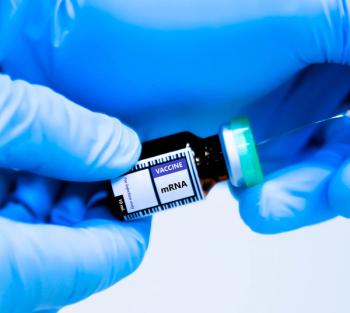
Despite the controversy surrounding mRNA's role in the COVID-19 response, the technology's broader promise—to prevent, treat, and even cure a host of diseases—is coming into focus.
In part 2 of this interview, Michael Mina, MD, PhD, discusses LIBERTY study data showing that VYD2311 boosted neutralizing activity without interfering with mRNA COVID-19 vaccine response.
In an interview with Pharmacy Times, Michael Mina, MD, PhD, chief medical officer and chief epidemiologist at Invivyd, continued discussing findings from the phase 3 LIBERTY study, focusing on immunogenicity results and the potential role of the investigational monoclonal antibody VYD2311 in COVID-19 prevention.
Addressing concerns that the improved tolerability observed with coadministration might reflect a blunted vaccine response, Mina explained that the study was designed to evaluate potential interference. Individuals who received VYD2311 alongside an mRNA vaccine demonstrated approximately 2.5-fold higher overall neutralizing capacity than those who received the vaccine alone over the study period. Using a technique to remove the monoclonal antibody from blood samples, investigators found that vaccine-derived neutralizing antibody titers were identical between the combination and vaccine-only groups, indicating no interference with the vaccine response.
Mina characterized the results as a rare “win-win-win,” in which coadministration reduced adverse events, preserved vaccine-derived immunity, and added a layer of protection individuals could not generate on their own.
He also noted that phase 3 trials of Invivyd’s earlier monoclonal antibodies, which bind in a nearly identical fashion, demonstrated protection comparable to, and in some cases exceeding, that of vaccines. As such, VYD2311 could offer an immunization option for individuals who are immunocompromised, at high risk, unable to mount an adequate vaccine response, or who choose not to be vaccinated.
For pharmacists, injection site reactions may be particularly relevant. Mina reported that the combination reduced the proportion of individuals experiencing injection site pain by more than 60 percentage points, noting that such reactions are a common reason individuals do not return for subsequent doses. Should VYD2311 receive regulatory approval, its administration as an arm injection, similar to a vaccine, paired with a favorable tolerability profile, may help pharmacists support individuals who are hesitant about vaccination and encourage continued engagement with seasonal COVID-19 immunization.