

Research reveals that isatuximab on-body injector shows consistent safety and efficacy across various body weight groups in multiple myeloma treatment.
Research reveals that isatuximab on-body injector shows consistent safety and efficacy across various body weight groups in multiple myeloma treatment.

New research highlights the benefits of adding isatuximab to standard therapy for newly diagnosed multiple myeloma (NDMM), improving patient outcomes and quality of life.

Teclistamab combined with daratumumab and hyaluronidase shows significant efficacy in relapsed multiple myeloma, potentially redefining treatment standards.

New long-term data reveal avapritinib's impressive efficacy and safety in advanced systemic mastocytosis.

Explore the advancements and challenges of allogeneic CAR T-cell therapies, including immune rejection and innovative engineering strategies for cancer treatment.

The Isa-VRd regimen shows consistent efficacy results across all age and frailty levels in patients with newly diagnosed multiple myeloma.

Fitusiran and concizumab are transforming treatment options and patient outcomes in hemophilia A and B with or without inhibitors.
Multidisciplinary approaches are crucial in treating complex cancer patients, focusing on tailored therapies and symptom management strategies.
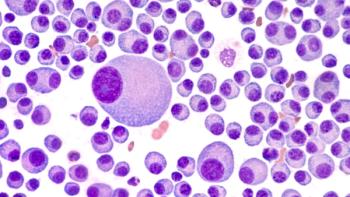
Pharmacists play a crucial role in optimizing CAR-T therapy outcomes by guiding bridging therapy decisions and enhancing patient safety through proactive collaboration.

Pharmacists enhance multiple myeloma care by managing cytokine release syndrome and advocating for safe vaccination strategies at ASH 2025.

Experts discuss the complexities of gene therapy for sickle cell disease, emphasizing patient support, psychosocial factors, and long-term care considerations.

New research reveals that effective bridging therapy before cilta-cel infusion significantly enhances safety and long-term outcomes in patients with multiple myeloma.
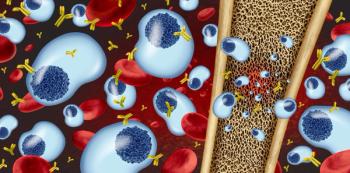
In an analysis of the intention-to-treat population of the BENEFIT study, investigators demonstrated improved sustained minimal residual disease negativity with the Isa-VRd regimen in newly diagnosed multiple myeloma (NDMM).
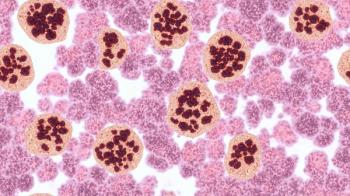
Experts at the ASH Annual Meeting and Exposition in Orlando, Florida, explored innovative strategies and treatments for improving outcomes in diffuse large B-cell lymphoma.


The American Society of Hematology (ASH) Annual Meeting and Exposition will feature the latest news, clinical trial updates, and key opinion leaders in the hematology field.
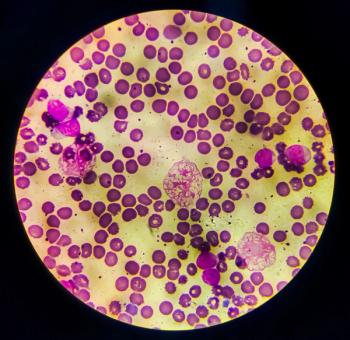
Leukemia biology may predict patterns of blinatumomab failure after initial response.
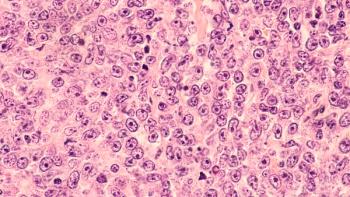
A phase 2 trial investigates MRD detection and therapy advancements.
Presentations detail clinical trial results and drugs in the pipeline.

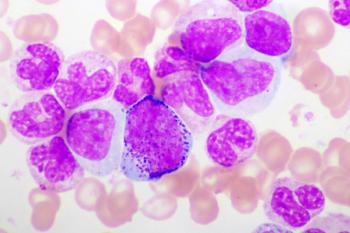
Constantine Tam, MD, discusses zanubrutinib's efficacy in CLL/SLL, emphasizing its durability, high response rates, safety considerations, and evolving therapeutic potential in combination with other agents.
Yi Lin, MD, PhD, highlights the importance of achieving MRD negativity in multiple myeloma, CAR T-cell therapy outcomes, and the critical role of pharmacists in patient care.
Firas El Chaer, MD, discusses newly-presented data at ASH demonstrating nuvisertib's effectiveness in myelofibrosis.
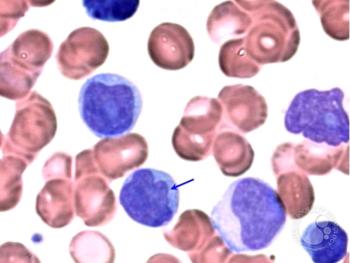
Alison Moskowitz, MD, discusses the clinical considerations, dosing strategies, and the critical role of pharmacists in managing toxicities and tailoring treatment plans for dual-targeted therapy with ruxolitinib and duvelisib.

Improvements were observed regardless of whether patients initiated ruxolitinib in the second or third line of treatment.
Compared with placebo, patients with relapsed/refractory (R/R) follicular lymphoma (FL) who were treated with tafasitamab showed a median progression-free survival (PFS) of 22.4 months.

Ira Zackon, MD, explains where future research lies regarding the implementation of bispecific antibodies in community oncology settings.