

Patients with chronic graft-versus-host disease (cGVHD) were most likely to receive belumosudil in the fourth line (33.7%) setting or the fifth through seventh line (33.1%).
Patients with chronic graft-versus-host disease (cGVHD) were most likely to receive belumosudil in the fourth line (33.7%) setting or the fifth through seventh line (33.1%).
Navtemadlin has demonstrated meaningful efficacy and safety as a monotherapy or combination treatment in various preclinical and clinical trials.

This builds off prior data that showed safety and efficacy of CD19 and CD22 chimeric antigen receptor (CAR)-T cell therapy in children with relapsed or refractory B-lineage acute lymphoblastic leukemia (B-ALL).
Sonja Zweegman, MD, PhD, explains the improvements in minimum residual disease negativity found after treatment with daratumumab and the VRd regimen in patients with newly-diagnosed multiple myeloma who are transplant-ineligible.

Luca Bertamini, MD highlights the potential clinical implications of using circulating tumor cells as a biomarker in patients with newly-diagnosed multiple myeloma.

The phase 3 CEPHEUS trial demonstrated that adding daratumumab (DARA) to the VRd regimen significantly improves minimal residual disease negativity, progression-free survival, and overall response in transplant-ineligible or transplant deferred patients with newly diagnosed multiple myeloma, establishing a new standard of care.

The GMMG-HD7 trial evaluated the addition of isatuximab to standard induction therapy in patients with newly diagnosed multiple myeloma who are eligible for autologous stem cell transplantation, demonstrating significantly higher rates of minimal residual disease negativity and improved progression-free survival (PFS).
Ira Zackon, MD explains his analysis of bispecific antibody utilizaton for relapsed or refractory multiple myeloma in community oncology centers.
Robert Rifkin, MD, FACP, discusses multiple abstracts featuring drugs demonstrating efficacy in patients with relapsed/refractory multiple myeloma.

Shirley D'Sa, MD, highlights the long-term efficacy and tolerability of zanubrutinib in patients with Waldenström macroglobulinemia, as seen in the long-term extension of ASPEN.

The phase 3 AMPLIFY trial demonstrates that fixed-duration regimens of acalabrutinib and venetoclax, with or without obinutuzumab, significantly improve progression-free survival and deliver manageable safety profiles compared to chemoimmunotherapy in treatment-naive chronic lymphocytic leukemia (CLL).

The AQUILA study demonstrates that early treatment with daratumumab significantly delays progression to symptomatic multiple myeloma, improves survival outcomes, and offers a well-tolerated alternative to traditional observation.
Amir Ali, PharmD, BCOP highlights the success of shorter-treatment duration venetoclax in patients with acute myeloid leukemia and efficacy of pre-transplant blinatumomab in those with acute lymphocytic leukemia.

Rakesh Popat, MBBS, PhD explains the mechanisms of action behind the improvement in minimum residual disease in patients with lenalidomide-refractory multiple myeloma with cilta-cel compared with standard of care.
Jason Wang, MD highlights the reduction in incidence and severity of adverse events such as cytokine release syndrome and ICANS following axi-cel treatment in patients with R/R LBCL.

A ketogenic diet and its key metabolite, β-hydroxybutyrate, enhance the efficacy of CAR T-cell therapy by improving metabolic fitness, cytokine production, and cellular expansion, offering a promising, safe strategy for optimizing cancer immunotherapy.

Glucagon-like peptide 1 (GLP1) receptor agonists were shown to be associated with a reduced risk of venous thromboembolism (VTE), while high dietary fiber intake was shown to enhance microbiome health, lower graft-versus-host disease (GVHD) severity, and improve overall survival following allogeneic hematopoietic cell transplantation.

In newly diagnosed average and high standard risk B-cell acute lymphoblastic leukemia (B-ALL), blinatumomab improved disease-free survival (DFS) by approximately 97.5% and 94.1%, respectively.
Donald Moore discusses some of the obstacles that bispecific antibodies have faced in community cancer centers, including misconceptions coupled with a prevalent toxicity profile.
Jose Tinajero discusses how certain mutations can be indicators of blinatumomab treatment failure in patients with B-cell acute lymphoblastic leukemia.

Mazyar Shadman, MD, MPH, discusses the continued efficacy of zanubrutinib in patients with chronic lymphocytic leukemia.
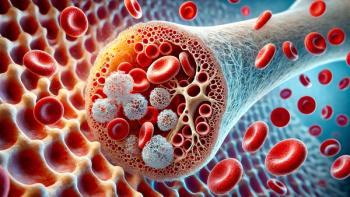
Pelabresib is an investigational, oral, small molecule that inhibits bromodomain and extraterminal (BET) proteins.
The data support the use of supportive anemia care agents in combination with ruxolitinib (Jakafi; Incyte Corp).

The American Society of Hematology (ASH) Annual Meeting and Exposition will include the latest news and clinical trial updates in the hematology field.

Anemia is a very common adverse effect associated with the use of ruxolitinib.

Anemia is a common adverse effect of ruxolitinib, calling for new approaches to mitigate risks.

Clinical trial analysis results studying VAD-44 in patients with hereditary hemorrhagic telangiectasia (HTT) will be presented at the 2024 American Society of Hematology Annual Meeting & Exposition.

Pharmacy Times provides a comprehensive recap of the latest advancements in hematology and breast cancer, shared at the 2023 American Society of Hematology and the San Antonio Breast Cancer Symposium conferences
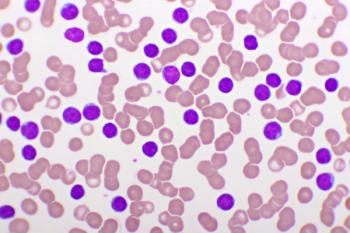
The MRD-guided treatment approach has a significant advantage over chemotherapy.

It can also help identify patients who would benefit from disease-specific therapies.