

Fecal microbiota transplant from responders to non-responders was able to rescue immune checkpoint inhibition use in patients with melanoma, with 40% of patients showing clinical benefit.
Fecal microbiota transplant from responders to non-responders was able to rescue immune checkpoint inhibition use in patients with melanoma, with 40% of patients showing clinical benefit.

High tumor fraction after induction chemotherapy identifies a population with an unmet need who has low chances to benefit from immune checkpoint blockades.
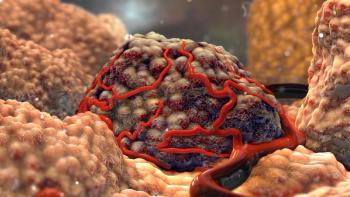
Findings presented at the American Society of Clinical Oncology (ASCO) 2023 meeting show the long-term efficacy and safety profile of larotrectinib (Vitrakvi; Bayer) in solid tumors with NTRK gene fusion.

Obe-cel is an investigational CD19 CAR T-cell therapy currently in clinical trials for relapsed/refractory B-cell acute lymphoblastic leukemia and B-cell non-Hodgkin lymphoma.

Ribociclib (Kisqali) demonstrated a 26% risk reduction in distant disease-free survival and a 28% risk reduction in recurrence-free survival in patients with HR+/HER2- early breast cancer.

The 2023 ASCO Annual Meeting is being held in Chicago, Illinois from June 2 to 6.

In the initial cohort, 63% of patients with advanced melanoma achieved an objective response rate, including 6 who had a complete response and 19 who had a partial response to the combination of fianlimab and cemiplimab.

Study shows 18.4% of patients with relapsed or refractory chronic lymphocytic leukemia treated with lisocabtagene maraleucel achieved a complete response (CR), with median duration of CR not reached at median follow-up of 21.1 months.

Research has shown these programs can increase the number of patients who can access targeted treatments.

The ATHENA-MONO trial is investigating the use of rucaparib as front line maintenance treatment in ovarian cancer.

Expanded glomerular filtration rate (GFR) testing in the United States could be one step toward minimizing disparities in renal formulas, Beumer said.

The step-up dosing approach with glofitamab in a phase 1 trial enabled researchers to minimize cytokine release syndrome while maximizing outcomes.

Nicholas Robert, MD, chief medical officer at Ontada, discussed disparities in biomarker testing and how they are being addressed.

The treatment also significantly reduces the risk of progression or death and prolonged median PFS compared with fulvestrant in all individuals without prior chemotherapy, the analysis shows.

Although it has clear benefits when monitoring and managing cancer, Feinberg said more widespread use of circulating tumor DNA will take time.

Investigators report that the 2 individuals receiving the 120-mg dosage had 3 probable immune-related adverse events, which provides supportive evidence of immune activation.
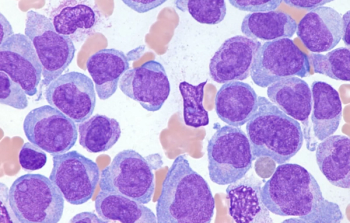
Results from a phase 3b study showed that venetoclax combined with azacitidine or decitabine can safely be initiated in a US community-based outpatient setting.

Blinded independent central review analysis also adds confidence to the findings.
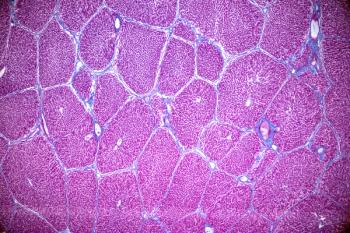
JZP458, a recombinant Erwinia-derived ASNase from a Pseudomonas fluorescens expression platform, was previously approved by the FDA for patients with ALL/LBL who had developed hypersensitivity to Escherichia coli (E. coli)–derived ASNase.

Investigators found that individuals receiving selinexor had a median PFS of 5.7 months compared to 3.8 months for those given the placebo, with a stratification adjusted hazard ratio of 0.70.

The ability to measure GFR would be a significant advancement for clinicians in the United States.

Scot Ebbinghaus, MD, vice president of oncology clinical research at Merck, discussed the growing body of research surrounding pembrolizumab (Keytruda) and what it is currently being investigated for.

Additionally, the 2-time dependent variables, dose reduction, and relative dose intensity 2 (RDI2) were included in the respective model as covariates to explore the connection to overall survival.
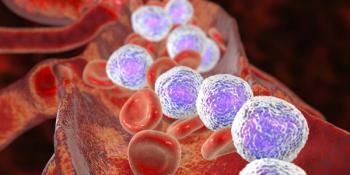
Overall, the investigators observed that the CR, undetectable minimal residual disease rates, progression free survival, and overall survival amomg the patients enrolled in the trial were favorable.

Ginna Laport, MD, discussed the growing body of research surrounding venetoclax.

Beth Koselke, PharmD, BCOP, discusses the impact of pharmacist intervention in clinical trial enrollment, specifically in the MYLUNG Consortium.

All individuals who received second-line chemotherapy regimens met the PFS2 endpoint and all but 1 individual had died at time of data cutoff, according to a presentation at 2022 ASCO Annual Meeting.
Rucaparib at the 400 mg dosage combined with nivolumab and ipilimumab for 4 cycles will continue onto a phase 2 trial for individuals with relapsed ovarian cancer.

Nicholas Robert, MD, chief medical officer at Ontada, discusses disparities in biomarker testing and how they are being addresses at ASCO 2022 Annual Meeting.

Biomarker positive patients were randomized to maintenance rucaparib 600 mg or matched placebo within 10 weeks of completing PBC until disease progression.