



Future of Pharmacy
Latest News
Advertisement
Latest Videos




Advertisement
More News

High-cost novel therapies challenge payers and patients, while biosimilars help balance affordability.

Jake Galdo and Annie Eisenbeis discuss their vaccine gap closure program and the ability to utilize the model beyond vaccines.

Eight areas of improvement were developed as part of national initiative with stakeholder involvement.

For pharmacies, AI and other technologies are key to thriving in the era of value-based care.

In Missouri, community health workers partnered with community pharmacists, CPESN, and others to develop a state-funded program to address vaccine gaps in local communities.
In an interview with Pharmacy Times, Jasmine Perry describes her idea of an effective health care delivery model and why research can have a huge impact at the policy level.

Drawing on years of experience, Rina Shah explains how sustainable care models are essential for a thriving pharmaceutical industry.

In an interview with Pharmacy Times, Jon Easter discusses the need for pharmacy to align as a profession to achieve policy and research goals.

President of NACDS, Steve Anderson, discusses how the events at Total Store Expo reflect on the association's goals of innovation and a focus on public policy.

When a community loses a pharmacy, it loses a trusted health care provider. Understanding the root causes of these closures—and what we can do about it—can drive change.

Sara Roszak recounts the Annual NACDS Foundation Dinner and their role in implementing research at the clinical level.

The decision by the Supreme Court has the potential to upend the power of regulatory agencies to shape the health care landscape of the country.

In a session at NACDS Total Store Expo, experts spoke to the success of value-based care models in the pharmaceutical industry.

The FDA also granted rare pediatric disease designation for the drug.

Customers report that their communication is strong with their pharmacists, but only 51% said their pharmacist was trustworthy.

Pharmacies can adapt by embracing digital self-service options to better engage with patients, meet increasing consumer demand, and enhance revenue streams.

Immunization rates have not returned to pre-pandemic levels, leaving millions of children and infants at risk for measles or diphtheria, tetanus, and pertussis.

If properly implemented, increasing the pharmacist’s clinical authority could ensure increased access to care for patients and advance the practice of pharmacy.

Innovations are expanding opportunities for care.

The findings showed that pharmacist-led interventions resulted in the greatest systolic blood pressure reductions.

The cause of the outage was deemed to be due to a defect found in a content update for Windows users.

Allison Burns discusses how pharmacists should prepare and educate themselves regarding OTC naloxone, and the steps that can be taken in stores and pharmacies to ensure OTC naloxone is visible and available.
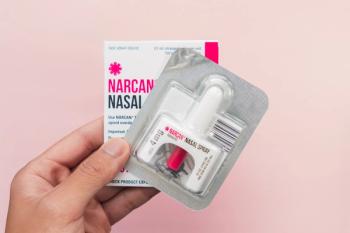
Allison Burns, president and CEO of EMO Health, discusses the price point and stigma surrounding OTC naloxone in an interview with Pharmacy Times.

Panelists identify key public policies that pharmacies would benefit from acting on in 2024.
In a new report, the FTC says pharmacy benefit managers act as middlemen in the pharmaceutical industry, leading to the squeezing of independent pharmacies and increases in prices for patients.
Advertisement
Advertisement
Trending on Pharmacy Times
1
Amivantamab Becomes First FDA-Approved Therapy in 10 Years for Pretreated Recurrent or Metastatic HNSCC
2
Understanding Kratom: Pharmacology, Safety, and Regulation
3
CVS Health to Split Into 2 Public Companies, Separating Retail and Specialty Pharmacy
4
AHA 2026: Insights on Oral PCSK9, Survodutide, and HF Care Come to Chicago
5