



Breast Cancer
Latest News

Advertisement
Latest Videos





































































































Advertisement
More News
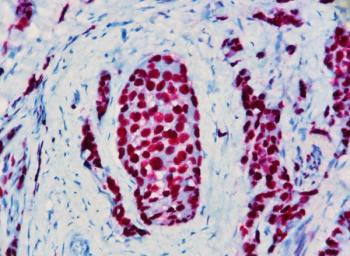
Building on promising prior research, ERβ was found to prevent aggressive forms of breast cancer from metastasizing.

Previous research has determined the role of dysregulation in the evolution of cancers but lacked investigation of the ability of these mutations to predict different forms and aggressiveness of cancer.

There are currently no effective treatments for CIPN prevention.
Chemotherapy may increase inflammatory biomarkers that can impact the diversity of the gut microbiome, leading to serious anthropomorphic changes among women treated for early-stage breast cancer.

A panel at the Advanced Topics for Oncology Pharmacy Professionals Summit discusses strategies to address patients’ fears and distrust of the medical and scientific community.

A cancer vaccine has shown efficacy in dogs, with implications for benefit in humans.

These study results may inform clinical practice strategies this year and beyond.

The landscape of clinical trials in oncology is rapidly evolving, driven by increasing research efforts and advancements in the field of clinical research.
More than half of the patients prescribed oral anticancer agents report persistent moderate-to-severe symptoms, despite receiving counseling on adverse effect management.

Investigators call for further public awareness of other breast cancer risk factors, besides dense breasts, which could help identify more women who are at high risk.

Race, ethnicity, years after diagnosis and mental and physical stress are among factors associated with unmet supportive care needs and a higher risk of hospitalization among patients with cancer.

Increases in biological aging based on epigenetic measures could be used to inform the future of survivorship care among patients with breast cancer.

The single institution study compared fixed dose capecitabine to standard dose capecitabine to compare efficacy and tolerability in metastatic breast cancer.

The benefit of ribociclib was seen as consistent against all of the stratification factors in the phase III study.

Both immunotherapies and targeted therapies are showing significant promise in these areas, offering patients new treatment options.

Andrea Iannucci, PharmD, BCOP, assistant chief pharmacy officer at UC Davis Health, discussed challenges and opportunities when implementing new treatments for breast cancer.

Depression can affect the trajectory of treatment and associated outcomes.

Capivasertib combined with fulvestrant doubled progression-free survival in patients with recurrent or progressed advanced stage HR-positive HER2-negative breast cancer compared to placebo.

There are 8 million cancer survivors who may have limitations in their daily functional ability.
The meeting aims to bring together pharmacists to discuss solutions for responding to the rapidly evolving evidence and needs for effective implementation.

FR alpha expression is limited on normal cells, but upregulated on cancers such as ovarian, endometrial, and triple-negative breast cancers.
Ribociclib (Kisqali) demonstrated a 26% risk reduction in distant disease-free survival and a 28% risk reduction in recurrence-free survival in patients with HR+/HER2- early breast cancer.

Specialty pharmacists—those caring for patients with serious, sometimes life-threatening conditions such as cancer or rheumatologic disease—are not immune from the ongoing labor crisis.

The imaging agent and visualization system will be an adjunct to standard of care to reduce residual cancer in the lumpectomy cavity during initial surgery.

US Preventive Services Task Force also called for more research into how to address screening and treatment disparities faced by racial and ethnic minorities.
Advertisement
Advertisement
Trending on Pharmacy Times
1
Pharmacists Weigh Health, Not Just Weight, in Obesity Care
2
Extended-Interval Tarlatamab Dosing Offers Pharmacists More Flexible Administration Windows in SCLC
3
Building a CDTM Program Means Starting Small
4
Pharmacists as the Glue in Cardio-Kidney-Metabolic Care
5