

Zahra Mahmoudjafari, PharmD, BCOP, DPLA; Alison Gulbis, PharmD, BCOP; and Kamakshi Rao, PharmD, BCOP, FASHP, discuss research conducted looking to assess the hematology-oncology pharmacist “great migration” from the field.
Zahra Mahmoudjafari, PharmD, BCOP, DPLA; Alison Gulbis, PharmD, BCOP; and Kamakshi Rao, PharmD, BCOP, FASHP, discuss research conducted looking to assess the hematology-oncology pharmacist “great migration” from the field.

Ken Thorpe, PhD, professor of public health at Emory University and chairman of Partnership to Fight Chronic Disease, discusses legislation that the US House of Representatives recently passed to put greater restrictions on the FDA’s accelerated approval pathway.

After 4 years of treatment with ofatumumab, 78.8% of patients with relapsing forms of multiple sclerosis who continuously received ofatumumab achieved NEDA-3 compared to 51.8% of those who switched from teriflunomide to ofatumumab.

Jazz Pharmaceuticals announced top-line results from the phase 3 RELEASE MSS1 trial, evaluating nabiximols oromucosal spray in individuals with multiple sclerosis.

Zahra Mahmoudjafari, PharmD, BCOP, DPLA; Alison Gulbis, PharmD, BCOP; and Kamakshi Rao, PharmD, BCOP, FASHP, discuss the underlying causes of the hematology-oncology pharmacist great migration from the field.

Andre Harvin, PharmD, MS, executive director of Pharmacy, Oncology Services at Cone Health, discusses methods of accomplishing greater workforce diversity in the field of oncology pharmacy.

New data show that after 4 years of treatment, 78.8% of patients who continuously received ofatumumab achieved no evidence of disease activity-3 (NEDA-3) compared to 51.8% of those who switched from teriflunomide to ofatumumab.

Bhavesh Shah, RPh, BCOP, steering committee co-chair of the 2022 ATOPP Summit, discusses the impact of the annual ATOPP summit on the oncology pharmacy field.
Sonidegib is a biphenyl carboxamide that blocks the signaling in the hedgehog pathway.

Nearly 63% of newly diagnosed patients have advanced colorectal cancer, which requires more aggressive treatment and reduces the associated 5-year survival rate.

Andre Harvin, PharmD, MS, executive director of Pharmacy, Oncology Services at Cone Health, discusses the importance of putting precision medicine programs into oncology practices with pharmacists leading the way.

Pharmacy Times will be covering the 2022 ATOPP Summit live in San Diego, CA.

Amy Woodard, PharmD, BCOP, the steering committee co-chair of the 2022 ATOPP Summit, highlights key topics and discussions at the in-person summit in July in San Diego, CA.

Metformin has been shown to decrease pro-inflammatory cytokines that appear to improve the immune response to tumor cells and improve the efficacy of immunotherapy.
Andrea Iannucci, PharmD, BCOP, member of the Board of Directors of the Hematology/Oncology Pharmacy Association (HOPA), discusses some common challenges hematology oncology pharmacists face in the field during their pursuit of professional growth and development.

Median radiographic progression-free survival was 24.8 months for olaparib plus abiraterone, compared to 16.6 months in the abiraterone arm.

Throughout the world, patients and health care professionals alike have become better acquainted with digital tools when face-to-face interactions became increasingly problematic.

As part of the submission, the companies have also requested priority review with the FDA for elacestrant in patients with ER+/HER2- advanced or metastatic breast cancer.

June 27 is National HIV Testing Day, so Pharmacy Times® sat down with Brad McElya, PharmD, director of Specialty Health Solutions at Walgreens, to discuss the importance of HIV testing.

As we mark the second anniversary of Bostock v. Clayton County this month, let’s remember to treat each other with dignity, empathy, and respect, while we work together for a safer and more tolerant workplace.
Lenvima (lenvatinib) is approved for the treatment of thyroid cancer, renal cell carcinoma, hepatocellular carcinoma, and endometrial carcinoma.
Lisocabtagene maraleucel (liso-cel, Breyanzi; Bristol Myers Squibb) approved for the second-line treatment of patients with large B-cell lymphoma (LBCL), including diffuse large B-cell lymphoma not otherwise specified, high-grade B-cell lymphoma, primary mediastinal LBCL, and follicular lymphoma grade 3B.
Analysis results expand understanding of the impact of the company’s medicines in early stages with the goal or providing patients with durable and robust outcomes from their first treatment.

Breast cancer screening guidelines using mammography vary among guiding bodies, including the American Cancer Society and the American Academy of Family Physicians.

Abemaciclib (Verzenio; Eli Lilly and Company) is an FDA-approved kinase inhibitor being investigated for new indications in individuals with hormone-sensitive prostate cancer and castration-resistant prostate cancer.

Combination therapy with both nivolumab and relatlimab leads to increased T-cell activation compared with monotherapy with either agent alone.

Andrea Iannucci, PharmD, BCOP, member of the Board of Directors of the Hematology/Oncology Pharmacy Association (HOPA), discusses how HOPA works within and its impact on hematology/oncology pharmacy practice management.

The impact of the pandemic on the mental health of health care workers, including pharmacists and pharmacy staff, has been well documented.
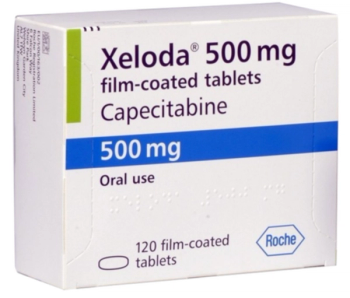
Capecitabine (Xeloda) is indicated for adjuvant colon cancer, metastatic colorectal cancer, and metastatic breast cancer.

Treatment identifies patients with ROS1 fusion-positive non-small cell lung cancer or those with NTRK fusion-positive solid tumors for whom treatment with Rozlytrek may be appropriate.