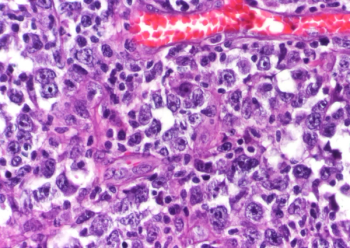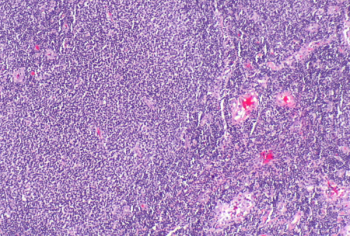
New research in immunotherapy is exploring vaccines to treat cancer, whether preventative or reactive against current tumors.

New research in immunotherapy is exploring vaccines to treat cancer, whether preventative or reactive against current tumors.

Belantamab mafodotin plus lenalidomide and dexamethasone was found tolerable with no new safety signals and enhanced response rates in patients with multiple myeloma.

All of the findings indicate that inadequate margin widths result in higher risks of distant recurrence and breast cancer mortality, as well as increased total recurrence.

Ivosidenib plus azacitidine shows benefits in event-free survival, overall survival, and clinical responses compared with placebo in patients with IDH1-mutated acute myeloid leukemia.

The functional and physical well-being and other scores from the survey are more favorable for those who were treated with the therapy, investigators say.

A researcher discusses how developing tertiary lymphoid structures may reach a greater maturity level within the tumor microenvironment.

Given that dendritic cells are necessary for anti-tumor response, researchers investigated which pathways stop these cells from performing their full functions.

Despite significant advances in cancer treatment, molecular sequencing and enrollment of Black patients in clinical trials are still less than that of White and Asian patients.

Yvonne Chen, PhD, discusses her research to engineer more safe and effective next-generation CAR-T therapy for cancer immunotherapy.

IDH inhibitors show encouraging results in patients with myelodysplastic syndrome, but longer follow ups are needed in a larger patient population to confirm the results.

Expert discusses whether epigenetic programs regulate human T cell exhaustion and whether epigenetic-based strategies can be used to enhance T cell-based therapies.

Bevacizumab-adcd (Vegzelma) is indicated for the treatment of nonsquamous non–small cell lung cancer; recurrent glioblastoma; metastatic colorectal cancer; persistent, recurrent, or metastatic cervical cancer; metastatic renal cell carcinoma; and epithelial ovarian, fallopian tube, or primary peritoneal cancer.

Two Houston Methodist cancer researchers were granted a quarter of a million dollars each to study some of the most lethal cancers.

New research has shown significant promise for the use of CAR T-cell therapies in solid tumors.

KIN-2787 is a potential treatment for BRAF class II or III alteration-positive and/or NRAS mutation-positive, metastatic or unresectable, stage IIB to IV malignant melanoma.

Combination treatment with ibrutinib found to increase median progression-free survival by 2.3 years compared to the placebo.

There were approximately 250,000 new cases of prostate cancer identified in the United States in 2021, which is considered approximately 13% of all cancer cases.

Experts discuss insight from a recently published oncology drug shortages research project and HOPA’s plan to address related issues based on the project’s findings.

Expert explains how delaying BCOP certification too long after a PGY2 residency can cause a “if you don’t use it, you’ll lose it” problem.

CAR T therapies are potentially revolutionizing the treatment of acute lymphoblastic leukemia (ALL).

The annual report notes that progress in reducing cancer mortality is uneven among populations, with minority groups not seeing the same benefits from therapeutic advances.

Danielle Carnival, PhD, addressed the National Comprehensive Cancer Network Policy Summit on Friday.

The FDA accepted a supplemental New Drug Application for tucatinib to treat HER2 colorectal cancer, which could significantly improve outcomes for these patients.

The All of Us Research Program looks to enroll more than 1 million US individuals in the next 10 years to enable public access to medical data for research purposes.

Selpercatinib produced clinically meaningful and durable responses across a variety of tumor types in patients with RET-driven cancers.

Data showed that Black women, regardless of education level or income, are more likely to reside in disadvantaged neighborhoods, which may contribute to racial disparities in breast cancer.

Nivolumab is a biomarker that has been shown to benefit the survival of patients with stage 2 melanoma patients compared with placebo.

Second- and third-generation individuals living in Los Angeles, California, demonstrate 35% and 61%, respectively, more of a chance of getting the disease, according to new study results.

Black women are suggested to be diagnosed with stage 3 HR-positive breast cancer and receive longer neoadjuvant endocrine therapy more often than White women.

Phase 3 TOPAZ-1 trial of AstraZeneca’s durvalumab demonstrates an improved overall survival benefit.