Early detection is crucial for breast cancer survival.
Early detection is crucial for breast cancer survival.
Patients undergoing chemotherapy can use Emend with other antiemetic medicines to prevent chemotherapy-related nausea and vomiting.
Patients undergoing chemotherapy can use Emend with other antiemetic medicines to prevent CINV.

Top news of the day from across the healthcare landscape.

Top news of the day from across the healthcare landscape.

Judge orders tobacco companies to inform Americans about the harmful and addictive properties of smoking.
The lack of association of SVR with ribavirin dose reflects the wide variance in plasma levels between individuals with hepatitis C receiving the same weight-based dosage.
Top news of the week from Specialty Pharmacy Times.
Abemaciclib (Verzenio) may not improve overall survival in patients with non-small lung cancer.

Afatinib (Gilotrif) may treat patients with non-small cell lung cancer who have certain mutations.
Many cancer drug approvals based on indirect measures, study finds.

Cancer care at hospitals is significantly more expensive than at community oncology clinics.
Researchers continue to focus on developing an 8-week treatment regimen for hepatitis C virus.
Patients with ovarian cancer often face complex burdens that go beyond just medication.

Mastectomy rates increased after actress Angelia Jolie announced her procedure.
National brand spending and new patient rates for hepatitis C virus dropped last year.
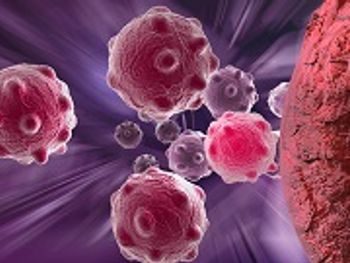
Mass spectrometry device rapidly identifies molecular profile of cancerous tissue.

Beth Wallace was always one to advocate for herself in different areas of her life, but when it came to her health, she left it to the doctors. Here, she discusses the importance of education and being your own advocate.

Consistency among caregivers can be an important factor for patients undergoing treatment for cancer.

Cancer patient Beth Wallace speaks about her support system and the impact they have made on her life.
The pharma giant will now focus on its PD-1 cancer immunotherapy Keytruda.

Top news of the day from across the health care landscape.
Top news of the day from across the healthcare landscape.

Beth Wallace discusses various treatments for leiomyosarcoma, including doxorubicin (Adriamycin), nicknamed the red devil.
Gadolinium-containing imaging agent could improve breast cancer survival.
Recent studies suggested that hepatitis C antiviral drugs may increase the risk of hepatocellular carcinoma.
In part 2, Beth Wallace describes the events leading up to her diagnosis with leiomyosarcoma.

Pertuzumab-based regimen shows promise treating adjuvant treatment of HER2-positive early breast cancer.
Genentech is seeking approval for Perjeta used in combination with trastuzumab and chemotherapy for adjuvant treatment of HER2-positive early breast cancer.

Consolidative radiation followed by chemotherapy could play a key role in future survival outcomes among patients with non-small cell lung cancer.