

Opinion|Videos|July 2, 2024
RSV Vaccine Efficacy in Pregnancy
Author(s)Carrie Koenigsfeld, PharmD, FAPhA
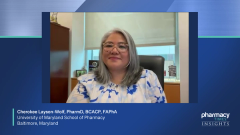
Carrie Koenigsfeld, PharmD, FAPhA, highlights the main findings from the MATISSE trial, which evaluated the safety and efficacy of a non-adjuvanted RSV vaccine administered to pregnant women, presenting data that suggests the vaccine's effectiveness in preventing severe RSV in infants and discussing the observed adverse events in both mothers and infants.
Advertisement
Episodes in this series
- What were the key results from the
MATISSE trial regarding the safety and efficacy of the non-adjuvanted vaccine in pregnant women?- Efficacy in preventing severe RSV in infants
- Adverse effects in maternal and infant subjects
- Trial limitations: no high-risk pregnancies
Advertisement
Related to this article

A single infusion reversed new-onset type 1 diabetes (T1D) in more than half of treated mice by strengthening regulatory T cells and driving autoreactive CD8+ T cells into a less destructive state.

A detailed LINKER-MM1 analysis found that cytokine release syndrome (CRS) with linvoseltamab occurred early, was predominantly low grade, and became less frequent with successive step-up and full doses.
Approval spans early and levodopa-treated disease; a 6-week titration and CYP3A interactions put pharmacists at the center of starting therapy.

In a Pharmacy Times interview, study coauthor William J. Peppard, PharmD, discusses the association between suzetrigine and fewer opioid refills after knee replacement, the limits of the evidence, and the access barriers pharmacists can help patients navigate.
The once-daily tablet is the third approved treatment for fibrodysplasia ossificans progressiva (FOP), with CYP3A4 and metformin interaction guidance.

Novo's topline phase 3 data show 12.4% weight loss with CagriSema 1.0 mg/1.0 mg in type 2 diabetes and 21.0% in adults with overweight or obesity.

Marissa Reigelman of US Pharmacopeia explains how single-country dependence on key starting materials, combined with low prices, has kept 5 critical injectable drugs in shortage for more than a decade.
An MRD-guided strategy incorporating teclistamab-daratumumab intensification produced deep responses in newly diagnosed high-risk multiple myeloma, although infections affected more than three-quarters of treated patients.
Advertisement
Advertisement
Trending on Pharmacy Times
1
Ramantamig's 93.6% ORR and Outpatient CRS Control
2
Nearly Two-Thirds of Patients With Long COVID Meet Diagnostic Criteria for POTS
3
Teclistamab-Daratumumab Intensification Achieves 73% MRD-Negative CR Rate in High-Risk Multiple Myeloma
4
Influenza Vaccines Continue to Reduce Severe Disease and Death Across High-Risk Groups, Evidence Review Finds
5