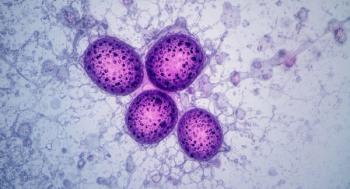
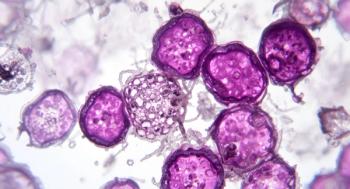
Clostridioides difficile(C difficile) is a spore-forming, toxin-producing, gram-positive anaerobic bacterium that causes antibiotic-associated diarrhea and colitis.1 An estimated 500,000 C difficile infections (CDI) and 15,000 to 30,000 CDI-related deaths occur each year in the United States, posing a major burden on patients, caregivers, and the health care system.2,3 Risk factors for CDI include older age (≥65 years), recent antibiotic exposure, long length of stay in health care settings, serious underlying illness, or immunocompromising conditions.4,5
After treatment with standard-of-care (SOC) antibiotics (eg, oral vancomycin, metronidazole, and/or fidaxomicin), CDI recurs in up to 35% of patients following an initial episode, and up to 65% of patients experience subsequent recurrent CDI (rCDI).1,6,7 CDI and rCDI are associated with life-threatening sepsis, which can occur in about 27% to 39% of patients who had an initial episode of CDI and 35% to 45% of patients with rCDI within 12 months following infection.8,9 Patients also experience a psychological impact after suffering from CDI, with studies reporting worsening of self-reported depression, increased rates of psychiatric diagnoses, and lower scores on mental health surveys during and after a CDI episode.8,10,11 CDI imposes a significant financial burden on patients and the health care system, and rCDI further increases all-cause health care costs by $10,000 to $60,000 above the cost of an initial CDI episode.12
Given the high rates of treatment failure for SOC antibiotics in patients with rCDI, new therapeutic strategies are needed. Current therapies targeting secondary prevention of CDI include bezlotoxumab (Zinplava; Merck Sharp & Dohme Corp) and fecal microbiota transplantation (FMT).7,13 Evidence supporting bezlotoxumab in combination with current SOC therapy for CDI (eg, fidaxomicin) is very limited. FMT may effectively target gut dysbiosis;14–16 however, FMT has notable quality and safety concerns. FMT lacks product standardization, consistent donor screening for pathogens, and a uniform method of administration.17,18 Live biotherapeutic products (LBPs) offer a unique approach to addressing the underlying gut microbiota dysbiosis that fuels rCDI, and feature traceability of the supply chain.19
Overview of RBL
Fecal microbiota, live-jslm (RBL, Rebyota; Ferring Pharmaceuticals Inc), is the first FDA-approved, single-dose, rectally administered, microbiota-based LBP for preventing rCDI in adults, following SOC antibiotic treatment for rCDI.20 LBPs are designated by the FDA as biological products containing live organisms, such as bacteria, that are applicable to the prevention, treatment, or cure of a disease.21
RBL is formulated as a 150-ml rectal suspension and can be administered by a health care professional in any health care setting. Each dose of RBL is derived from a single healthy donor who undergoes rigorous screening for pathogens. RBL is standardized to a stable, cryopreserved liquid suspension of 1x10⁸ to 5x10¹⁰ colony forming units/ml and contains a broad consortium of micro-organisms including Bacteroides spp.20 The other ingredients in RBL are ≤5.97g PEG-3350 (cryoprotectant) and saline.
RBL is hypothesized to restore healthy gut microbiota to the patient, to mitigate antibiotic-induced dysbiosis associated with rCDI.22 After administration, product microbiota recolonize the intestine and restore the “ecosystem” that was disrupted by antibiotics leading up to and during CDI. The newly introduced microbiota may produce metabolic products or interact with the host to shape the local environment.23 Results from clinical trials of RBL support this hypothesis, showing that the gut microbiota in participants with rCDI reflected a healthier microbiota. The microbiota of patients who achieved treatment success after receiving RBL was similar to the microbiota of the RBL dose.24
A total of 978 participants were enrolled across 5 clinical trials evaluating RBL. This included 3 phase 2 trials (PUNCH CD, PUNCH CD2, PUNCH Open-label) and 2 phase 3 trials (PUNCH CD3 and PUNCH CD3-OLS [completed 2023, NCT03931941]).25–30 In the phase 3 PUNCH CD3 trial, RBL demonstrated a statistically significant treatment success rate (absence of CDI-related diarrhea) at 8 weeks vs placebo (70.6% vs 57.5%). Most participants in PUNCH CD3 achieved sustained treatment response, with 92.1% of participants who achieved treatment success at 8 weeks remaining rCDI-free at 6 months. For those who experienced treatment failure, an open-label second dose of RBL was permitted (n=41 RBL, n=24 placebo) with a subsequent 54% response rate. It is unknown which types of patients may require or benefit from an additional dose. However, one post-hoc pooled analysis of the phase 2 and phase 3 randomized, controlled trials suggests modifiable risk factors may be no concomitant proton-pump inhibitor/histamine H2-receptor antagonist use and an antibiotic washout period of 3 days (vs 1-2 days) to improve the chance of treatment success after single-dose RBL administration.31 Retreatment with SOC antibiotics prior to a second dose of RBL was left to the discretion of the treating clinician.
RBL has demonstrated consistent safety and good tolerability through 2 years (24 months) of follow-up.32 Safety has been well-established in a broad patient population, including older adults with numerous comorbidities.33 While patients with select comorbid conditions (eg, inflammatory bowel disease, irritable bowel syndrome, immunocompromised) were excluded from earlier trials and the phase 3 PUNCH CD3 trial; these patients were included in the phase 3 open-label study, PUNCH CD3-OLS. Gastrointestinal (GI) adverse effects (AEs) are common after RBL administration, and can include abdominal pain, diarrhea, abdominal distension, flatulence, and nausea. Most GI AEs are mild to moderate in nature and temporary. In the clinical trial program, no patients experienced infection where the causative pathogen was deemed related to RBL.32
Patients receiving RBL have reported a positive impact on both their mental and physical health-related quality of life.34 Patients report the rectal administration is quick, convenient, acceptable, and lacking any perceived issues with administration, such as bowel preparation.35
Author Disclosures
ALC has served on advisory boards for Melinta, Ferring, LaJolla, Entasis, InflaRx, Gilead, and MicroGenDX; and as the site principal investigator for retrospective chart studies sponsored by Shionogi and Karius (no salary support or funding for involvement with these studies). ST is an employee of Ferring Pharmaceuticals Inc. DWK has nothing to disclose.
Publication fees were supported by Ferring Pharmaceuticals Inc.
Practical Considerations for Using RBL
Patient characteristics
RBL is indicated for the prevention of rCDI in individuals 18 years of age and older, including those at first recurrence, following antibiotic treatment for rCDI.20 RBL should be administered after the patient has completed SOC antibiotic course for CDI and a washout period of 1 to 3 days after the final dose of antibiotics (in a post-hoc analysis, treatment effect was higher in patients with an antibiotic washout period of 3 days vs ≤2 days).31 Patients do not undergo any special bowel or procedural preparation prior to RBL administration. The only contraindication to RBL is a history of severe allergic reaction to any component of RBL. Patients with food allergies were not excluded from any of the clinical trials. Additionally, donors do not have to meet any dietary specifications. In the completed clinical studies, there have been no reports of food-allergy related AEs.32 There are no reported drug interactions; however, it is advised to avoid antibiotic use within 8 weeks of RBL administration unless clinically necessary.
RBL Handling
After ordering RBL, product is shipped frozen on dry ice and delivered in 1 to 3 days. For long-term storage, place RBL (orange box) in an ultracold (–60°C to –80°C) freezer. RBL may be stored in the ultracold freezer or refrigerator with other medications; no separate storage is required. For near-term administration, RBL may be stored in the refrigerator for up to 5 days. Frozen RBL must thaw in the refrigerator prior to administration. Frozen RBL requires at least 24 hours to thaw completely. There are no approved methods or techniques to reduce the thawing time. Frozen RBL must not be heated. Once thawed, RBL cannot be re-frozen. The blue administration kit must be separated from the product and stored at room temperature. Of note, the administration kit is labeled with its own expiration dating. With turnaround time for delivery and thawing, the time from product order to administration of RBL is at least 2 to 4 days.
Acknowledgments
Medical writing and editorial support were provided by Agnella Izzo Matic, PhD, CMPP (AIM Biomedical LLC) and sponsored by Ferring Pharmaceuticals Inc.
Preparing for RBL Administration
Obtain the administration kit (blue box, stored at room temperature), RBL (orange box with suspension bag, thawing in the refrigerator), a disposable under pad, water-soluble lubricant, and any other medical supplies. The potency of RBL is not affected if kept between 46°F and 86°F for up to 15 minutes. Prior to the procedure, request that the patient empty their bladder and bowels. No bowel preparation or fasting is required.