Where to Find Coverage
Pharmacy Times is ready to provide the news and insights that matters most as these PDUFA dates arrive. Be sure to follow our FDA Updates page so you don’t miss a beat.
Cardiomyopathy, hepatitis B, breast cancer, hypertension, and myeloma decisions land in the FDA's final-quarter queue.
The FDA's calendar through the close of 2026 carries decisions that pharmacists across oncology, cardiology, nephrology, immunology, and infectious disease will want to track. Dozens of Prescription Drug User Fee Act (PDUFA) target action dates fall between September and December, several of them tied to potential first-in-class approvals or first pediatric indications. Here are 8 key pending dates and why each matters at the point of care.

The quarter opens on September 18, 2026, with zidesamtinib, Nuvalent's investigational ROS1-selective tyrosine kinase inhibitor (TKI) for adults with locally advanced or metastatic ROS1-positive non-small cell lung cancer (NSCLC) who received at least 1 prior ROS1 TKI. Designed for central nervous system penetrance and activity against resistance mutations such as G2032R, the agent holds breakthrough therapy and orphan drug designations, positioning it as a later-line option for a molecularly defined population pharmacists increasingly encounter in oncology dispensing.1
Pharmacy Times is ready to provide the news and insights that matters most as these PDUFA dates arrive. Be sure to follow our FDA Updates page so you don’t miss a beat.
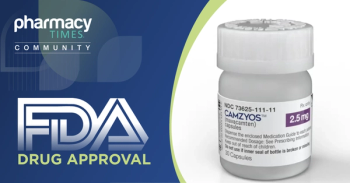
On September 30, 2026, the FDA is set to decide on a supplemental new drug application (NDA) for mavacamten (Camzyos; Bristol Myers Squibb) in adolescents aged 12 to younger than 18 with symptomatic obstructive hypertrophic cardiomyopathy (oHCM). If approved, it would be the first cardiac myosin inhibitor indicated for this younger population. Because mavacamten already carries a Risk Evaluation and Mitigation Strategies (REMS) program and requires echocardiographic monitoring in adults, pharmacists should anticipate extending those same counseling and monitoring workflows to adolescent patients.2
"Approval of mavacamten for adolescents with symptomatic oHCM would represent a major advance, providing the first approved therapy for this population that directly targets the underlying pathophysiology of the disease,” Joseph Rossano, MD, MS, FAAP, FACC, a pediatric cardiologist at Children’s Hospital of Philadelphia, said in an interview. “For patients and families, it could reduce obstruction, improve symptoms and exercise capacity, and potentially decrease the need for invasive procedures in selected patients. Pharmacists would be essential partners in its safe use by identifying important drug interactions, supporting adherence and required monitoring, and counseling patients and families about precautions.”
October 26, 2026, brings bepirovirsen (Ionis), an investigational antisense oligonucleotide from GSK for adults with chronic hepatitis B (CHB). Granted breakthrough therapy and priority review, bepirovirsen would be positioned as the first therapy to deliver clinically meaningful functional cure rates, drawing on the phase 3 B-Well 1 (NCT05630807) and B-Well 2 (NCT05630820) trials. Current nucleos(t)ide analog therapy typically requires lifelong dosing with functional cure rates near 1%, so a finite-duration option would reshape counseling around adherence and treatment expectations.3
Three days later, on October 29, 2026, a supplemental Biologics License Application (sBLA) for tildrakizumab-asmn (Ilumya; Sun Pharma) targets adults with active psoriatic arthritis, supported by the INSPIRE-1 (NCT04314544) and INSPIRE-2 (NCT04314531) phase 3 studies. The IL-23 inhibitor is already approved for plaque psoriasis; the new indication would give pharmacists a familiar agent to discuss for patients whose psoriatic disease has progressed to joint involvement.4
November carries a decision on obinutuzumab (Gazyva/Gazyvaro; Roche) for adults with primary membranous nephropathy (pMN), a chronic autoimmune kidney disease with no FDA-approved therapies to date. The priority review draws on the phase 3 MAJESTY trial (NCT04629248), in which the agent achieved higher complete remission rates at 2 years versus tacrolimus (Prograf; Astellas Pharma). As a B-cell–depleting antibody, obinutuzumab brings infusion-related and infection-monitoring considerations pharmacists already manage in its hematology and lupus nephritis uses.5
“Beyond driving high rates of deep immunologic remission and preserving kidney function, [obinutuzumab] brings an established, well-characterized safety profile that offers genuine reassurance to patients,” Fernando Fervenza, MD, PhD, a professor of medicine at the Mayo Graduate School of Medicine, told Pharmacy Times. “For providers and pharmacists, an official label replaces off-label workarounds with a clear, evidence-based standard of care to streamline payer access and ensure timely intervention—because in glomerular disease, 'time is kidney.’”
On November 30, 2026, the FDA is expected to rule on giredestrant (Roche), an oral selective estrogen receptor degrader (SERD), as adjuvant treatment for adults with ER-positive, HER2-negative early-stage breast cancer. Based on the phase 3 lidERA trial (NCT04961996), giredestrant would introduce an oral endocrine option in the curative setting, with adherence support a natural pharmacist touchpoint given the challenges of long-term adjuvant therapy.6
“For patients, approval would introduce the very first oral SERD for early-stage breast cancer in the adjuvant setting,” Sara A. Hurvitz, MD, FACP, professor of medicine and head of the division of hematology and oncology at Fred Hutchinson Cancer Center, told Pharmacy Times. “For pharmacists, approval would add a new endocrine therapy option requiring familiarity with its mechanism and safety profile. More broadly, it would represent the first major advance in adjuvant endocrine therapy in many years and could expand the treatment options available to patients and clinicians.”
December 22, 2026, marks the decision on lorundrostat (Mineralys Therapeutics), an oral aldosterone synthase inhibitor for adults with hypertension used alongside other antihypertensives. Supported by the phase 3 Launch-HTN (NCT06153693) and phase 2 Advance-HTN trials (NCT05769608), it targets uncontrolled and resistant hypertension. Pharmacists should note the mechanism's relevance to potassium monitoring, though trials reported a favorable safety profile without serum potassium excursions above 5.5 mmol/L.7
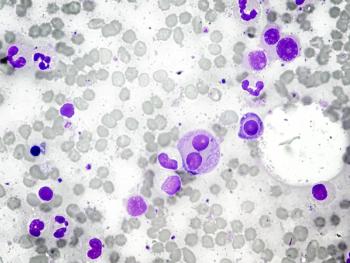
The year ends December 23, 2026, with anitocabtagene autoleucel (anito-cel; Gilead), a BCMA-directed CAR T-cell therapy filed as a fourth-line treatment for adults with relapsed or refractory multiple myeloma. The BLA is supported by a phase 1 study (NCT04155749) and the pivotal phase 2 iMMagine-1 trial (NCT05396885). As a cell therapy, it will carry REMS, cytokine release syndrome, and neurotoxicity monitoring requirements central to any dispensing and coordination role.8