



Reimbursement
Latest News
Advertisement
Latest Videos






































































































Advertisement
More News

The rise in value-based reimbursement models has required oncology care providers to assume an unprecedented level of accountability.

The proposal, which is still largely conceptual, was a part of Newsom’s proposed 2020-2021 budget.1

The Supreme Court released their decision to review Rutledge v. Pharmaceutical Care Management Association, which could affect pharmacy benefits across the country.

A key demand was for the Ohio Department of Medicaid (ODM) to set a minimum reimbursement level and dispensing fees for Managed Medicaid, in order to ensure that pharmacies receive adequate reimbursement plans.

There are some basic tips or tricks to getting the most out of your insurance plan and to maintain the care patients are accustomed to.

Girish Dighe, PharmD, MS, explains why it's important to understand more than just the revenue integrity piece of the puzzle.
Jesse C. Dresser, Esq explains how DIR fees affect specialty pharmacists at the NASP Annual Meeting in Washington, DC.

Jesse C. Dresser, Esq explains a recent piece of PBM legislation from North Dakota and its implications for specialty pharmacy at the NASP Annual Meeting in Washington, DC.
Jesse C. Dresser, Esq explains the current climate of PBM reform at the NASP Annual Meeting in Washington, DC.

Care planning can increase pharmacy profits through efficiencies and through new revenue from payers that value what pharmacists do for patients, if they see the documentation of what has been done.

Making medication synchronization a core tenet of a pharmacy’s business can lead to success.

Utilizing many of the skills learned in pharmacy school could help to personalize care and enhance medication delivery for patients, potentially leading to reductions in adverse drug events and health care costs,

Reform of pharmacy benefit management (PBM) practices has been an issue under much scrutiny due to a belief these entities play a significant role in exacerbating high drug costs.

As pharmacists continue to provide more direct patient-centric services, the case for technicians to take on managing pharmacy inventory becomes more reasonable.

In the wake of California’s drug transparency law, an analysis by state health officials on pricing trends found that drug companies raised the whole acquisition cost dramatically for many drugs.

Study finds health-related quality of life is often not collected for novel cancer drugs when they are submitted for reimbursement.

The new report found that widely used prescription drugs increased by an average of 4.2% in 2017, double the general inflation rate of 2.1%.

As the cost of treating the disease has risen, so too have the direct medical care expenses that patients pay out of pocket, as commercial insurers increasingly shift the burden of paying for treatment to patients through higher premiums, deductibles, and co-pays.
David Pope, PharmD, CDE, and chief innovation officer of OmniSYS, and John King, CEO of OmniSYS, discuss some opportunities to leverage cash prescriptions to drive revenue in the pharmacy.

Community Pharmacy Consultant Bruce Kneeland and Theresa Dickinson, RPh, owner of Melrose Pharmacy in Phoenix, AZ, discusses direct payment options for payers and patients.
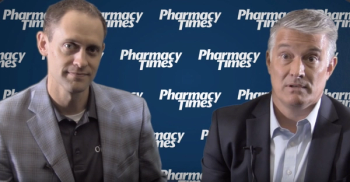
John King, CEO, and David Pope, Chief Innovation Officer, of OmniSYS, discuss how they're tackling reimbursement issues for pharmacies.

These techs are key players in navigating the complexities of the compliance requirements and training staff.

In 2018, the drugs generated $293 billion in savings, based on a recent AAM report.

When a pharmacist and a pharmacy assistant are indicted on charges of defrauding a government health insurance program and make motions with the relevant federal court to overturn the charges, should they prevail, heading off a trial, or should the matter proceed to trial?

The American Society of Health-System Pharmacists (ASHP) has released a statement opposing the Centers for Medicare and Medicaid Services’ (CMS) proposed cuts to reimbursement for drug purchased through the 340B Drug Pricing Program.
Advertisement
Advertisement
Trending on Pharmacy Times
1
FDA Approves Rebisufligene Etisparvovec as First Gene Therapy for Children With Sanfilippo Syndrome Type A
2
Adult Pneumococcal Immunizations: A Practical Guide for Pharmacists
3
New Bladder Cancer Regimens Reshape Treatment Across Disease Stages
4
FDA Reduces Monitoring Time for First Two Tarlatamab Doses
5